Earth Day 2020

EARTH DAY 2020 and the Rule of Six P’s

When I woke up this morning it was 33 degrees out, interesting because the average winter temperatures here in sleepy Central Pennsylvania were higher in January (37 degrees) and February (40.7 degrees)

When the kids were young and wouldn’t do their homework, my husband would recite the rule of six Ps:  Proper Prior Planning Prevents Piss-poor Performance.  By the time they were out of high school they were pretty sick of hearing about the six P’s, but that didn’t stop him from repeating it.  Today, we’re living in the Upside Down where winter looks like spring and spring looks like winter, and since we haven’t given a thought to the Six P’s for decades we’ve created a whole new normal.

Actually, we haven’t been ignoring things.  At the first Earth Day on April 22,1970, about 10% of the country showed up on behalf of the planet.  Under the leadership of Senator Gaylord Nelson, environmentalist, conservationist, consumer advocate, small business proponent and peace lover, along with about 20 million of his best friends, Earth Day raised the nation’s awareness of the critical environmental issues of the day. 

The result?  Richard Nixon created the Environmental Protection Agency on December 2, 1970.  Earth Day also led to the expansion of some of our most important national legislation like the Clean Air Act — originally passed in 1963 and amended in 1970 — and the Clean Water Act — originally enacted in 1948 as the Federal Water Pollution Control Act, and reorganized and expanded in 1972 to restore and maintain the chemical, physical, and biological integrity of the Nation’s waters

Changing public opinion is difficult.  Sometimes it takes generations of slow movement in a singular direction to experience even minor change.  Just look at the civil rights movement, or the women’s movement.  Yet for the last 50 years we have presided over one of the greatest social movements in history, the environmental movement, and we’ve made great strides in the process.

So how are we really doing?  Rivers aren’t catching on fire (bonus!);  the use of green infrastructure is on the rise, resulting in reduced stormwater runoff (we’ll take it),  our air quality has improved significantly over the last several decades (asthma is still on the rise so we have work to do here, people), and perhaps we are starting to understand the economic benefits of open space (lots of work to do in land use planning), 

The contiguous U.S. has warmed 2.4 degrees since the first Earth Day.   As of the last month, we have even seen a sharp reduction in carbon emissions — unfortunately, Covid related since no one is driving anywhere, factories aren’t pumping out waste, and most people are hunkering down at home — but at the least it’s a demonstration of what can be done with a concerted effort.  So while I’m delighted we made it this far, with a few noteworthy improvements, our success could be exponential. 

Take renewables.  There’s nothing that powers our planet like the sun and the good news is we don’t have to dig, drill, or destroy anything to get access to that kind of fire power. 

What about hydroelectric?  Is there a more stunning example of harnessing the power of water to create electricity AND taking home the crown in the natural beauty competition than Niagra Falls? 

How about wind?  Yesterday we had 40 mph winds here and 60 mph the week before.  A small turbine in our backyard could have turned that wind into power.  We actually had a turbine for awhile.  My husband built it from scratch, but the paddles were made of wood and after rebuilding and replacing them a couple times, he finally gave up.  Today we could get panels made out of fiber glass or carbon fiber which would have resulted in a workable, long-lasting piece of equipment.

Geothermal is another good one, tapping the thermal heat far below your house’s foundation to give you heat.  There are others and probably some which have not been developed yet. 

It’s time for society to focus on the six P’s, not just my husband’s, but two more sets of three.  First, public private partnerships where a government entity collaborates with a private party or company to create some kind of public works project.  Through public/private partnerships, projects that may not have come to fruition because of time, lack of manpower, or cost, are getting a leg up. 

Then there’s the triple bottom line:  profit, people and planet.  These three P’s focus on financial, social and environmental performance because good environmental policy = good economic policy.  To have a safe and prosperous future for ourselves and our children, we need to focus on each leg of this triangle.  So vote with your feet and pick the guy or gal that’s gonna keep the three P’s in mind.

Maybe you were planning to take part on an Earth Day celebration but were shut down by this dang pandemic.  Not sure how to contribute?  Just take a look around.  Anything you can do to improve your little part of the world will help. Want to plant a rain garden in your backyard?  Rain gardens look cool, they help water hang around for a while so it can seep slowly back to groundwater rather than rush off down the storm drain, they filter out toxins and pollutants from entering the streams and rivers so they improve water quality, and it’s another connection to mother earth.  If that’s too much, how about putting a rain barrel under your downspout.  You can use the water for your garden all summer long.   

Is it windy where you live?  Why not take a crack at building a wind turbine in your backyard.  Too much work?  Then how about a compost bin?  Want to help pollinators and assure a continuing food supply?  Why not plant a pollinator garden, and if you’re really adventurous, you could become a beekeeper. 

Want to stay healthy, safe and virus free?  Protect nature.  Keep a respectful distance, allow open space to stay open, give the critters the freedom to roam just like you want to roam, and create a building practice that doesn’t lead to deforestation and doesn’t impinge on critical habitats because it’s not just the spotted owl, but the whole dang ecosystem that’s crashing and us along with it if we don’t take some action now.  Need more convincing?  About 25% of our medicine comes from rainforest plants yet less than 5% of rainforest plants have actually been studied.  What if the cure for cancer was somewhere in that part of the rainforest that just got bulldozed for raising cattle?

Earth Day is not just about bugs and bunnies, but people, too.  We’re part of the earth, just like the soil, the sand, and the air we breathe, and we need to replenish ourselves the same way.  So before you dismiss Earth Day as just some environmentalist fluff, remember, we’re all stuck here together on this tiny little globe so if Mom says go take out the trash, or clean up your room, or don’t throw your smelly fast-food wrappers or plastic bottles on the street for someone else to pick up, maybe it’s time to listen to her.

Happy Earth Day.   Stay safe and healthy.  We’re all in this together.

pam lazos 4.22.20

Posted in Earth Day, ecosystems, rain gardens, rainforests, Uncategorized | Tagged , , , , , , , , , , , , | 28 Comments

Amazonication – One Store to Rule Them All

Amazonication — One Store to Rule Them All

Yeah, it’s Saturday!  The weekend’s finally arrived!  At least that’s what the pre-corona me used to say.  Now the weekend is just like the week except for the work part.  There is no dinner with friends, no movie at the local cinema, no walking along a beautiful wooded trail — well, that’s because it’s always raining, as if we moved to Seattle or something — no shopping to speak of unless it’s for essentials and frankly, I’m a little nervous that all this staying at home to flatten the curve is also flattening my creativity with my writing at an abysmal all-time low.

There is one thing I have become extremely good:  shopping on Amazon.

Be honest.  How many Amazon deliveries have you gotten since the beginning of the Covid-19 quarantine?  Two dozen? Three dozen?  Several million?

Look, I’m not proud of it.  It’s been hard for us and there’s a lot going on, trying to fill in the gaps with things the grocery store doesn’t have or items that we can’t run around looking for because we are sheltering-in-place, and face it, we’re exhausted even though we aren’t going anywhere or more likely because of it.

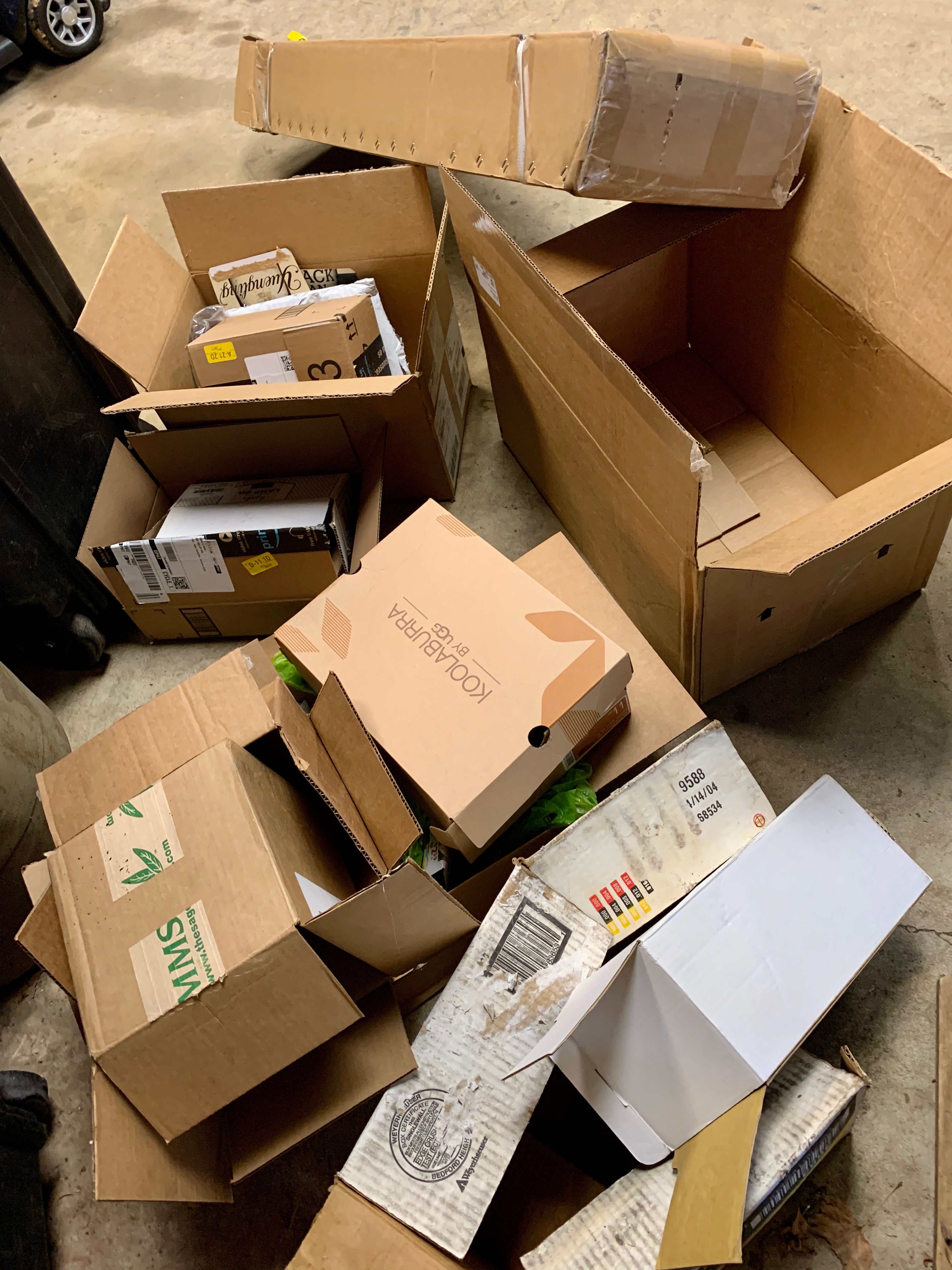
It looks like there’s a year’s worth of packaging in my garage right now, but really it’s only about two weeks worth.  My son is doing an internship with Americorps in Idaho at the end of the semester so we’ve been ordering things like a new sleeping bag and tent, boots and all-weather gear, but even without those contributions, there’s a lot of packaging on the garage floor.  The one bright spot is that of the four things Lancaster still recycles — glass, aluminum, plastic bottles (with necks only) and cardboard — at least these boxes make the cut.  If you’re wondering why they are strewn all about, well, that’s because we’ve been too lackadaisical to break down the boxes and put them into the recycling bin, another side effect of quarantining — downright laziness.

But other than a messy garage, why is shopping with Amazon such a bad thing?  Well, for starters, Jeff Bezos is richest man in the world, not a bad thing, yeah for him, he achieved his childhood dream, or something like that, and I applaud his ingenuity and drive.  Somebody’s got to hold that moniker, right?  Yet, what did the richest guy in the world say when asked about sick leave for Amazon drivers who contracted Covid-19 during a global pandemic where his company stands to rake in more money than ever before — drivers who are out risking their health, BTDubs, to bring us our packages?  He wanted people to donate sick leave to support them; he didn’t want to reach in his own pocket.

For a company that made over $11 billion in profits last year and did $280 billion worth of business, I’d say that’s a little bit love-of-moneyish, wouldn’t you agree, or to put it in blunter terms, downright greedy?

It is the love of money, not money itself that is the root of all evil.  Money is simply a means of exchange.  So when did it get so gosh darn blown out of proportion?  If I had the answer to that, maybe we could fix a few things around here like health care and boosting people out of poverty, but the truth is, I have no idea why although I think it has something to do with feeling unsafe in the world.  Let’s face it.  Fear is a powerful motivator and things are moving at a fast clip.  Money insulates you from a lot of life’s vicissitudes.  Not everything, mind you, but many things, and if you’ve got it, you don’t have to worry about feeding your family or keeping a roof over your head, or having access to clean, safe water, luxuries that many of us in the developed world take for granted.

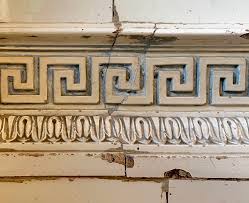
[The Greek meander key representative of our meandering through life.]

To be fair, Bezos did say he’d give two weeks of sick leave to any Amazon employee who contracted Covid-19, but the Amazon drivers, those men and women coming into contact with the public — or at least the public’s front porches — all day long, sometimes up to 12 and 14 hours a day, are not considered Amazon employees, but contractors and, therefore, not eligible for employee benefits.  It’s not unusual.  I work for the feds, and it’s the same deal there — contractors don’t get the benefits that employees do, but we don’t make a profit, our budgets are allocated by Congress, and we operate on an entirely different level than a Fortune 500 company that recently cracked into the top five highest grossing companies in the world.  Usually contractors benefits are covered by their employer, yet Amazon contractors seem to be a scattershot of companies with very little oversight which looks to me to be very much by design.

Similarly, when Bernie Sanders pressured Amazon to raise the minimum wage for its workers to $15, Bezos bent, but did so disingenuously, passing the costs along to employees by eliminating their bonuses as well as Amazon’s stock unit program which paid some portion of employees salaries in stock.

The question is, why?  Is Bezos a modern day Scrooge?  He didn’t even pay taxes in 2018, why does he need all this money, or more to the point, why can’t he pay people what they are worth?  The drivers delivering his packages are making him tons of moola.  Can he give a little back so their health and well-being are safe-guarded?  Is he hoarding?  Saving for a rainy day?  Isn’t that the kind of thinking that got us all into this mess in the first place with our planet cratering under the pressure of take, take, take, me, me, me, while we slash and burn, destroying natural resources so we can make cheap plastic crap, and there most certainly is not enough to go around so I better take what I can get now?

Then there’s Amazon’s carbon footprint — 44.4 million metric tons of carbon dioxide equivalent in 2018.  Not the worst out there, but certainly not the best, especially when the retail giant is expected to come out of the pandemic stronger than ever.  To their credit, Amazon is shooting to be carbon neutral by 2024.  Now if they can just get that salary and health benefits thing worked out.

Look, I love Amazon and as you can see, I buy a lot from them, but couldn’t they be, IDK, a little nicer?  Costco, one of my favorite retailers, pays its people well; Costco shares and shares, and the company is thriving.  Is it really that important to be the richest guy in the world if no one likes you?

You can do better, Amazon.  So can we all.

pam lazos 4.18.20


Posted in living wage, Uncategorized | Tagged , , , , , , , , , , , | 54 Comments

One Dissenting Voice – Prayer and Pandemic

[Rev. James DeWolf Perry, Jr. (1838-1927), was the “one dissenting voice” at an October 1918 meeting of Philadelphia Episcopal clergy during a deadly influenza outbreak. He refused to join their protest of the City’s ban on church services, an emergency measure to curb the spread of the deadly virus.]

Bio: William Carl Smith is a lawyer and writer in Narberth, PA.  Church is something of a family business for Bill, who is a deacon at Philadelphia’s Arch Street Presbyterian Church, and a co-leader of ASPC’s monthly pub-based Church in the Alehouse and a co-moderator of the weekly lunch-based “Good Book Club” Bible Study.  Bill is also the husband of Rev. Judith M. Brackett, Director of Family Ministries at Ardmore Presbyterian Church; the brother-in-law of Pastor Jim Dougans of the First Presbyterian Church of Maysville, KY;  the stepbrother of Rev. Ruth Beresford of Christ Church Christiana Hundred in Wilmington, DE; and the son of the late Rev. Carl R. Smith, Jr., who was Donald Trump’s pastor in the 1960s, when the future president’s family  belonged to the First Presbyterian Church of Jamaica, Queens, NY.

My friend and work colleague, Bill Smith is also a great writer with his finger on the pulse of people, politics, and that which moves us.  I thought this article a very fitting post for today since it’s Easter Sunday and we are banned from gathering, but it applies not just to Christians, but to all people of faiths who had to give up worshipping with their loved ones during this season of renewal because of the coronavirus.  Our faith teaches us that we are all one in spirit and with that understanding, maybe the pain of separation on these, our holiest days, becomes a little less knowing that our love and affection for one another transmute the 3-D world.  Take heart.  As with all, this too shall pass.  What life looks like on the other side is an unknown, but I encourage you to envision the kind of world that would make your children proud to be a part of and then call it into being.  You got this.  You know you do.

And without further ado, here’s Bill:


“There Was But One Dissenting Voice”:

Prayer and Pandemics in 1918 and 2020

by William Carl Smith

A pandemic ravages the world, infecting and killing thousands.  U.S. cases increase exponentially, as asymptomatic Americans infect loved ones at home, neighbors on the street, colleagues at work, and worshippers in the pews.

Thousands of Americans get sick.  Many die.  The federal government dithers as the body count mounts, forcing desperate state and local authorities to close schools and non-essential businesses, and prohibit public gatherings . . . including church services.

For some pastors, this last measure simply goes too far.  Their faith compels them to pray and repent together during this perilous pestilence, they argue; the government has no business telling Christians where and how to worship.

If this reads like a story “ripped from the headlines,” it is.  Struggling to “flatten the curve” of coronavirus infections and deaths, state and local officials nationwide have banned public gatherings, including religious services.  By and large, churches have willingly complied.  Even in states like Pennsylvania with religious exceptions in shutdown orders, most churches have “gone virtual” — substituting streaming for gathered worship.

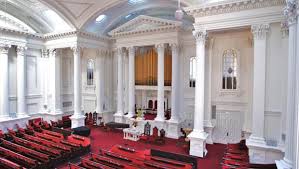
[Like many houses of worship nationwide, Philadelphia’s Arch Street Presbyterian Church is closed and empty during coronavirus crisis (top). Instead of gathering in the pews, the congregation logs into online worship, Bible study, and other meetings.]


[Rev. Carla Jones Brown, Arch Street’s head of staff, led Palm Sunday service on April 5 (top) as the congregation participated via the “Zoom” videoconference app (bottom).]

Some pastors and churches, though, are defiant.  “The virus, we believe, is politically motivated,” said Rev. Tony Spell of Life Tabernacle Church in Baton Rouge, La., claiming that he sent 27 buses to gather over 1,000 worshippers in violation of the state’s stay-at-home order. “We hold our religious rights dear and we are going to assemble no matter what someone says,” said Spell.

Solid Rock Church near Cincinnati posted on Facebook that its doors would remain open as long as the First Amendment was unchanged. “If there ever was a time in the history of our world when we all need God’s help, it is now,” the evangelical church said.

Rodney Howard-Browne of The River at Tampa Bay Church boasted that his church would close only “when the Rapture is taking place,” he said.  On March 30, Tampa police arrested Howard-Browne for flouting Florida’s public gathering ban.

President Trump believes that Americans should go back to church, and work, as soon as possible.  On March 24, Trump mused that the holiest day on the Christian calendar would be a “beautiful time” to end America’s COVID-19 shutdown.   

Our erstwhile Presbyterian president envisioned “packed churches all over our country” on Easter Sunday, April 12, although he has since backed down from this data-free deadline as an “aspiration.”   Most churches remained closed for Holy Week, but some pastors are still packing the pews during the pandemic, supported by conservative politicians.   Republican Kansas legislators rescinded an emergency order by Democratic governor Laura Kelly limiting church services to ten worshippers, after an outbreak traced to a church conference caused at least 15 COVID cases, including one fatality.   

Yes, you can read all about preachers and pandemics in today’s newspapers…and also in the century-old archives of the Philadelphia Inquirer.

In 1918, the inaccurately named “Spanish Flu” killed an estimated 45,000 American soldiers in the final months of World War I – nearly equaling the total WWI U.S. combat deaths.  President Woodrow Wilson was also stricken, but did little and said nothing publicly about the global pandemic.

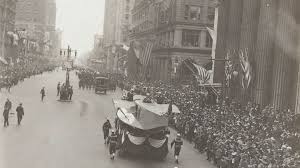
[On September 18, 1918, days after the influenza outbreak in Philadelphia, the City threw itself a huge outdoor party.  An estimated 200,000 spectators — an unknown number carrying the flu virus — packed and hacked along the Broad Street route of the World War I “Liberty Bond” parade.]

The virus slipped unnoticed into the city on September 7, 1918, when a merchant ship from influenza-ravaged Boston docked at the Philadelphia Navy Yard.  Within 10 days, over 600 servicemen and local civilians were hospitalized.  Downplaying the threat, the city’s Board of Health did not impose a quarantine, or any other restrictions to minimize the infection rate.  Instead, Philadelphia went ahead with a massive war bond parade on September 18, 1918.  An estimated 200,000 Philadelphians packed the parade route, including an unknown number of infected spectators.

The city’s bungling initial response turned a bad — but potentially manageable — public health crisis into a deadly catastrophe.  In late September, after the flu claimed over a thousand lives in the Philadelphia area, the Board of Health finally stepped up, closing schools and public gathering places such as theaters, bars, and churches.

The leadership of the City’s most prestigious and powerful Protestant denomination also stepped in – not to protect parishioners from pathogens, but to whine about the shuttering of their sanctuaries. 

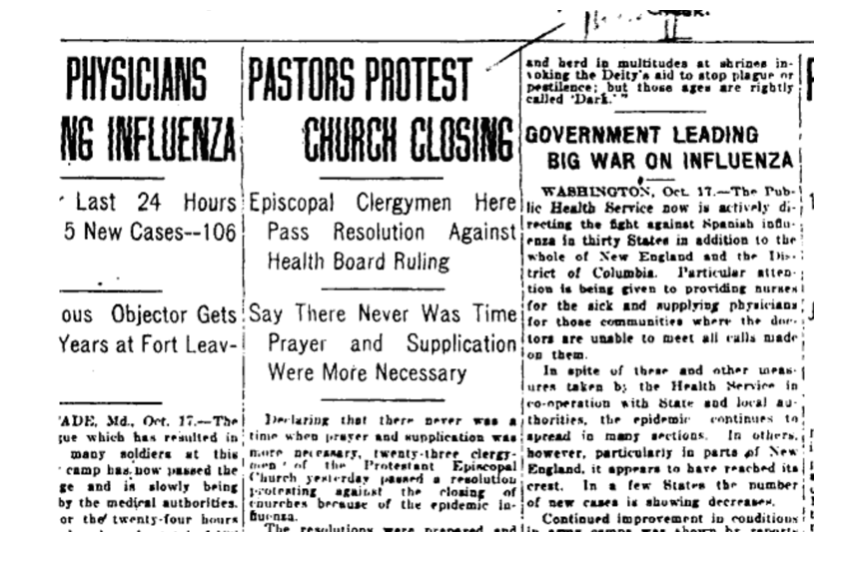
[Philadelphia Inquirer, October 18, 1918]

“Pastors Protest Church Closing,” blared the Inquirer’s October 18, 1918 headline about a resolution from 23 Episcopal priests opposing the church closure.  While public worship was banned, the clergymen complained, city residents could still “crowd in cars and stores on the plea that ‘business must go on.’”

“It is more important to pray to God than to carry on business,” read the near-unanimous resolution, “it is the opinion of the Protestants that God will care for His people when they meet to plead with Him.”

However, this was not the opinion of all Protestants in the room, the Inquirer observed:

There was but one dissenting voice in the conference, that of Rev. Joseph De Wolf Perry, pastor emeritus of Calvary Church, Germantown. After declaring that he believed the action of the health authorities should be sustained, he left the meeting.

Journalism is the first draft of history, the saying goes, so the unnamed reporter may be forgiven for misstating the Christian name of the 80-year-old Rev. James DeWolf Perry, Jr. The reporter also did not specify Rev. Perry’s reasons for siding with the Board of Health over his white-collared colleagues.

However, genealogy provides a clue. The pastor’s son, the uncreatively named James DeWolf Perry III, had followed his father into the ministry, becoming the Bishop of Rhode Island in 1911.   In WWI, he served as head of the American Red Cross chaplains in Europe, nicknamed the “Bishop in Boots.” The elder Rev. Perry likely learned from his namesake about the hellacious influenza outbreak killing thousands of doughboys in the crowded trenches of France.  If so, Rev. Perry must have considered his fellow clergy in Philadelphia to be murderously ignorant in demanding to pack the pews as the epidemic raged.

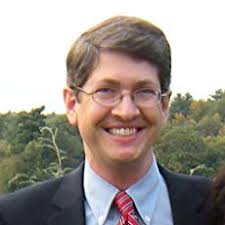
[Public historian James DeWolf Perry is the great-great grandson of the Episcopal priest who defied his fellow Philadelphia clergy by supporting the City’s ban on church services during the 1918 influenza pandemic.]

Whatever compelled Rev. Perry to spurn his clerical peers in 1918, though, his great-great grandson (also named James DeWolf Perry, of course) is gratified that his ancestor took this stand.

Perry, a public historian, author, and co-founder of the Tracing Center, a racial justice nonprofit in Massachusetts, is pleased that his kin “saw the wisdom in suspending public worship during a deadly epidemic. I doubt very much that, as the resolution suggested, the Lord intends for Christians to gather as usual and rely upon divine protection from disease.”

As a devoted Episcopalian himself, Perry and his wife have been working throughout the COVID-19 crisis with New England parishes and dioceses “to suspend public worship, and craft appropriate substitutes and other precautionary measures.”

In 1918, Philadelphia’s haphazard response to the influenza outbreak– exacerbated by self-serving, short-sighted religious leaders — was tragically typical of many cities.  This attitude contributed to the pandemic’s ghastly toll of 50 million deaths globally, including over 17,000 Philadelphians. 

Perry prays that religious leaders are part of the solution, rather than a problem, in addressing the current pandemic.

“I’m a strong believer that our faith doesn’t require us to put our own health, or the health of others, in jeopardy, but calls us to do the exact opposite,” he says. “If it is hard for us as Christians, especially during such a trying time, to refrain from gathering in person for worship and fellowship, then I see it as a test of faith and a measure of our love and devotion for our fellow human beings.”

***


Thank you, Bill, for your insight.

And to everyone reading, if you are the one dissenting voice in your tribe, stay strong and continue being the voice of reason.  As Abraham likes to say:


And because it’s a holy day, let me leave you with this beautiful rendition of one of my mother’s favorite songs.  She loved the Andrea Bocelli/Celine Dion version, but this one by Mat and Savanna Shaw is equally stunning:


Be safe.  Be well.  xo

pam lazos 4.12.20

Posted in pandemic, religion, Uncategorized | Tagged , , , , , , , , , , , , , | 27 Comments

Love in the Time of Corona: Venice Underwater – Is Manhattan next?

Venice Underwater — Is Manhattan Next?

I had flagged this article back in November when the floodwaters were rising in Venice and then set it aside.  My title, Venice Underwater — Is Manhattan Next? was referring to the literal flooding of Manhattan as an island susceptible to sea level rise.  Fast forward three months and both Italy and New York are flooded with Covid-19, the lungs of its inhabitants filling with fluid as they attempt to fend off a novel virus with no cure and limited testing.  Life speaks in metaphor and so does the earth.

In metaphysical speak, there are four elements:  fire, earth, air, and water, each with its own symbols and signature energy.  Water represents emotion in astrology, tarot (cups), acupuncture, feng shui, many more, I’m sure.  As for the lungs, they represent life energy.  Depriving the lungs of air is probably one of the quickest ways to die; you can last about four days without water and about 40 days without food, but you only get about four minutes without air. 

The lungs also speak the language of grief.  Not coincidentally, Grief is currently riding sidesaddle with the coronavirus and it’s pretty clear that society is grappling with the fallout.  We’re grieving the loss of our normal routine; of our inability to chat and share and break bread with our friends and neighbors; to ride public transit; to go to the movies (particularly acute for me); to hug and shake hands; to shop without face coverings or the worry of contracting the virus while buying groceries; to homeschool young kids and work from home at the same time (like, impossible); and we’re grieving the actual physical loss of friends and loved ones as the world that we once knew changes in ways that a few months ago we could have never imagined.

I’ve been working remotely for about four weeks now.  Teleworking has comprised some part of my routine for the last 25 years so that part is not new.  What is new are the reasons behind it. My husband who has MS is immunocompromised so I am grateful for the ability to work at home since the very real danger of bringing something into the house plagues my every trip to the store — which have been few and far between — and barrages my optimism.  How can you protect against something you can’t see?

My soon to be 20-year old is home, her in-person sophomore year in college now aborted for an online version that she is having difficulty navigating.  Gone are her friends, her teachers, her classes, her “cute room” that she finally had fixed up the way she wanted.  Where there used to be parties on weekends are now just two boring parents, a couple cats and the dog for company.  Where there used to be afternoons in the park are now just her childhood bedroom, dressed up with colored lights to make the dark times a little more sparkly, but to be thrust back into the role you’d recently outgrown feels a bit like wrestling with a crocodile — it’s impossible to get a grip.  I completely understand all this and have been offering suggestions to ease the burden, but what, really, can any of us do to make another’s grief go away?

Last night I told my son — a senior in college this year who has no graduation ceremony and no last rites of passage from childhood to adulthood to look forward to as a result of corona — not to come home for Easter.  He’s been at college which he reports is a ghost town but for a few of his buddies who also stayed in their apartments because of various commitments.  My son had an internship to finish up which he needs to graduate, hence why he went back.  Plus, he studies better at school. When he made the decision to go back to school I cried — not in front of him because I didn’t want him to feel bad — knowing that it would come do this:  choosing to keep our house germ-free over seeing my kid.  That’s a tough choice for a parent, but the last time my husband got sick he ended up in the hospital.  Through that lens, it’s no longer seems like a choice, but still, I didn’t sleep well last night because of it.

I have been unable to write, or draw, or cook anything that I don’t have in my memory banks, meaning, nothing much new or interesting is happening.  I’ve done very little gardening, mostly because the weather has been crappy, but really, it’s just me being … what is it? Lifeless?  Limited?  Anxiety ridden?  Grief stricken?  Or, as my friend Bob and I like to say, “waiting for the other shoe to drop”?

I read an article the other day.  Some twitter troll said— and maybe they were well meaning or just trying to be motivational, I don’t know — that if you don’t come out the other end of this with a new skill or hobby or prolific at something that you’ve wanted for a while then you never really wanted it badly enough.  That made me feel kind of crappy about myself because despite a novel in the works and a blog that I could contribute to every day if I wanted, and freelance writing opportunities to be had, I’ve been frozen in time, able to deal only with work, walking the dog, making dinner, cleaning the house, very little else.  A psychologist called the twitter troll out on it.  I mean, don’t we all have enough to deal with that we don’t need to add self-battering to the laundry list?

Remember the boot that the cops would put on your car if you didn’t pay your parking tickets?  I feel like I have one of those on my throat right now.  It’s tight, like it’s struggling with what to say, and the moral decisions of everyday life are overwhelming it.  I told my daughter whose motivation is at an all-time low right now that:  “you think I’ve got it all together because I manage to get up and work everyday, but you’re wrong.  Everyday I’m dying a little inside.  Same as everyone else.”  It’s tough to admit to your kid that you’re struggling, too, and that maybe you don’t have all the answers.

But here’s what I know:  life is cyclical.  It ebbs and flows.  The tide comes in, the tide goes out.  We’ll get through this, a bit more battered and bruised, but the world will go on and so will we.  Refracted light tells a different story that maybe we wouldn’t have seen otherwise.  The world will look different, sure, but what if it changed for the better, ushering in things like universal health care; a living minimum wage (a special thank you to all the grocery store workers putting their health on the line so the rest of us can have fresh vegetables); a social safety net that protects the most vulnerable among us and not just the stock market and those who invest in it; and maybe, just maybe, the return of the American Dream where millions aren’t always on the outside looking in?

[Thanks to whoever took this picture!]

I think the earth is trying to tell us something.  Perhaps we can use this time of isolation to tune in and really listen.  Maybe we’ll understand how to navigate this brave new world being presented to us.  In the meantime, be safe, be well. 

pam lazos 4.10.20 


Posted in coronavirus, Covid-19, social safety net, Uncategorized | Tagged , , , , , , , , , , , , | 57 Comments

Love in the Time of Corona

It’s been a hell of a few weeks and it looks like it will continue for a bit.  At the risk of sounding both blasé and alarmist at once, I think the planet is trying to tell us something.

We are on the verge of a sixth mass extinction with species experiencing lights out at alarming rates and any potential for rebound numbering in the millions (!) of years.

In the process, we have created so much pollution with our lifestyles that our climate has become inhospitable and our CO2 levels will reach critical mass in the next couple decades without a complete overhaul of how we do business.

We’ve gotten into an only money matters mentality, and the stock market’s precipitous weeks’ long plunge not only put a hurting on most people’s retirement funds but eroded faith in the economy.  That event may keep us working longer until stocks rebound, but what, really, is the stock market?

Certainly, not a physical, tangible entity, but like everything else in this 3-D world — even things you can hold in your hands — it’s an idea and the success or failure of that idea is based upon how people perceive it.

Are we confident or fearful?  Do we believe in our government or do we think it will fail us?  No place is the process played out more quickly than in the stock market.  It doesn’t make sense that something worth $1 one day is worth $0.50 the next unless you look at it through this lens of perception.

So what is happening??

We rush, rush, rush from thing to thing never really enjoying or being present for any of it, leaving us breathless and looking for meaning in our lives which seem physically full, but spiritually bereft as we ignore The Power of Now.

And what all this is telling us is that the world needs to change, not in some superficial new hairstyle kind of way, but as in a fundamental shift in the way we interact and live, in our interpersonal and business relationships, in the way we treat our families, each other, and ourselves, and since we weren’t able to find the time to get to it, along comes a virus to gives us all the time we need, forcing us into this shift — and that’s all this is, a shift, in our consciousness, our way of thinking and living, of learning, and loving.

A bit of Gratitude goes a long way.

If you are working, give thanks for your job. I am lucky to have a portable job so for me, work-life goes on in my home instead of my office. For those of you who are home without work, I can’t imagine the level of anxiety you must be feeling right now (actually, I’ve been furloughed a few times so I have felt this level of anxiety before), but perhaps you can use this time to think about what your hands can do that will benefit your better well-being and that of those around you.

Can you plant a little garden?  Learn to play the ukulele?  Clean out your closet?  Shine a light on the most neglected parts of your world and give it an overhaul?  What are the things you put off until you have absolutely nothing left to do or until you find a few hours of free time?  Those are the things you want to tackle.  This is your free time so use it.  If you view it less as isolation and more as a Roto-Rooter for the Soul, you can work miracles in your life.

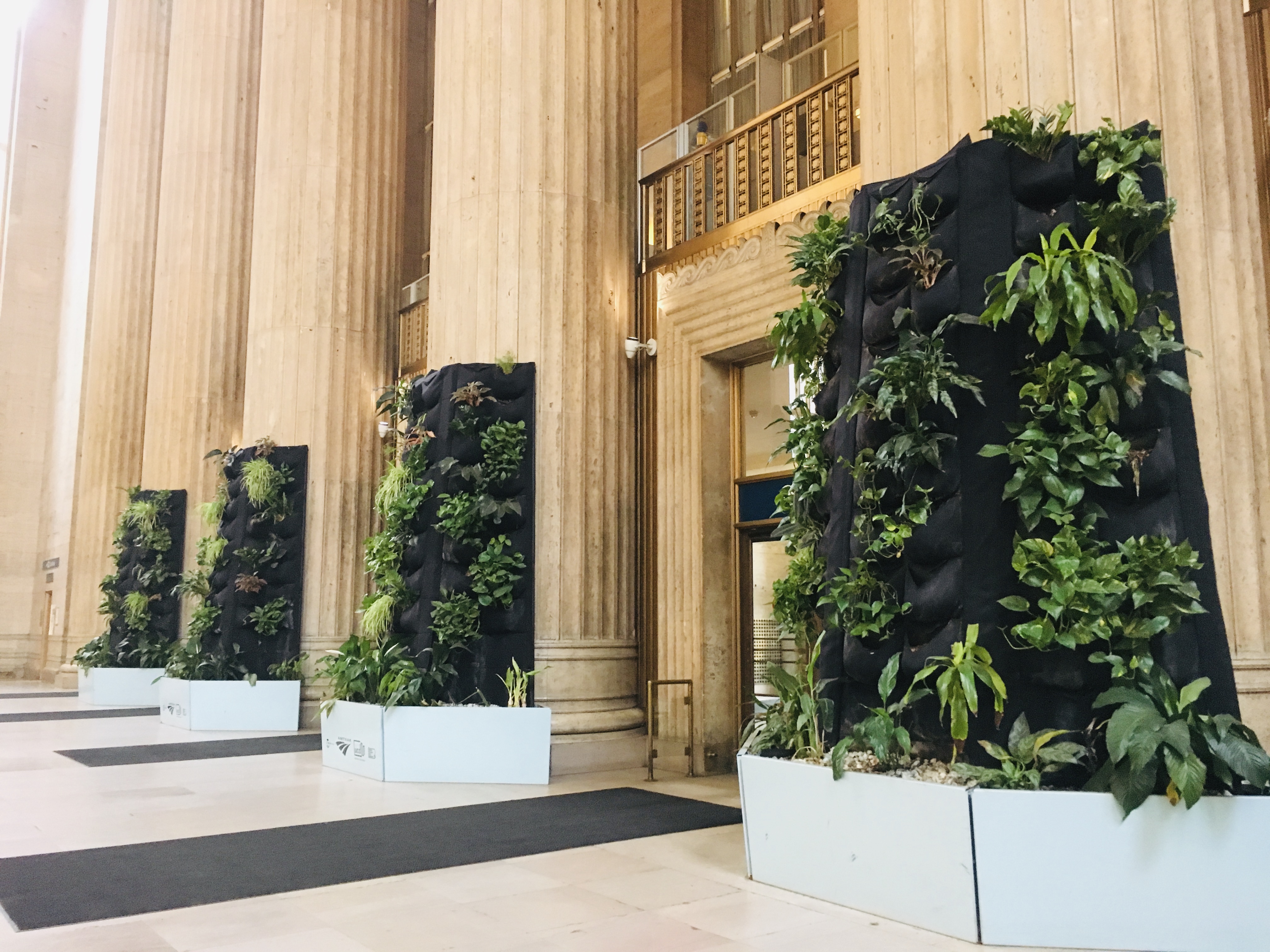
[Vertical garden at 30th St. Station in Philadelphia]

My sister and her husband have decided to build a small vertical garden that they can hang on the wall.  They’ve been talking about this for years.  Is there anything you’ve been thinking about but haven’t had time for?  Now’s your hour.

[Photo credit – Brethern Village Retirement Community]

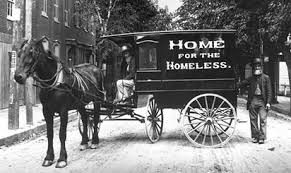
If you are safe in your home right now, give thanks, because the homeless population is among the most vulnerable among us, and also one of the most likely places to transmit the virus.  It’s hard to shelter-in-place when you don’t have a shelter.

March 22 was World Water Day.  Do you have water running to your tap?  If so, you are better off than approximately 2 billion people worldwide who don’t have access to basic sanitation so give thanks.   You may be stuck in your house, but at least you’re not thirsty and you don’t have to defecate outside.

Are your lungs working?  If so, then you are in better shape than the almost 700,000 people who have contracted Covid-19 to date.  Give thanks for the alveoli — the tiny airsacs in the lungs which allow for the gas exchange, replacing carbon dioxide and flooding every inch of your body with life-giving oxygen.  People with Covid-19 can’t get their lungs to absorb the oxygen so even being on a ventilator may not help you.

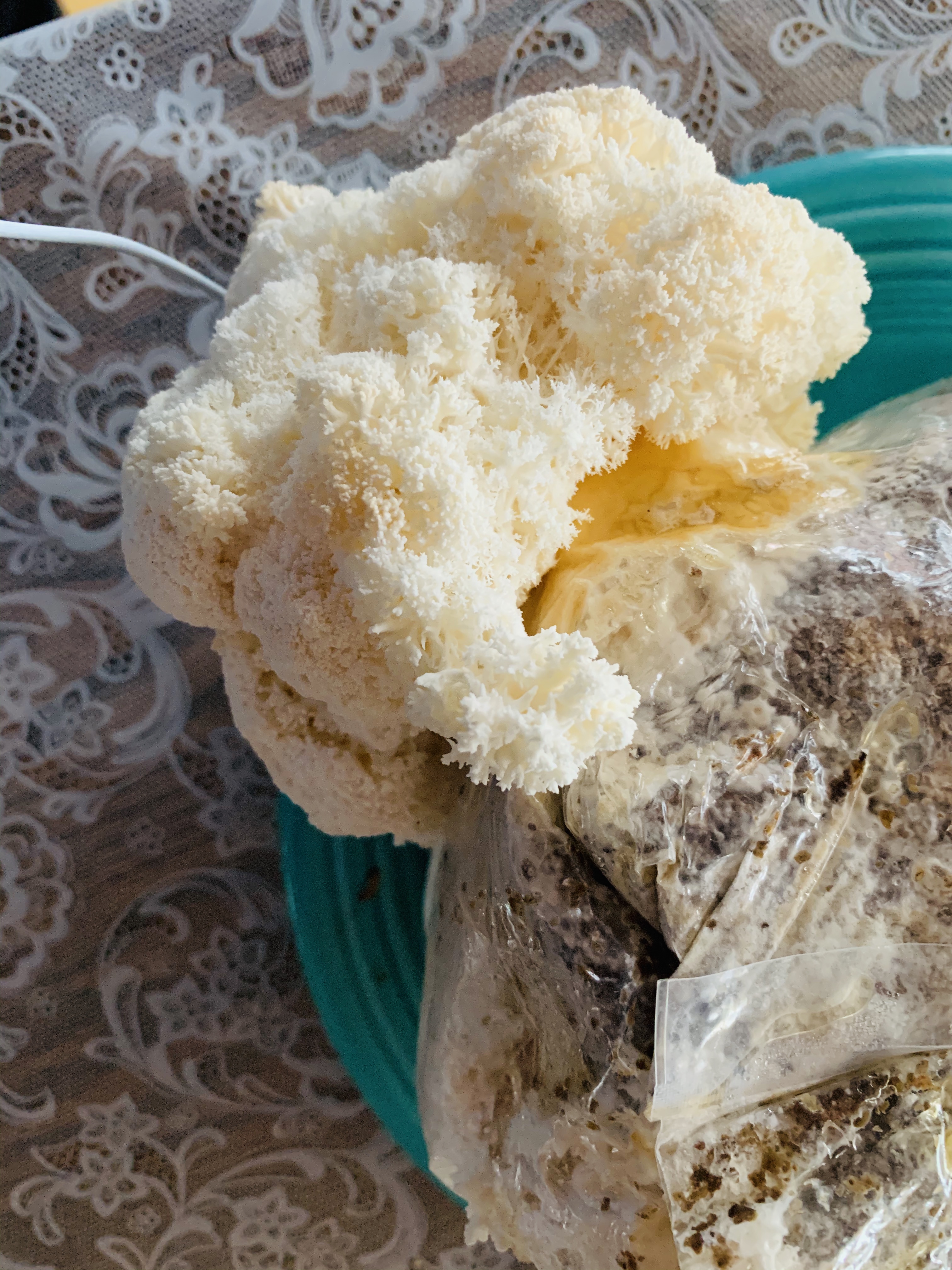
And while we’re on body parts, give thanks to your body for keeping you healthy, for fighting off invaders and keeping your immune system humming along.  It’s possible that you come into contact with dozens of viruses every day that result in barely a sniffle.  You can thank your immune system for that.  And if you want to check out some great immune boosting stuff, go to Fungi Perfecti and listen to a Paul Stamets TEDtalk or read all about how mushrooms might just save us.

[My husband’s indoor mushroom-growing project –Lion’s Mane — great for your immune system.]

And since you have some extra time, maybe you’ll want to take a look at the movie:  Fantastic Fungi streaming here (scroll down to find it).

So what do we do to weather this period of volatility and uncertainty, of seismic and unprecedented shifts in consciousness that none of us has ever witnessed?  The answer will be specific to each of us, but I think there are some common themes we can all adhere to:

Instead of hoarding (toilet paper and whatever is next), choose giving.

Instead of loneliness, choose levity.

Processed with VSCO with p5 preset

Instead of solitude, institute “bring your dog or cat to work” day.

Enjoy the shorter commute.

Take time for walks.

Stay connected.

Practice walking meditation.

Exercise. Exercise. Exercise.

To keep the anxiety of a Covid-19 reality at bay, remember that we live in a 3D world, but we come from spirit and in spirit, all is always well.  In spirit is also where the magic happens so take some time to meditate on the kind of world you would like to be living in when this is all over.

Nothing happens unless we first dream it into being.  Now is the time to dream our better world into reality.  The sun will rise.  What kind of day will it rise upon for you?

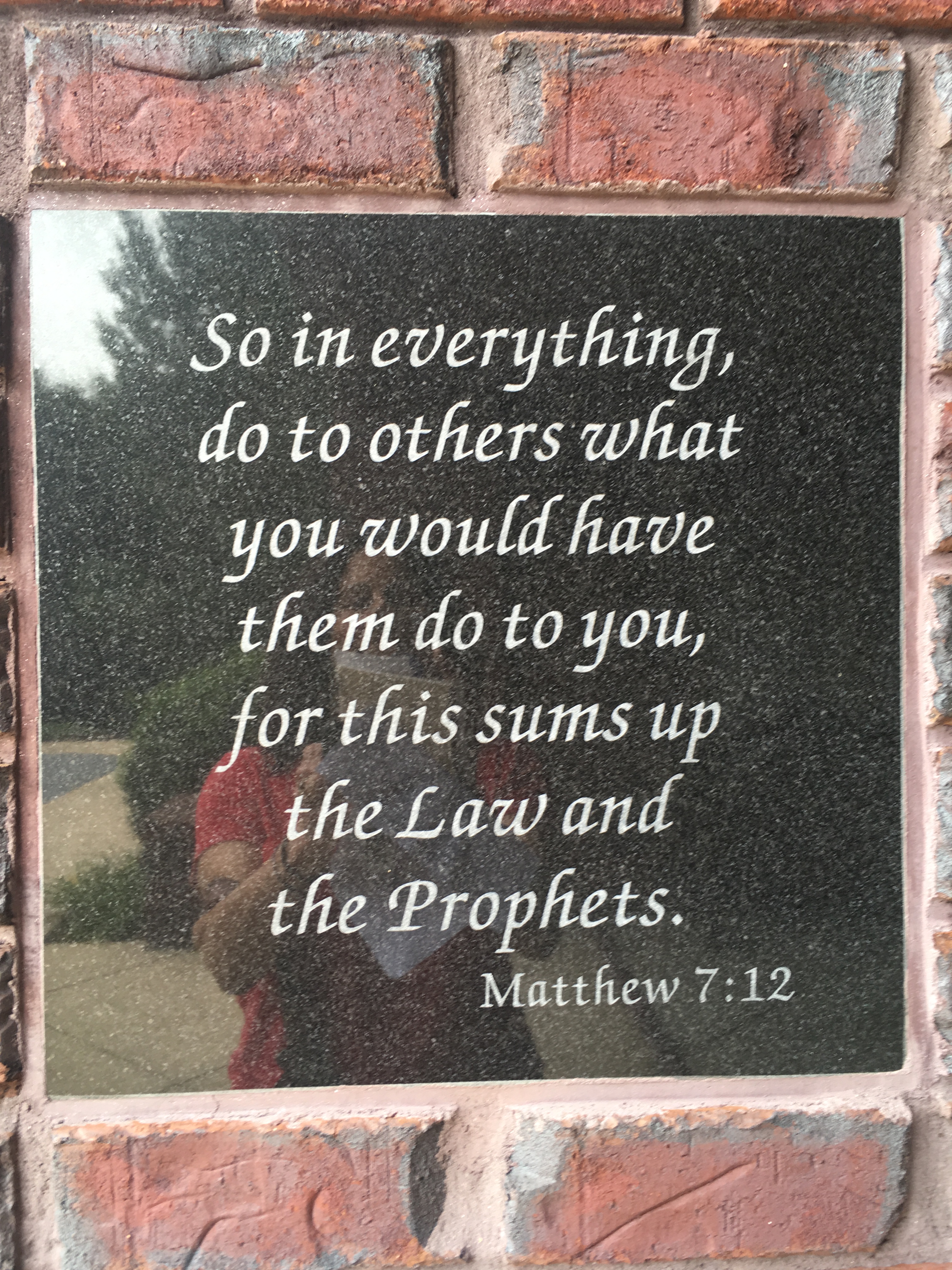
And, most importantly, in a world where you can be anything, be kind.

Sent with love to all species in times of crisis and otherwise.  Be safe and well.

pam lazos 3.29.20

Posted in Kindness, mushrooms, shift in consciousness, Uncategorized, vertical gardening, virus | Tagged , , , , , , , , , , , , , , , | 57 Comments

WATWB – Arctic Ice Abounds


Arctic Ice

In Philadelphia this past winter, the total snowfall count was a wafer thin 0.3 inches.  While many Philadelphians celebrated the fact that they didn’t have to scrap the snow off their cars there was yet another upside:  an uptick in arctic ice!  By keeping the frigid air up north, the ice, like the plot, thickened.  It’s still the 11th lowest since we’ve been keeping score with 42 years of satellite photos, but at least it’s not the worst, eh?

A small blip of good news and a reason for celebration in a time when there’s very little else to celebrate.

Remember when hunkering down in your house was because of this:

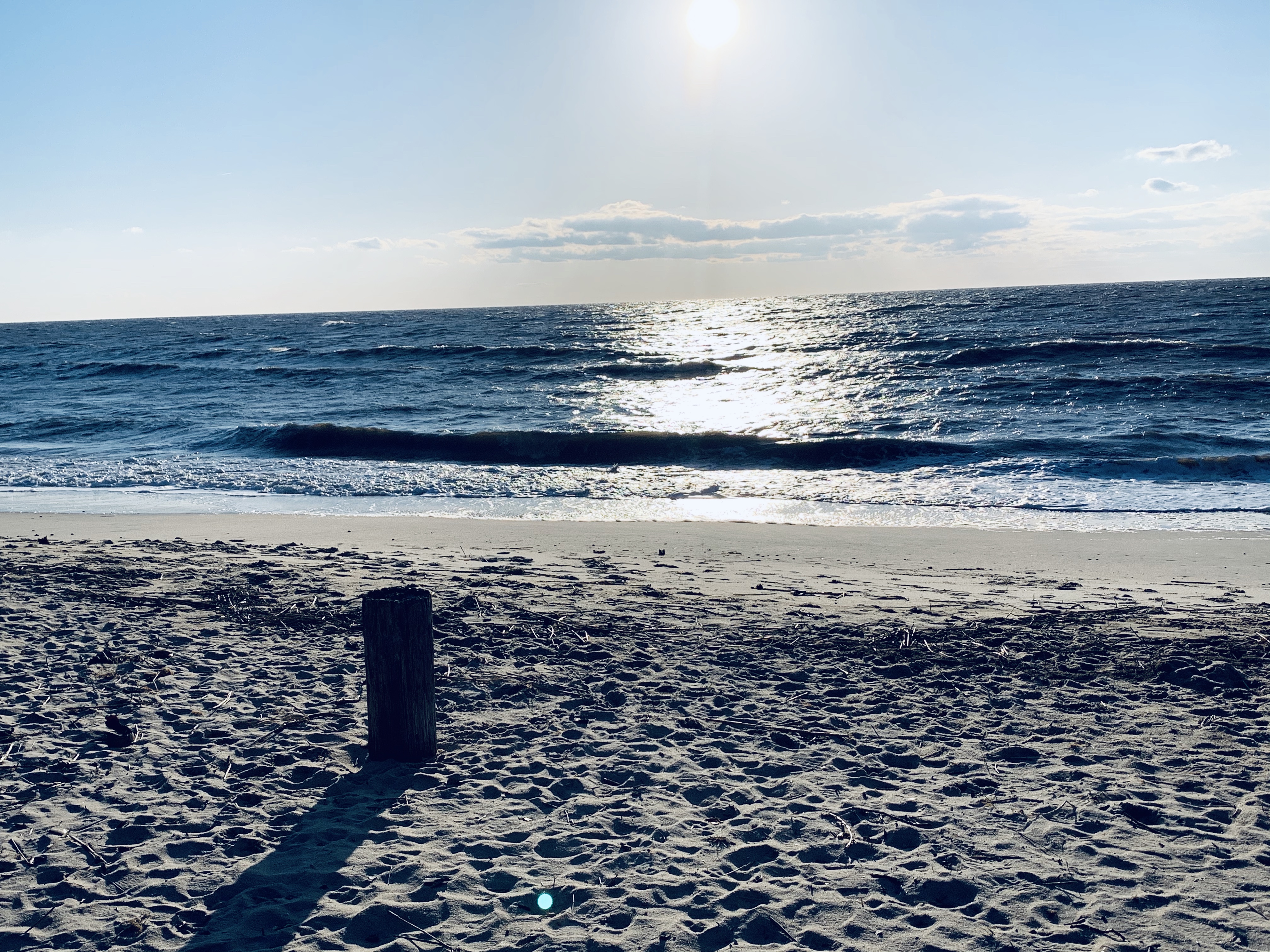
instead of this:


It’s the last Friday of the month.  Time to share the good news on We Are the World Blogfest — #WATWB — a monthly good news trip around the world.  May we all be energized and rejuvenated by the good news.  If you’re interested in joining our Blog Hop, the guidelines are as follows:

1. Keep your post to below 500 words;

2. Link to a human news story on the last Friday of each month that demonstrates love, kindness, humanity, support, open-mindedness, you know, that kind of stuff, but no proselytizing, preaching or inconsiderateness toward others;

3. Post on the last Friday of the month in sharing the good news.  No story is too big or small;

4. Place the WE ARE THE WORLD Badge on your sidebar and help spread the word on social media. Tweets, Facebook shares, G+ shares using the #WATWB hashtag through the month most welcome;

5. Read and comment on others’ posts, play nice, and make friends;

6. To sign up, add your link in WE ARE THE WORLD Linky List below.

Click here to enter your link and view this Linky Tools list.  This month’s cohosts are:

Sylvia McGrath,
Damyanti Biswas,
Shilpa Garg, Dan Antion,
and Belinda Witzenhausen.

Thanks for reading.

pam lazos 3.27.20

Posted in #WATWB, arctic ice, Uncategorized | Tagged , , , , , | 30 Comments

Amigos por Agua


Amigos por Agua

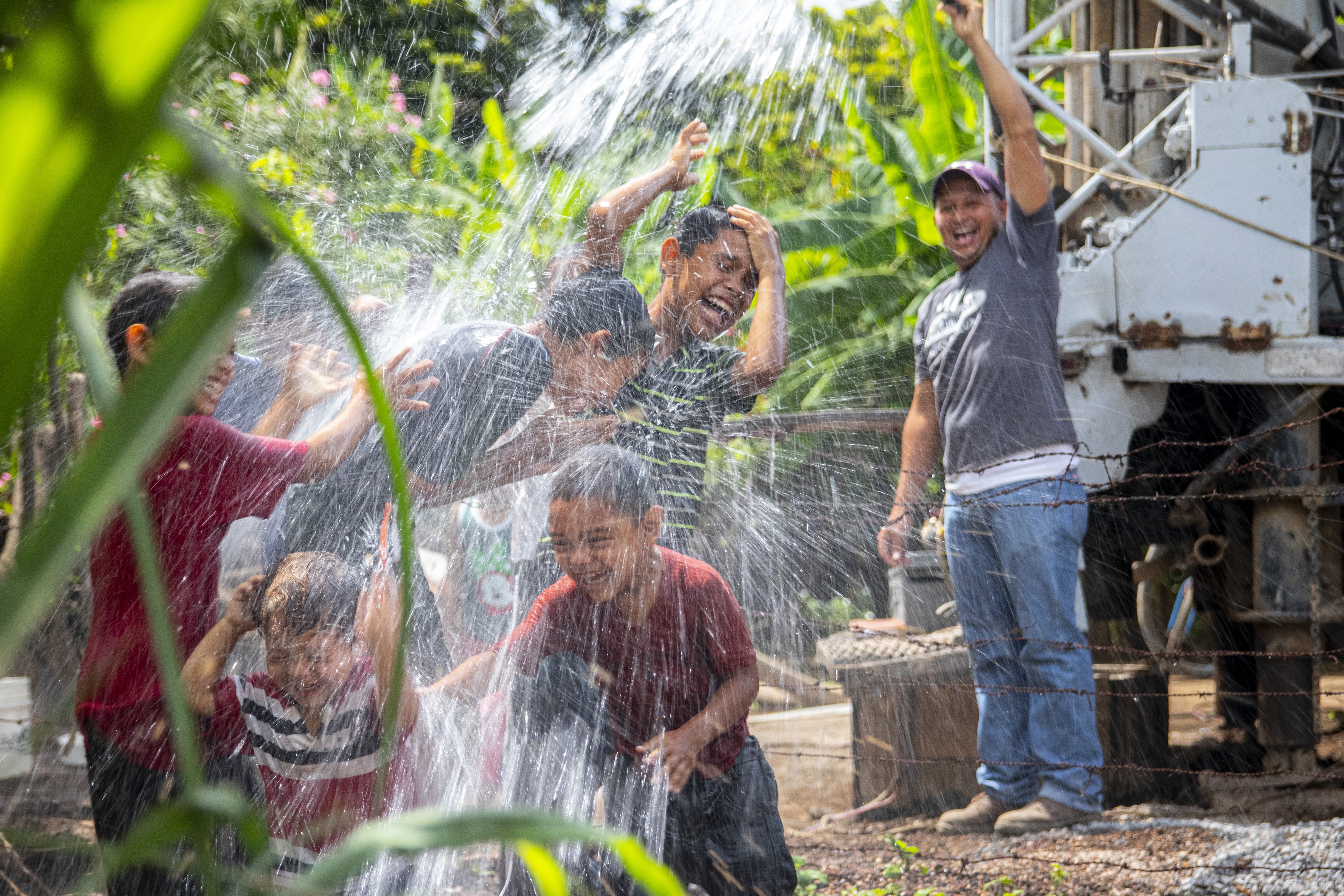
Imagine what it would be like to have running water for the first time in your life.  The feeling of sheer joy and exhilaration.  That’s exactly what these kids, residents of Chinandega, Nicaragua are feeling.


[All photos by John Bland, Amigos for Christ]

I just had an article published in the wH2O Journal, the Journal of Gender and Water. I’ve been on the editorial board there for the last five or six years, a labor of love that I feel is so very important because it relates to the narrative we tell about water.

You can read the article here.


There is so much to say about water:  how women bear the burden of collecting water where it is not readily provided or available; how approximately a billion people lack access to clean, safe water and about 2.5 billion lack access to improved sanitation; how that lack of access can lead to infant mortality, a myriad of adult diseases, and even death; and how the U.N.’s Sustainable Development Goals are working to assure that one day, everyone will have access to water, sanitation and hygiene, or WASH.

Here’s the abstract from my article, Amigos por Agua:

The role of non-profit organizations in outfitting the developing world with clean water has become more extensive as the world’s population grows, especially in places such as Nicaragua, the second poorest country in the western hemisphere. Nicaraguans suffer high rates of kidney disease, respiratory illnesses and parasites as a result of water borne diseases. NGOs such as Amigos for Christ are stepping in to fill the void in Chinandega where the local government lacks the financial wherewithal to provide a basic WASH infrastructure to its inhabitants. It is the goal of Amigos for Christ to bring water to every household in Chinandega thereby improving the health, education and welfare of the populace. This article is based on transcripts from an interview on how this NGO accomplishes their work.

With a staff of 123, this small but mighty group is aiming to bring water to every home in Chinandega — population approximately 150,000 —  and in doing so will alter those residents lives forever.

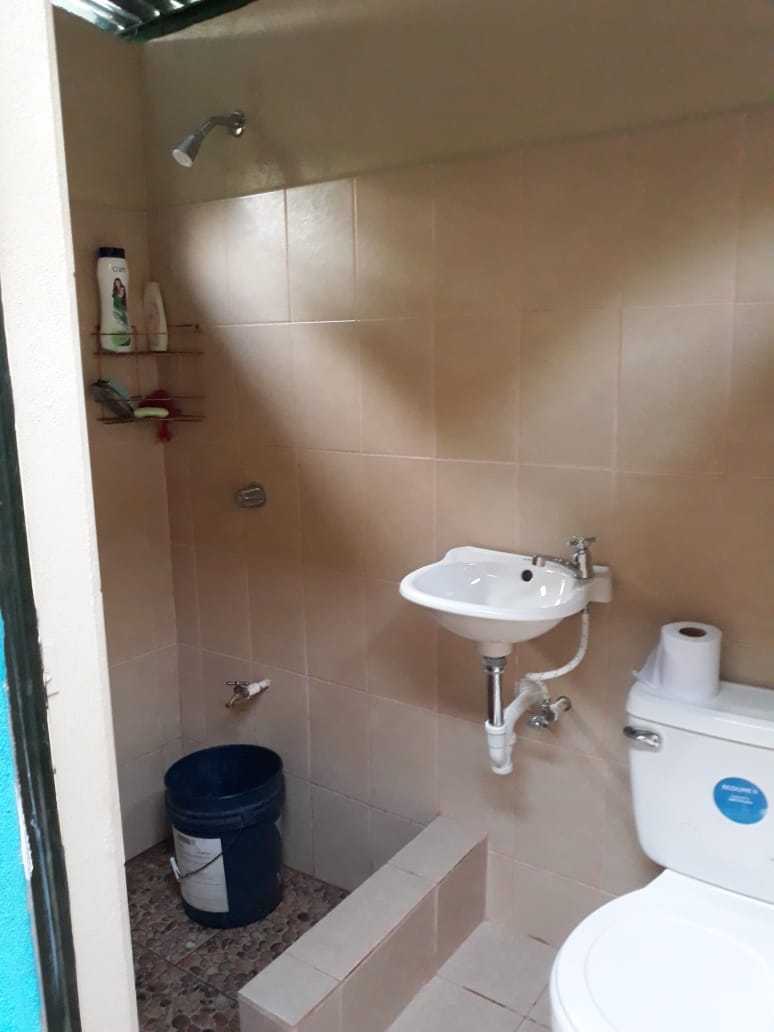
Amigos digs wells, runs water lines and installs bathrooms such as the one pictured above, AND they teach organic farming methods to the locals so they can improve their standard of living.  It’s an amazing organization with a terrific track record of improving people’s lives.

I encourage you to read the interview with John Bland, founder of Amigos for Christ.  You may be moved to take a week off from work and head to Nicaragua to help drill a well.  Or maybe you’d like to send Amigos a donation.  Or even offer up a good wish or two for their continued success.

Whatever you do, I dare you not to be inspired.

pam lazos 3.11.20

Posted in NGOs, organic farming, United Nations, water, water conservation, water purification, water security | Tagged , , , , , , , , , | 49 Comments

The Night Bus

The Night Bus

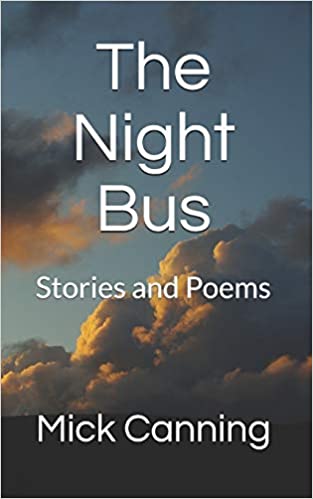
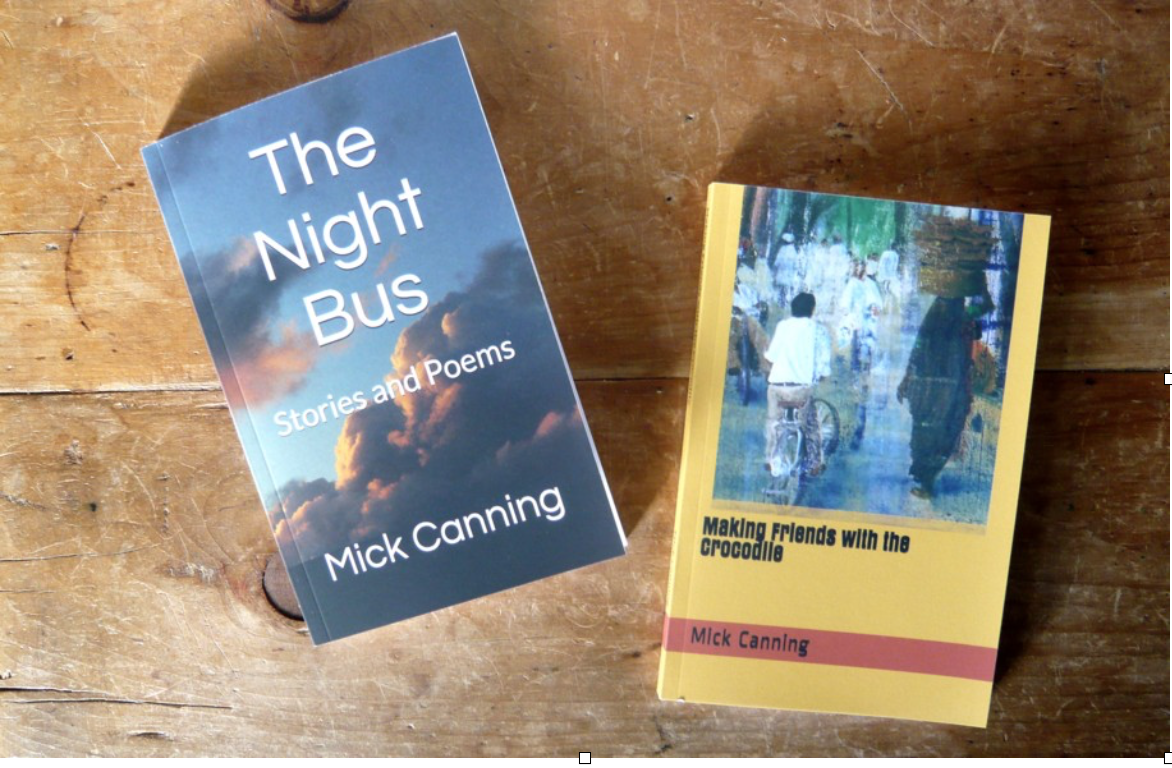
You know that lovely feeling you get when you crack the spine on a book and after a few sentences in you know you’re in the presence of a master?  That was my takeaway from reading The Night Bus, by U.K. resident, Mick Canning, a collection of stories and poems teeming with vitality and resonant with the flavor of the wide open world.  The Night Bus is Mick’s second indie-published work; the first was a novel, Making Friends with the Crocodile.  

So enthralled was I with Mick’s writing that I asked him if he would stop by and chat a little.  This is what ensued.

First, congratulations on the release of The Night Bus (Nov. 2019).  It’s always exciting to release a new work, and quite cathartic, I think. How long have you been writing, Mick?  How did you first get started?

I’ve always written – I used to make up stories as a small child and read them out to my parents. I am one of those writers who ‘has to write’ – it is almost a compulsion. I always carry a notebook and scribble down ideas for new pieces or something I’m working on at the time.

From where do your ideas come?  What inspires you?  How do you keep the creative spark going?

If I knew where they came from, I’d market that! But seriously, we all have ideas. We see or think of something and think it might make a good story, but the difference is that the writer notes them down and works on some of them later. I don’t think there is anything in particular that inspires me, though. It can be as diverse as a chance thought, something in the news or a view of some mountains. As for keeping it going, when I feel a bit stuck or stale, I go for a long walk. It never fails to free whatever block I have at the time.

These have also been my experiences.  If I fail to write something down, the idea seems lost forever.  Similarly, if I get stuck, a walk dislodges all the blocks, probably because you’re giving your body something to do so your mind is free to think as it pleases.  It’s amazing how many writers have similar experiences.  From reading your stories, I assume you’ve traveled extensively.  What were some of the most profound places you’ve been to?  How does travel inform your writing?

If by profound you mean intense, then India immediately comes to mind. It is an intense country in many ways, a country of extremes and intensity. As such, it provides marvelous colour and background for stories. My novel, Making Friends with the Crocodile, is set in an Indian village, and a lot of what happens there – especially the round of day to day life – comes from my own experiences in a similar village. And then the title piece of The Night Bus is based strongly on a bus journey through Northern India and Nepal I took over thirty years ago. But places closer to home inspire me, too. I’ve set a lot of my writing in the UK (not surprisingly), and it’s possible to find the exotic even in places that might be considered more mundane since, in the end, it is often people that make places.

Have you had any of the metaphysical experiences you write about in your stories? If so, tell us about one.

They’re all out of my imagination, sadly!

What message do you most want to convey with your writing?

That would depend on the story or poem. In Making Friends with the Crocodile, I am writing very overtly about the prejudices and abuse faced by women, but in other pieces I am usually aiming to entertain rather than get a message across. That doesn’t mean I don’t throw in a few pointers or make a few points, of course. As someone with strong opinions about many subjects, I think that’s inevitable.

Do you go for a clear message or do you want the reader to extrapolate?

That rather depends – see above!

Do you work outside of writing, i.e., do you have day job?

I’m now retired.

What has been your greatest writing lesson?  How about life lesson?

As far as writing is concerned, there is no substitute for writing as much and as often as possible. That is how you develop your style. To read as much and as widely as possible. That is how you learn so much about structuring. And finally to actually learn and know how to use grammar. That is how you stop your books sounding lazy and amateurish. And then a serious edit. I have read many, many samples of self-published books on Amazon, and I am amazed and appalled at how incredibly sloppy and poor some of them are. It is scary enough putting yourself out in the world to be read and judged by strangers, so why make yourself look extra foolish? And make someone who has bought your book feel short-changed and resentful?

A life lesson? Live in the present. It’s all we have.

Who are your biggest influences?  Inspirations?  Present day? Historical?

The writers who have had the greatest influence on me are possibly the South American short story writer Jorge Luis Borges and the novelist Hermann Hesse, but I suspect that everything I’ve read has had some sort of influence, and it’s more than likely that I don’t recognize some of them. Perhaps readers might be more likely to spot them.

Now that you mention Borges, I can see his influence on your work.  He’s a very trippy (metaphysical) writer in my opinion.  As far as you own work, where do you want to be ten years from now as far as creative accomplishments?

It would be nice to sell a few more books…

I know from reading your blog that you have a deep respect for nature and the environment.  What can we do as writers to help nature out or at least educate our fellows in this critical time?

The obvious, really. Use whichever platforms we have to educate and inform. My blog reaches more readers than my books, and on a regular basis, so that is where I write on environmental issues. That’s not to say I won’t perhaps explore those other avenues sometime.

Anything else you want to add?

Thanks for inviting me here, Pam.

My pleaseure, Mick.  I look forward to your future works. 

Making Friends with the Crocodile:

Siddiqa was only just into her teens when she was forced to leave her home to live with her new husband and his family in another village. The years have passed, and now Siddiqa has three children of her own. Her grown up son has brought his new wife, Naira, to live with them, so Siddiqa is no longer the lowliest in the household, for she has a daughter-in-law.

Life in rural India is particularly harsh for women. This novel explores themes of female oppression and tradition and asks whether the next generation will find life any easier.

The Night Bus:

This book is in two parts. A collection of seven short – and not so short – stories, which make up the bulk of the book, followed by a selection of recent poems.
Travel has always been a passion of mine and, one way or another, nearly every piece here is to do with journeys. Some of the stories are quite dark, but the majority of the poems have a lighter touch.

Two stories are set in India; in one, a young man goes in search of a mysterious destiny, while in the other a traveling Englishman becomes embroiled in a chilling disappearance. One story speaks of the support and comradeship of a close-knit island community while another tells of jealous intelligences far older than mankind.

There is one long poem, which gives the title to this collection and tells of a journey across India and into the mountains. There is also a short series of poems about the ancient paths and tracks of Britain; in these, especially, a love of the natural world shines through.

Mick can be reached at:

http://www.mickcanning.co

pam lazos 3.8.20

Posted in author interview, book promotion, book release, books, Uncategorized | Tagged , , , , , , , , , , , | 19 Comments

Let it Snow Geese


Let It Snow Geese

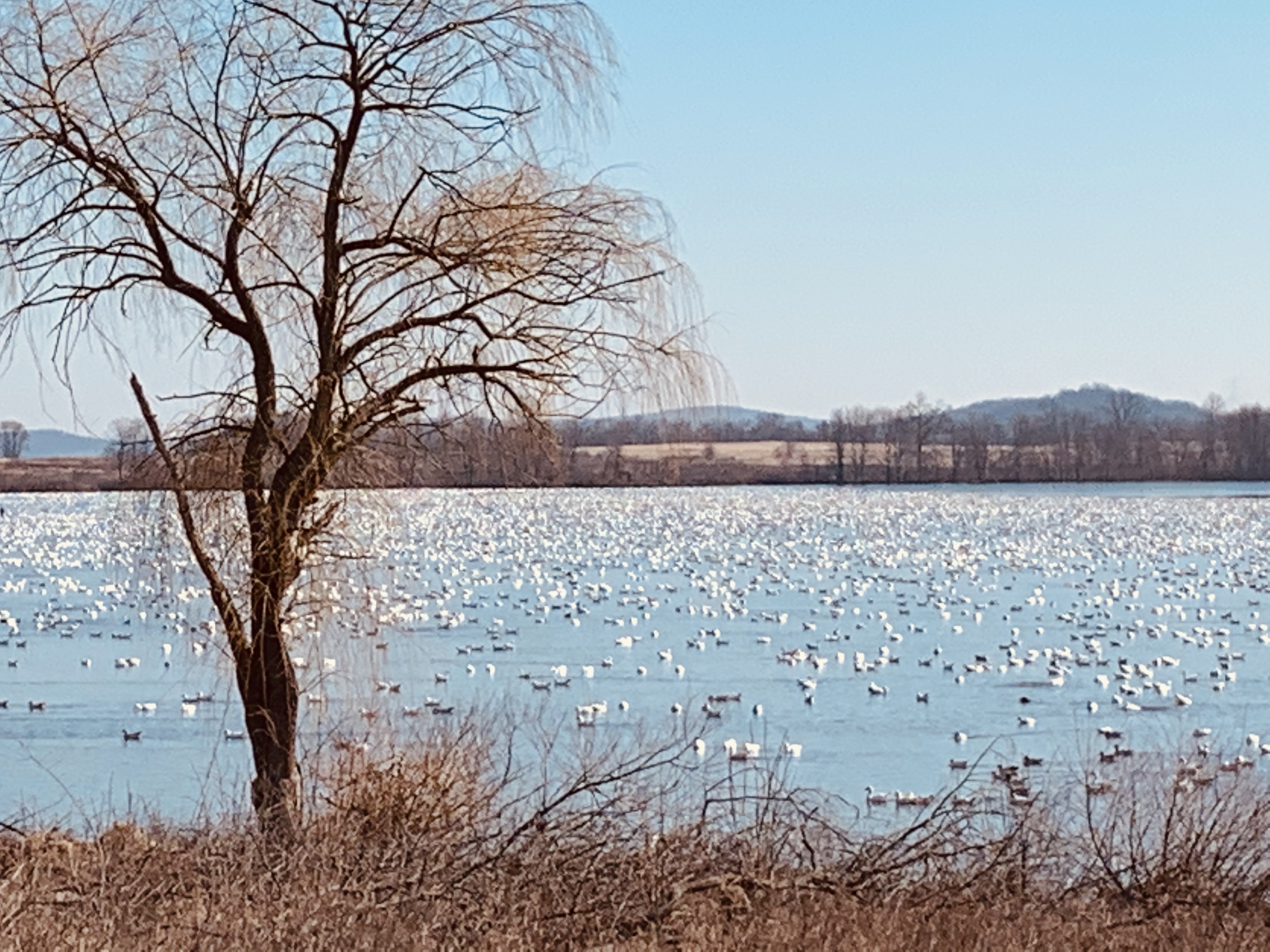
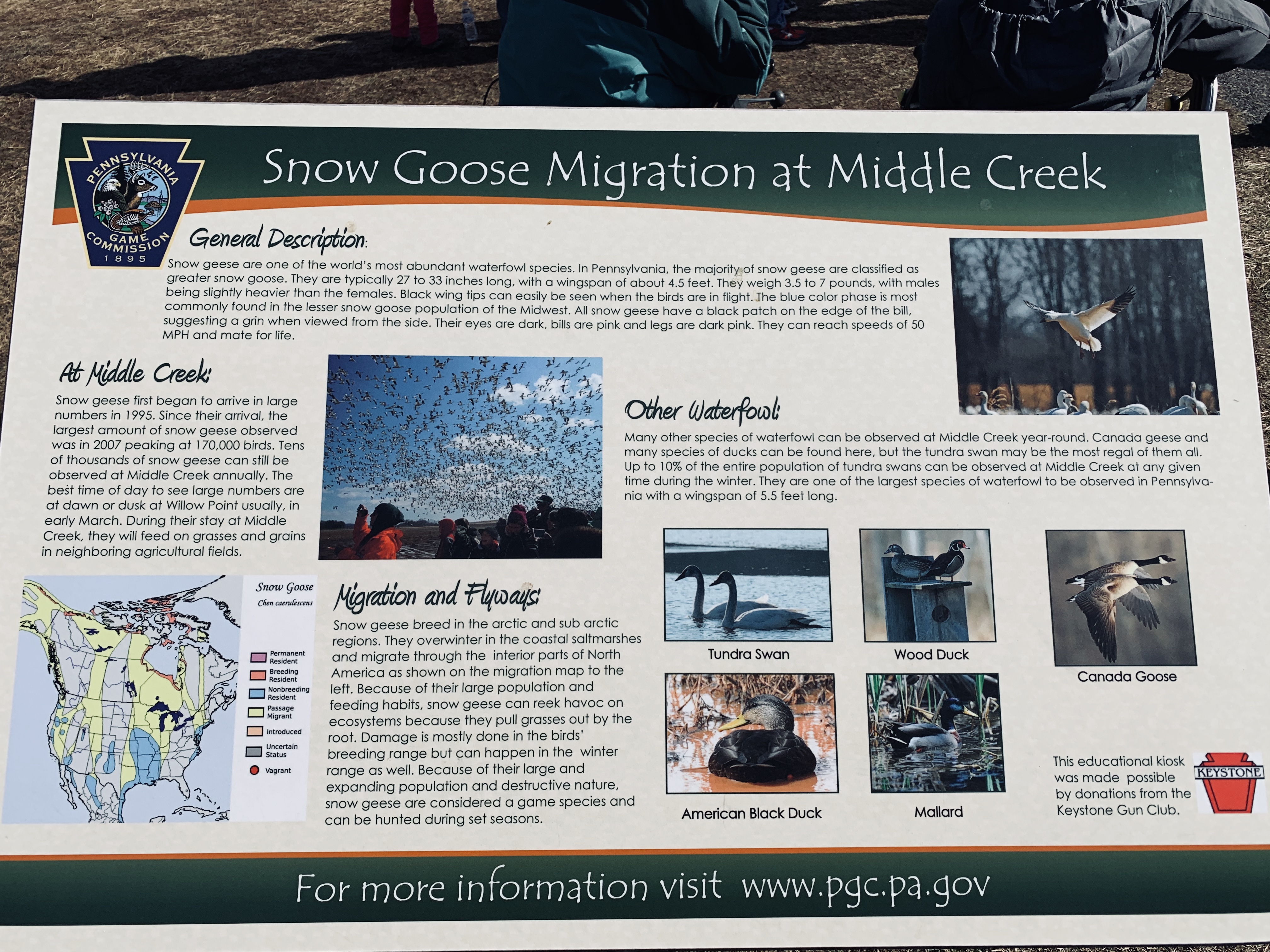
Middle Creek Wildlife Management Area in Kleinfeltersville in Lancaster and Lebanon counties is a 6,000-acre parcel that provides a stopover for migrating birds en route from sunnier climes south of Pennsylvania to their spring and summer breeding grounds on the Arctic tundra. 

Operated by the Pennsylvania Game Commission, the site was created from 1965 to 1972 from pieces of various local farms and offered local hunters the opportunity to enter a drawing to win one of a set amount of licenses to hunt Canadian geese. 

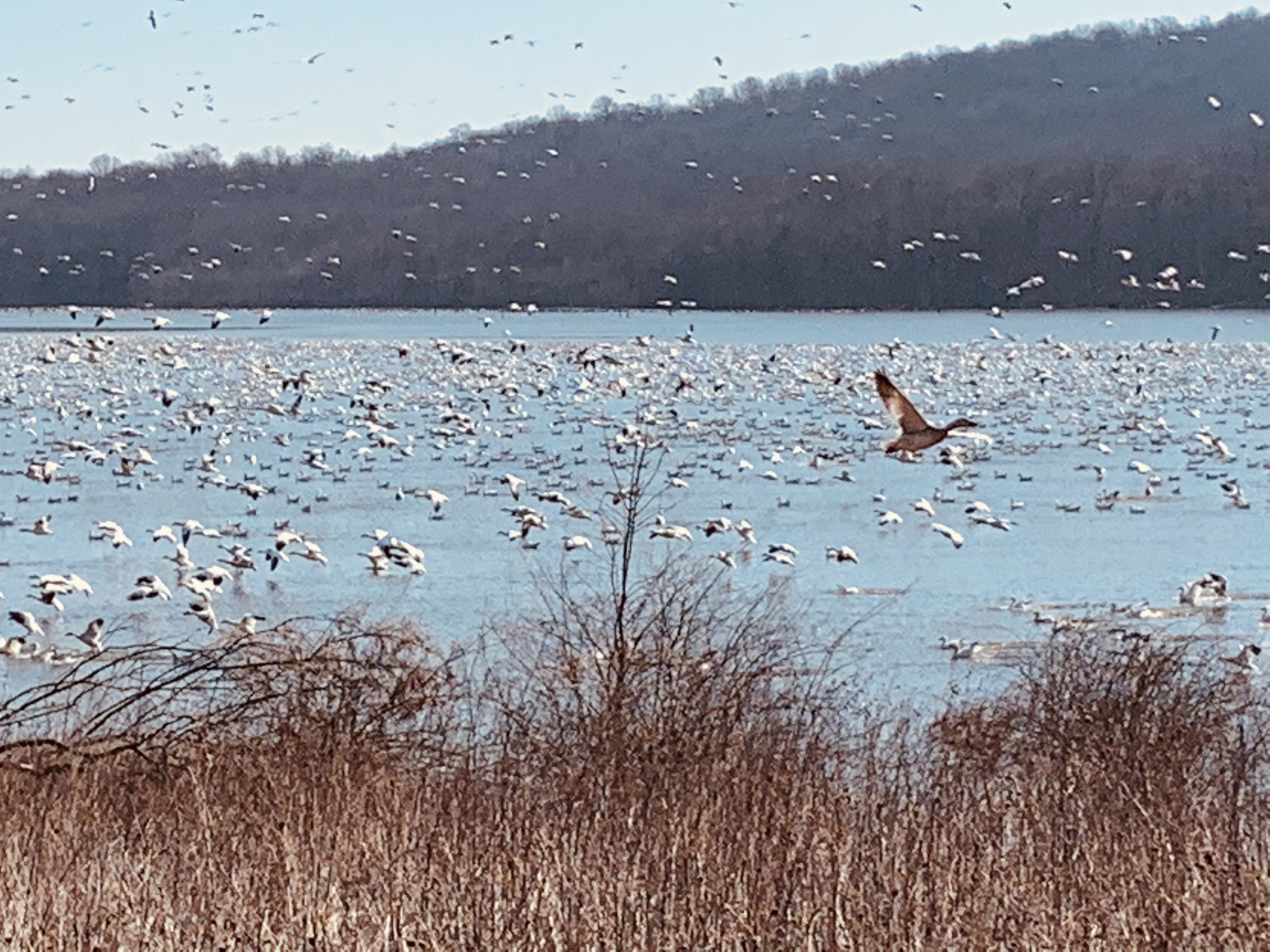
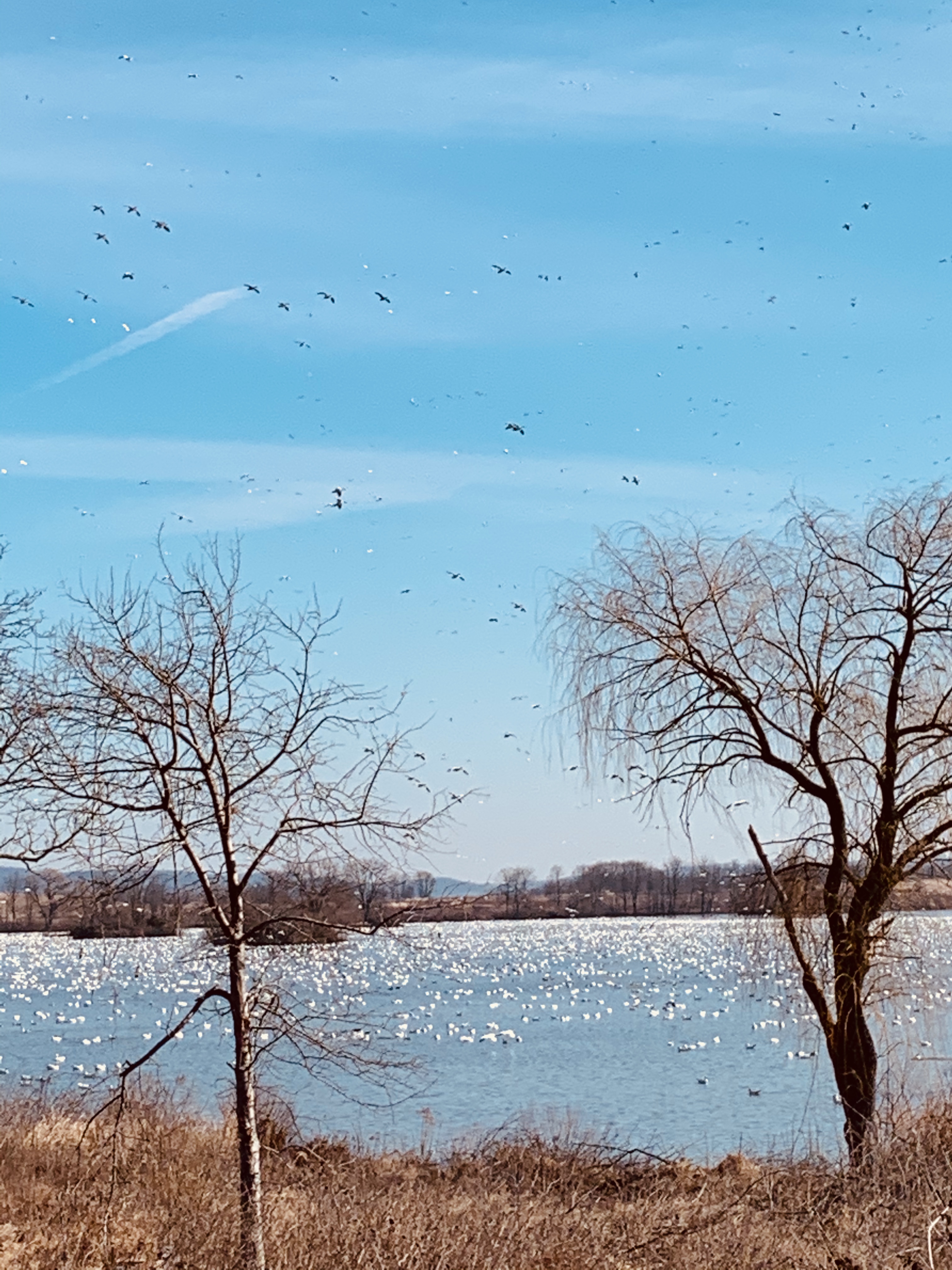
Fast forward to present day where thousands of snow geese — who mate for life, by the way — take a break on their long flight home.  On President’s Day this year, about 130,000 geese took a swim, grabbed some lunch and raised a ruckus at Middle Creek, drawing hundreds of locals, many with camera lenses as long as your arm, to witness the spectacle. 

Once home, a pair of snow geese will produce between two and six eggs which the female will incubate over a period of 22 to 25 days.  Come fall, the family hits the sky again, migrating along the Atlantic Coast to warmer weather. 

The record for the most snow geese at Middle Creek was set on February 21, 2018 at 200,000 geese. I have no idea how they count them.

I took these pictures with my phone so the depth is no where near what it could be, but you get the idea.  The most intriguing part to me was not just the number of geese but the noise they make.  It’s a real treat to see it live, but if you can’t get there…  

go here for the live snow geese cam and see these beautiful birds for yourself.  Hurry, while they’re still hanging around the place. 

pam lazos 2.23.20

Posted in Uncategorized | Tagged , , , , , | 41 Comments

Happy Hearts


HAPPY HEARTS

Happy Valentine’s Day, peeps.  Kiss your honey, your kids, your cats, your dogs, yourself even, and everyone else you love to have in your life.  It will make them feel loved and a lot lighter, and it will boost your immune system, too!  #GiveLove #SpreadLove #BigLove

Bleeding hearts…

Foody hearts…

Electric hearts…

Green and glowing hearts…

Cups of hearts…

Home is where the heart is.

Spread Love! Give Love!  Big Love! oxo

pam lazos 2.14.20
Posted in Uncategorized | Tagged , , , , , | 23 Comments