It’s always been interesting to me how the holy days in the christian calendar overlap with the pagan holidays of old. Before we had Christmas, there was the Germanic Yule — which gave us things like yuletide caroling and the yule log — and the Roman Saturnalia, a rousing ruckus of a time when laws were temporarily suspended and people exchanged gifts, got rip-roaring drunk, and ate — wait for it — fruit cake!
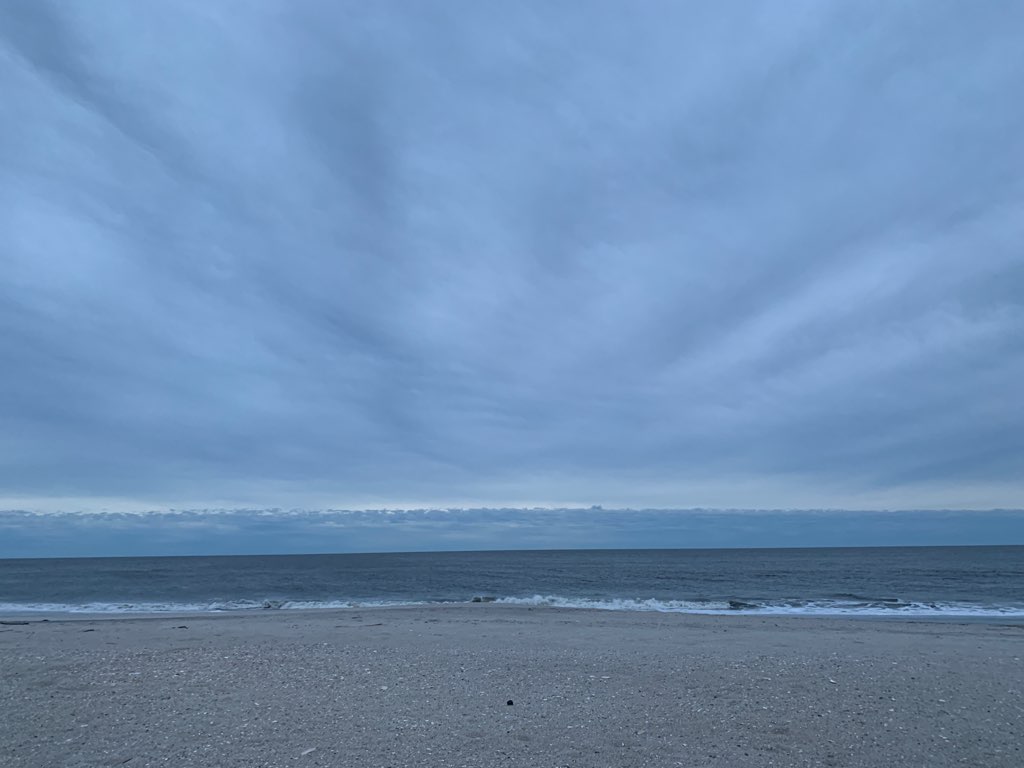
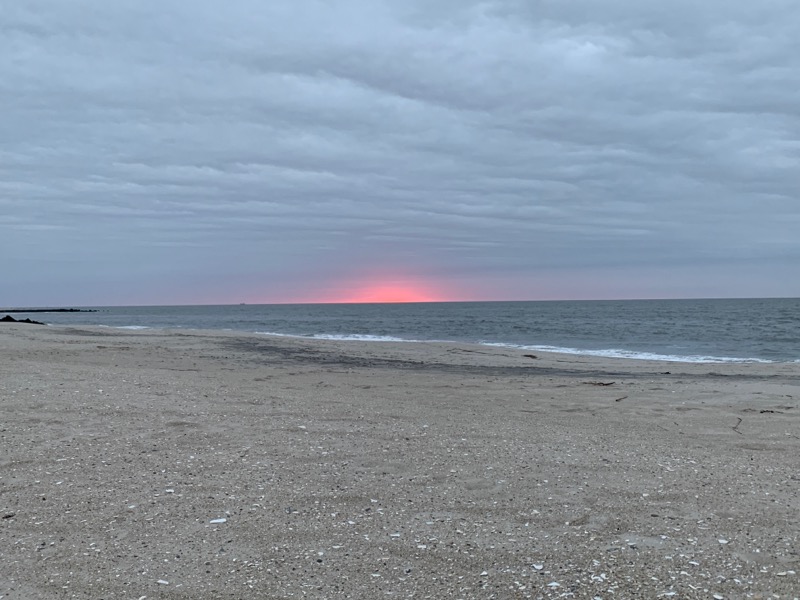
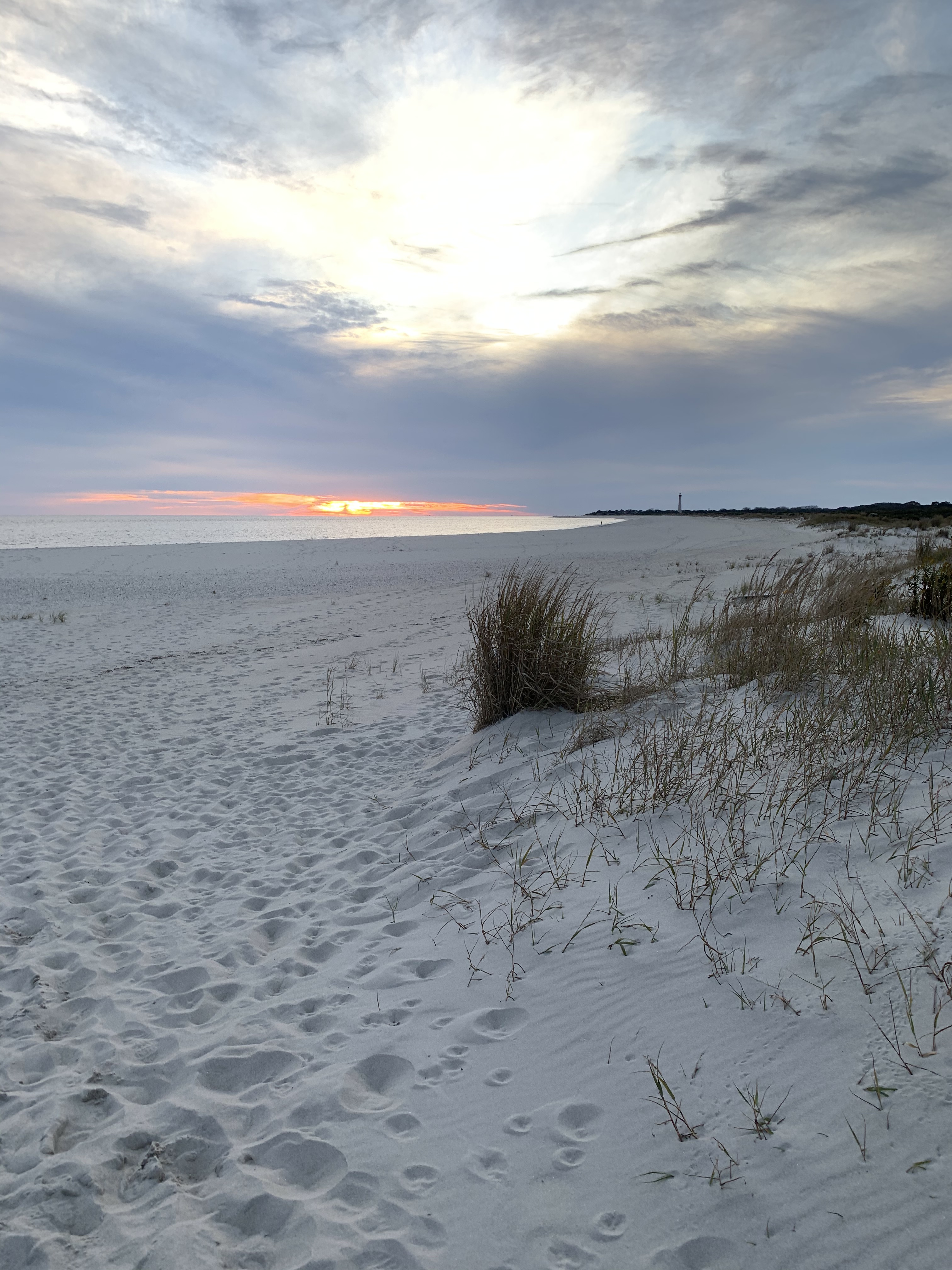
Moody Sunrise, Cape May, NJ
No matter what your holiday you celebrate, remember there is no wine without clean water. A little something to ponder while you drink your Christmas ale.
Thanks to Lisa Walker for this great article and helpful links on (up), (re), and (free)-cycling!
by Lisa Walker
Many of us would love to earn extra money but it can be difficult to figure out the best way to get started. For some, finding the time to try something new is tricky, while others strive to be careful about making sure they’re still being eco-friendly. Selling items through the second-hand economy is a great way to make extra money, and the good news is that it’s environmentally sound. Whether you want to learn how to recycle items to turn them into art or just get rid of all the things you no longer need, there are plenty of ways you can earn cash by taking advantage of items you already have.
Think about the tools you’ll need to make the process easier; there are many sites and apps that will help you sell belongings, whereas recycling bins will help you keep things sorted and neat so you can easily find what you need. If you’re thinking of having a garage sale, you’ll need to prepare well with signage, display tables, and racks for hanging clothing.
Here are a few tips from Neighborhood Sprout on how to get started in the second-hand industry.
Register Your Business
When you decide to delve into the world of the second-hand economy, you need to make sure you’re operating legally. Many states have very strict rules about what constitutes a business, so if you intend to do this on a regular basis going forward, you may need to register as an LLC, for example. There are many advantages of doing so (liability protection, for instance), and the process is fairly straightforward when you use formation services to help you through the process.
Do Some Research on Recycling
If you’re planning a future trip to Target to upgrade your office furniture, recycling the things you no longer use is a great way to earn the extra cash you’ll need. However, it’s important to do a bit of research first. Knowing how to recycle certain items or convert those items into something new requires knowledge. For example, if you want to find a new way to use something old — such as turning colored glass bottles into a mosaic piece you can sell — you’ll want to know how to do it properly and to your advantage. Alternatively, if you just want to get rid of that glass bottle, reach out to the local recycling center to see if they accept glass, as many don’t. Others don’t offer a pickup service but will accept drop-offs if you bring items yourself.
If you’re looking to get rid of some old things and don’t need to sell them, try sitting them out on the curb for passersby to take. Known as “freecycling,” this is a great way to declutter your home without sending more trash to a landfill — a huge contributor to climate change.
Sell on an App
There are several sites and apps that will help you sell the things you no longer want or need, so look online to find out more about your options. Some apps take a small cut of your sale but offer prepaid shipping labels to make the process easier. Check out Vinted, Poshmark, eBay, and Etsy (which only sells handmade or vintage items) and read about their policies to get an idea of how you can get started.
Hold the Perfect Garage Sale
The right garage sale can help you get rid of anything you no longer use while helping you make some cash at the same time. Do some promoting with brightly-colored posters around the neighborhood, set up displays to attract attention from the street, and be prepared to barter a bit. Most garage sale shoppers love finding a deal, so you might consider pricing your items a little higher so you’ll have room to haggle.
Start an Etsy Shop
If you have a creative streak or a great eye for vintage pieces, you can find quite a bit of success on sites like Etsy, where shoppers are looking for something unique. You can recycle items you no longer want — like turning old clothes and linens into tea towels, quilts, or dresses for little girls, for instance — and earn a nice profit by using a crafty spin.
If you’re more into vintage fare, head to your local second-hand shop or antique store and look for pieces with promise. If you can clean them up and take a great photo or two, you’re bound to find a buyer who is willing to pay a pretty penny. In fact, if you already have high-quality photos of these items on social media, you can simply use a free tool to remove background elements that you don’t want to show in the listing.
Earning money via the second-hand economy can be both fun and rewarding, as long as you feel prepared going into it. Doing a little research will help you get a great start, and you may even make a new career for yourself while doing something you enjoy.
Lisa Walker is a proud SAHM (Stay at Home Mom). She enjoys trail hiking and beach-coming with her husband Jake when not busy with her boys and home improvement projects. She created NeighborhoodSprout.org as a passion project to share her love of homeownership with others.
As many of you know, I am crazy for clean, safe water for all and work toward that end both in my J.O.B. and in my volunteer life. So I am sharing the post I made for the Global Water Alliance today with some water facts for you to ponder as you carve your turkey and relax with family and friends today. If you are one of the people that enjoys unfettered access to clean water, say a little prayer of thanks for your luxury and another one that all people will one day share your bounty. I hope you have a blessed Thanksgiving filled with family and friends, good food, a solid roof over your head, plenty of laughter, and clean water for all. pl — 11.25.21
Happy Thanksgiving! Here at GWA we have much to be thankful for, but most of all we are grateful for the gift of clean water! GWA envisions a world where all people have access to safe drinking water and sanitation. The UN and WHO estimate that around the world, over 785 million people don’t have access to basic water services while more than 884 million people don’t have safe drinking water.
We’re not on the straightaway yet, but we are making progress with projects like Panyebar in Guatemala and our arsenic removal work in West Bengal, India.
President, Christiaan Morssink and students from Temple’s EWB chapter at World Toilet Day
Become a member of Global Water Alliance today where you will collaborate with our partners in the field, such as Engineers Without Borders, in bringing the gift of clean water to a family or community, help us to educate the up-and-coming groups of students and future water leaders who will ultimately take the baton on behalf of clean, safe water, and to finally eradicate the lack of access to WASH, water, sanitation and hygiene, for all people across the globe, all of which cannot be done without a united, consolidated effort.
Clean water is a right, not a privilege. Let’s all exercise our rights.
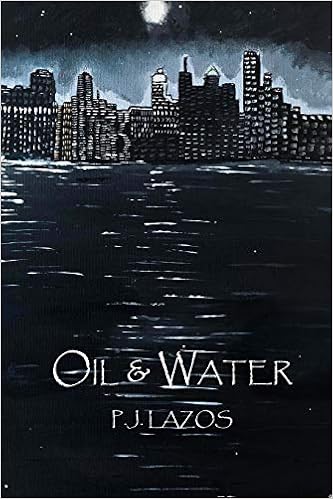
Pam Lazos is an environmental lawyer with a passion for assuring access to clean water for all, a blogger, author of the novel Oil and Water, about oil spills and green technology, and the VP for Communications at Global Water Alliance. She practices laughter daily.
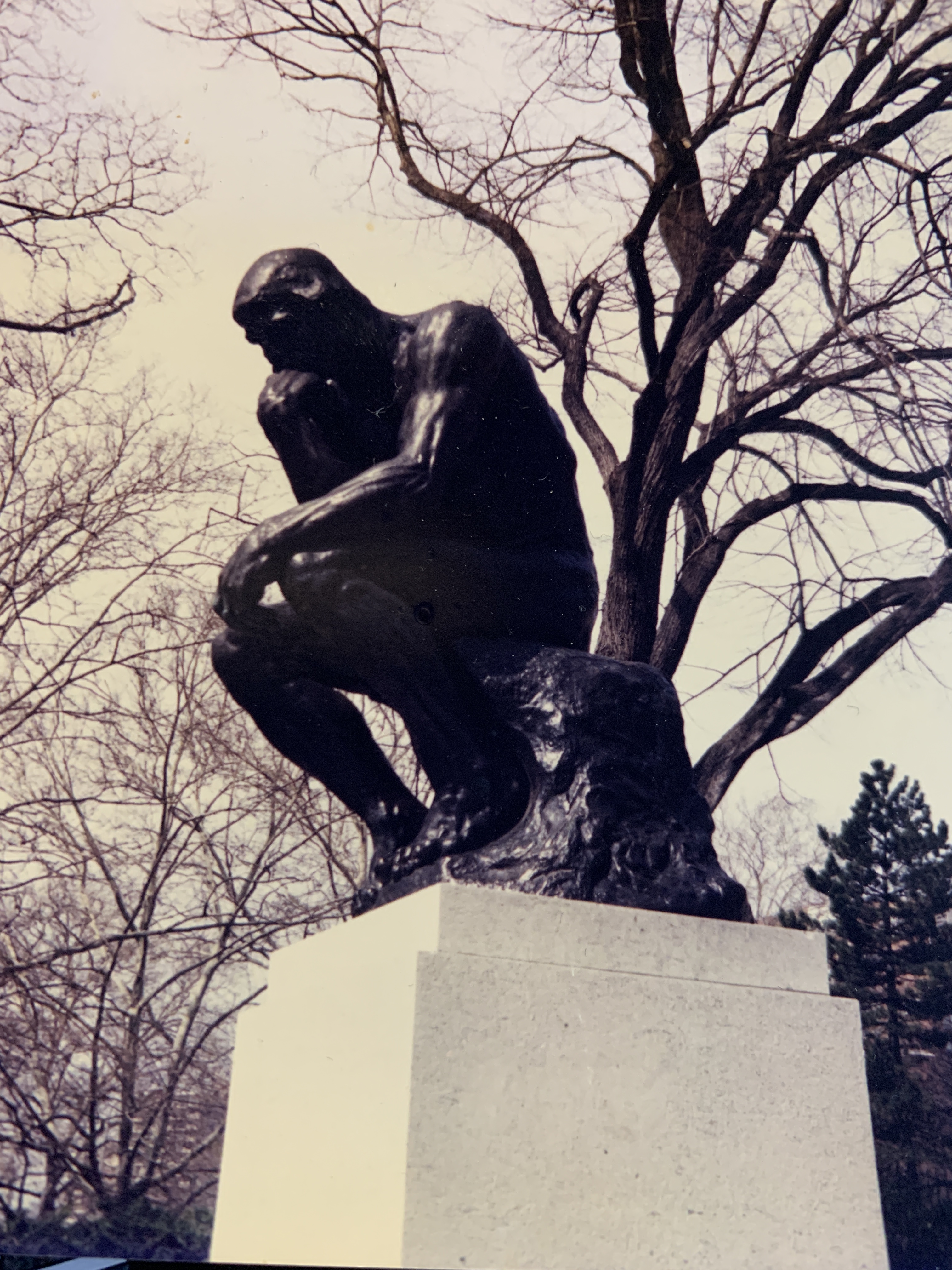
He’s probably thinking about the lack of access to improved sanitation for about 1/3 of the planet’s inhabitants.
Today is World Toilet Day. Let’s review a few facts:
How does a species evolve? For centuries, people lived side-by-side with their waste, throwing it into the streets, into the rivers, over the back fence, out of sight, out of mind.
But that’s never been the best solution since waste by definition is full of pathogens that can seriously impact human health and with almost 8 billion of us on the planet, the waste stream is rising.
Children are an especially vulnerable population.
As are those living in rural communities where access to water is expensive and often prohibitive due to difficult terrain and distance from the wastewater treatment plant.
In developing countries, women and girls bear the extra burden of a lack of access to clean, safe water, missing school because of starting their menses, or being removed from school to walk long distances to get water for the family.
Technologies such as the compostable toilet can ease the burden of deaths related to lack of sanitation.
Today, skip the coffee and instead, make a donation in favor of WASH — water, sanitation and hygiene. Your donation to GWA will support programs and projects dedicated to bringing water to those who need it most. Thank you in advance for your support.
My friend and colleague, Tom McKeon has written this lovely post about a composting toilet known as “The Crapper.” If you live in a tiny house, have an RV, or just want to learn more about composting toilets, read on.
Friday, November 19th is World Toilet Day and what better way to celebrate than with a visit to The Crapper! If you live in the Philly area, we hope to see you there. Details on the event are as follows:
photo courtesy of Temple Tiny House
Friday, November 19th 3 to 5 p.m. Where: Tiny House, Temple University Campus at Diamond & Carlisle Streets, Philadelphia, PA What: The Global Water Alliance (GWA) in partnership with Temple University’s Office of Sustainability, the Fox Entrepreneurship Academy and Engineers Without Borders plan to display a compostable toilet at Temple University’s Tiny House, Diamond and Carlisle Streets, in observation of World Toilet Day. The U.N. estimates that 3.6 billion people don’t have access to a working toilet and proper, improved sanitation. That’s almost half the world! To celebrate this global holiday and raise awareness by engaging the community around water access, sanitation and hygiene, or WASH, issues The Crapper will be on display. GWA hopes the event will also serve as a networking opportunity, connecting students and the community to upcoming GWA events, conferences, and research opportunities.
Although we will display The Crapper for demonstration purposes only, it is functional. It uses urine diversion and the natural processes of decomposition and evaporation to breakdown and reduce the volume of human waste, transforming it into a soil-like compost material.
It starts with a horizontally mounted rotating drum, much like a garden composter, that sits inside a box. This proven technology has been the industry standard since the 1970s in the USA and Canada.
To use, start by filling the drum with 1 gallon of damp and loose compost material — coconut coir is popular. Then you pee and poop as you do. No need to cover it with saw dust, dry leaves, or ash afterwards, you just spin it once after every use. The urine diversion system routes the urine (which is generally sterile) either into a container for later disposal or is discharged directly into a soak pit.
There is no need to clean the drum and the bin – it is actually better if some material carries over to start the composting process with the next batch. You would clean the seat as you would a seat on a flush toilet, and the same goes for the interior interface under the seat. The exterior can also be wiped down. Any cleaning product can be used.
The toilet only needs to be cleaned once every two months. The waste entering the toilets is over 90% water, which is evaporated and carried back to the atmosphere through the vent system. The urine diversion system carries sterile urine to storage containers to be diluted and used as fertilizer or discharged directly into the ground via a shallow soak pit.
The natural decomposition process, which is essentially the same as in your standard backyard garden composter, is enhanced in waterless composting toilets by manipulating the environment in the composting chamber.
The correct balance between oxygen, moisture, heat and organic material is needed to ensure a rich environment for the aerobic bacteria that decomposes the waste. This ensures odor-free operation and complete decomposition of waste.
Natural aerobic decomposition eliminates dangerous pathogens and foul odors. It also reduces the volume of the waste by 80% so the user only needs to empty the drum into the secondary storage container once every 2 weeks.
After you empty it into the secondary container, the composting solid waste will continue to break down underneath the drum. After emptying the drum a few times over 2 months you can take out the composting bin to bury.
To do so, you dig a hole a foot deep, put the compost in the hole, cover it with wood ash, charcoal ash or agricultural lime (this is to dry it out & raise the pH which kills the pathogens thereby disinfecting the waste) and finally cover it all over with dirt and you’re done!
The compost from the toilet is safe to be used as a fertilizer. When human waste is properly composted, levels of pathogens or viruses in the waste are dramatically reduced. The pathogens and viruses are further destroyed by desiccation (drying out).
It is recommended that the soil-like compost material coming out of a composting toilet be buried nearby with an ash/lime cover as a final disinfectant. This will raise the pH of the waste – further destroying any remaining pathogens and viruses that thrive in an acidic environment and die in a basic one.
Under certain circumstances, it can be used as a nutrient-rich fertilizer for growing trees. However it is not recommended for surface crops since there is the possibility that some pathogens remain in the waste, which can be harmful if exposed to. As long as the compost is in the ground, then the exposure route is not present.
Tom McKeon holds a master’s in public health from the University of Pennsylvania and is currently a Ph.D. student at Temple University studying geography where he uses statistics, GIS, and epidemiological concepts to analyze place-based interventions to improve community health by maintaining and improving water quality through community education, biological sampling, chemical sampling, and designing restoration proposals.
Glasgow, Scotland, COP26 conference: While world leaders continue their debate over who needs to take responsibility for climate change and how much it’s going to cost, the earth keeps heating up. If your plumbing breaks and you can no longer use your sink or toilet, you fix it, right? regardless of cost?– because you need it. We all need this planet. The time for action is now — before it’s too late. pl
As anyone reading the newspapers knows, climate change has had a devastating effect on the planet, causing rampant and incessant flooding, irrational warming trends, droughts, wildfires, and more, all corroborating the effects of the earth’s changing weather patterns and resulting in atmospheric and climatic conditions that began slowly enough over the last two centuries, but which have drastically changed altered the earth’s evolution over the last few decades. The cause is obvious: human activity and an unquenchable thirst for energy have contributed largely to the current imbalance.
The drilling of fossils which are then refined into petroleum products such as gas, diesel and plastic; the removal of associated gas through gas flaring; burning coal for electricity and heat; all cause an increase in the release of green house gas emissions into the atmosphere. And when these gases are trapped in the atmosphere, the earth’s surface temperatures increases, leading to warmer than the normal temperatures. The more heat that accumulates, the more we are on track to alter the planet’s climate irrevocably.
Changing weather patterns are occurring across all continents, regions and countries of the world, most especially, the Arctic regions. The acceleration of glaciers melting in Antarctica and Greenland has led to massive amounts of melted glacial (cold!) water entering warmer ocean waters and resulting in slower ocean currents and rising seal levels. Glaciers are an essential makeup of the planet’s structure because ice acts as a protective cover for the earth and oceans, keeping the earth’s secrets. When viewed from an aerial survey, these massive white sheets on the earth’s surface help to reflect back excess heat entering into the atmosphere through solar radiation. Fun fact: the solar energy falling on the planet in a single week is greater than the total energy produced by all the coal, gasoline and other fuels that man has ever burned, but by the time it reaches the earth’s atmosphere, much of this radiant energy is reflected back and scattered into space — partly because of these huge glaciers — while part of it passes through the atmosphere, strikes the earth’s surface and is absorbed by the oceans, seas and land.
About ten percent of land on earth is covered with glacial ice. The Arctic region remains cooler then the equator because more of the heat that strikes it is reflected back while the equatorial and tropical regions absorb more of the sun’s rays. While ninety percent of glaciers can be found in Antarctica, the remaining ten percent are in the Greenland ice cap. Yet no matter where they are found, the prognosis is the same: glaciers are melting. Scientists believe that glacier melting in the Arctic will double by the end of the 21st century, resulting in potential sea level rise of up to twenty feet, leaving cities like New York and Miami under water. Currently, the Greenland ice sheets are disappearing four times faster than in 2003, contributing to 20% of the current sea level rise.
When sea ice forms as a result of colder temperatures, sea levels remain the same. This can be likened to a plastic bottle of water you keep in the freezer: when you thaw it out, the water level in the bottle remains the same. But in the case of melting glaciers, large chunks of ice are breaking off and falling into the ocean where they melt, causing sea level rise. The life-changing effects of melting glaciers on rising sea levels cannot be overemphasized: coastal erosion; increased intensity of flooding; more frequent and severe storm surges, hurricanes and typhoons; the collapse of fisheries; the loss of habitat for the walrus, polar bear and penguin to name a few.
Melting ice also effects weather patterns. The rapid warming of the Arctic brings about a rise in air and ocean temperatures leading to more melting ice and increased sea level rise. Normal patterns of ocean circulation are disrupted by warmer air temperatures reducing the effects that always kept the polar regions cold. In addition, the combination of warming air and ocean temperatures in both the Arctic and the tropics has caused changes to the jet stream as the polar vortex is seen more frequently to appear outside of the Arctic.
While glaciers have always melted somewhat in the warmer months, since the industrial revolution, human activity has increased this trend with reports showing that our failure to significantly curtail future emissions will result in more than a third of the world’s remaining glaciers melting before 2100. Currently, 95% of the oldest and thickest ice in the Arctic is already gone and scientists warn many of the Arctic regions could become completely free of ice by the middle of this century.
There has been much debate about cutting our carbon emissions and transitioning to an active dependence on greener energy alternatives like solar and wind energy, but there is really nothing to argue about. We need decisive and immediate action to stop our over dependence on fossil fuels and reduce carbon emissions if we are to reverse course and save our current ecosystem. Failure to act makes it quite possible that in the not too distant future, man himself might be and endangered species! Let’s hope that the COP26 summit in Glasgow, Scotland going on now achieves the hoped for results.
Ewoma is a Geographer, environmental advocate and blogger for environmental issues. She writes a monthly newsletter and hosts a podcast titled, Your Environment Matters. For more news about the environment, you can check out her blog: https://enviromentalline.blogspot.com. Her podcast can be heard on Spotify, Anchor, Copy RSS, Apple, Google, Breaker, Radio Public & a host of others. https://www.anchor.fm/ewoma-okah-avae. You can follow on Twitter: @ewomao; LinkedIn: Ewoma Okah-Avae; Pinterest: eokahavae
When we talk about WASH — water, sanitation and hygiene — it’s not just access to water that we are discussing but access to clean, safe, usable water. The reality is that more children die each year from lack of clean water — about 85,000 under the age of 15 — than from gun violence. The following piece was written by Michele Ganz, currently a PreMed Student at Thomas Jefferson University. Ganz will be starting Medical School in December 2021 in Italy, his country of origin. His post details the wonders of his experiences in Nairobi, Kenya and the beauty of people he met — many of which were affected by the scarcity of drinkable water and the diseases caused by it — and how he sees the world now as a result of that experience.pl
by Michele Ganz
It is November of the year 2019. I am a university student from Italy, studying in the USA, and now working in Kawanguware, Nairobi, Kenya, a place that I have never visited before. I have not even the most superficial knowledge of the language spoken in this area.
Kawangware is located close to Kikuyu, where I will live for the next few months until I depart to the American continent for the upcoming academic year. The decision to undergo such a trip came without deep pre-established reasoning and thought. I wanted to expand my understanding of the reality of practicing science (and medicine in this specific case), both clinical and research-based, in a developing world. In Kenya, there are mechanisms of applied science that are not merely comparable with those seen in modern societies. Even the most basic requirements for managing healthcare, such as water, are at stake for positive outcomes in this region of the world.
My trip to Kikuyu was supported by Marafiki Community International, through which I found the perfect opportunity to join an incredible group of young people and professionals who dedicated their time to the local community. The volunteer group I joined helped to provide healthcare treatments for this population, particularly for children under eight years old.
Kikuyu was not like my home. In Italy, home was a warm shower, a plate of flavorful pasta just served, and the purple foliage of the trees in front of the balcony. In Kikuyu, a tiny village located on Nairobi’s northwestern side from the Kenyan state’s city capital, the mountains’ colors and shapes get gray and neat, respectively, as soon as the sun comes out from the east. Heavy rains make the air thick, and the wind finds ways to run through the doors kept open to clear up the humidity.
In Kikuyu, it was hard to see the light outside coming into the room in the morning. The sun here rose slower, I thought, and seemed never to reach the center of the sky at midday. To my eyes, still impressed by the sandy, dry and brown streets, the buildings surrounding seemed all the same as the one I was living in, impressively square and lonely. When it rained, and it rained often, the streets were filled with water.
I learned a lot from living among the people of Kikuyu. They gave me opportunities to learn and expand my beliefs. They challenged me to sit down and understand how they could be so open to accepting this unpredictable and damaging weather. Rain destroys roads and places where people live every day in Kikuyu, and still, I am shocked and scared today rethinking of that Land so carelessly changing every day. I learned from them about the strength of character and the ability to shift to a positive mindset at any time. I learned the power of finding gratitude in times of pain and sorrow, in times where home is no longer a safe place to be, but still offers the chance to restart from something.
In addition, my experiences in Kikuyu caused me to undergo personal growth, developing my personality and career plans both as a student and a simple human being. There, I found new ways to help by learning and applying science and medicine and by sharing and reflecting on what is needed and still missing in this small region on earth. For the first time in my life, I could see science as an impactful tool of nature and nurture that could affect individuals of any age’s chances to start one’s life again. Moreover, I could see the health care system facing problems I have never seen before. I would never forget the love shared in each corner of the smallest little villages. From the little kids running to see the sunrise at six in the morning to the elderly looking over the place where they had grown up, I witnessed an ecosystem that works on its own, full of strengths but weakened by a socio-economic system of greed and personal benefits.
Today, I reason more deeply than I did before my time in Kikuyu. I wonder why some individuals should be better off by being born within one region instead of another? I wonder why there can be no equity in this distribution of goods among this place and on earth? Before landing in Nairobi, I had expectations that I could perhaps find explanations for those questions. And still, the injustice of life remains a mystery.
Back home in Italy today, with clear thoughts, I think of my experience in Kikuyu as life-changing. I learned insights about the need for medicine to provide real care that benefits individuals. I improved my critical reasoning ability to face the most unusual circumstances, from social situations to empathic critical evaluations in a system in total evolution.
Through this experience, I have grown as an educator of my mind and body. I can tell my mind sees further away in terms of opportunities given and not received, provided by nature or completely omit, just by unfairness and injustice. However, what can this reasoning tell if considered in content that may be found away from home? Perhaps if I were to be in Kawangware today, I would not use the same words to describe some content. Can it be true that a story worth telling here in Italy may obtain the same importance and respect and give out the same strength and truth even if experienced in Kawangware some time ago? Well, I believe that that it can.
I now see science as a founder and perhaps a teacher of Happiness as it creates opportunities for those who may feel they have less chance to pursue and find it on their own. In Kikuyu, I found Happiness where there could be no sign of it seen miles away even when the water pipes still kept my mouth drained for days and days out in the heavy arid ground of this Land. In the wetland that sees Kawangware as the main character of the story, I keep thinking while I walk through the trees in the mountains where I grew up, in Italy, that there are people I met there who have more Happiness than I do — without all the needs that are not, indeed, needed.
I stopped thinking that there can be right or wrong in this world; perhaps there can be a different approach. A thoughtful approach. A positive mindset. A modified mindset. A perfection through character. An intuitive perspective. An opportunity through the chance to make this Land a more suitable place to live.
Today, back home in Italy, I do not always have the chance to see the change I expect to see, both in Kawangware and Kikuyu. The health care system is still corrupted and unhealthy, and its barriers reinforce the many socio-economic disparities among the population.
And even though my time in the little corner of the world of Kikuyu, I can still see the time going by fast, and I can still see the sunset towards the hidden beautiful, nurtured reserve across the river and into the trees, my pines.
Michele Ganz is an Undergraduate Student at Thomas Jefferson University, scheduled to matriculate in December 2021. In addition to playing soccer at the collegiate level for the Thomas Jefferson Rams, Michele did substantial work in Africa, volunteering at a local Clinic in Kawangware, Kenya, to assist patients in need. The way of life there, mainly affected by scarcity of drinkable water and the diseases caused by it, deeply resonated with Ganz who established a charity-based organization — WeStillAlive — that helps to support, via donations, the work done by the non-profit organization Marafiki Community International. He also started a blog of the same name — WeStillAlive — where he discusses the lives of the people he met throughout his journey in Kenya in response to these water issues.
Tomorrow, following GWA’s 14th Annual Conference, we will kick off the award ceremony with a showing of “From the Ground Up,” a short documentary about lack of access to clean water in Tanzania. (spoiler alert: the story has a happy ending!)
If you want to sign up for the conference, there is still time.
Get the hell out of my head, Bo Burnham. I’ve been singing your songs from “Inside” since our summer vacation, 11 hours in the car and most of that time listening on repeat to the entire special over and over — thank you, Spotify — a hilarious, draining, outrageous, unsettling, depressing, visionary, apathetically supercharged, and, crazily enough, charming special.
If you haven’t watched “Inside,” then head on over to Netflix where Bo Burnham will stand you on your head. Dozens of astute societal observations about everything, all revealing an apocalyptic, dystopian, unambiguous anxiety so spot on that you can’t help but laugh out loud as you gaze in the mirror and recognize the similarities.
Perhaps it’s because Burnham has tapped into my existential angst with these catchy pop tunes that are so damn sticky. He admits to hating catchy pop tunes and hypocritically employing them in his work, doing what most of us do all the time without realizing it — making and breaking alliances to suit our needs in any given moment.
Burnham is a comedian, writer, musician, actor and filmmaker who rose to fame on Youtube in 2006 at the age of 16 with a video about his whole family believing he was gay.
Imagine having a bazillion followers on your Youtube channel, people lining up to hear what you have to say because they know you’re going to make them laugh and think and maybe even help them work through some things. Imagine all this while you are still in high school and still have acne. Eventually the pressure gets to even the most seasoned hands, but a kid?
Pressure? What pressure?
Burnham didn’t stop there, and in 2018, he recorded a half-hour special with Comedy Central, the youngest person to have that opportunity. Being a teen is a challenging time — all those raging hormones while you employ a new way of seeing the world results in emotional overload — but being a teen during the internet age while the world is your stage could be cataclysmic for even the most mentally prepared adults.
Paradoxically, in 2016 while touring for his comedy special, Make Happy, Burnham began suffering from “crippling anxiety” and took one giant step backward to work on improving his mental health. It took five years, but he felt he’d corralled the monster. As he took his first tentative steps to reenter the world of comedy, the world slapped back with the coronavirus. He laughs about it in All Eyes on Me which is not so much a victory lap around anxiety — a tribute to moving beyond mental incapacitation — but evidence of one way one guy managed it.
Are you feeling nervous? Are you having fun? It’s almost over, it’s just begun. Don’t overthink this, look in my eye. Don’t be scared, don’t be shy, Come on in, the water’s fine.
You say the ocean’s rising — like I give a shit. They say the whole world’s ending — honey, it already did. You’re not gonna slow it, Heaven knows you tried. Got it? Good, now get inside. Bo Burnham, All Eyes on Me
Lest you think Burnham wasted this time, during the period of self-imposed standup lockdown, you’d be wrong: he wrote and directed, Eighth Grade (2018), which won critical and commercial acclaim, and also starred in a Promising Young Woman (2020).
Back inside, Burnham siloed like the rest of the world, used the time to turn his rants against “systematic oppression, income inequality, the other stuff” into a 1h 27m thesis on the effed-up state of mankind — apparently he’s only able to produce work if it’s significant to him — and produced a sparkling diatribe, cloaked in comedy, of societal ills that are much more digestible coming from him than when reading the New York Times.
“If you wake up in a house that’s full of smoke, don’t panic, call me and I’ll tell you a joke.If you see white men dressed in white cloaks, don’t panic, call me and I’ll tell you a joke. Oh shit, should I be joking at at time like this?” Bo Burnham, Comedy
Burnham wrote, directed, filmed, edited, and starred in this project, all recorded at his guest house in Los Angeles. The special shows his arc from disillusionment to something less edgy and, if not happy, at least more hopeful, the world opening up again, the cloud of mental anxiety lifting, at least for now. There are profound bits of wisdom, frank moments on suicide and mental health, and hilarious ones on corporate exploitation and elitism, on racism, classism, on being unhinged, and how the internet has allowed everyone to have the ability to say “everything and anything, all of the time,” all to catchy pop tunes.
Have a watch. You’ll be tapping your toes all the way to redemption.
My wonderful friend, Jean Lee has featured Oil and Water on her newest adventure, a podcast called Story Cuppings where she takes a “sip” of each novel by reading and analyzing the first chapter. It’s a delight to hear her read it. Please enjoy and thanks for listening/reading.
Welcome back, my fellow creatives! We’ll continue tasting the wares of fellow indie authors I have gotten to know in this beautiful community through the years.
Let’s see how oil and water will taste in our brew today. It’s time to take a sip fromOil and Water by P.J. Lazos.