Mrs. Batman

Mrs. Batman

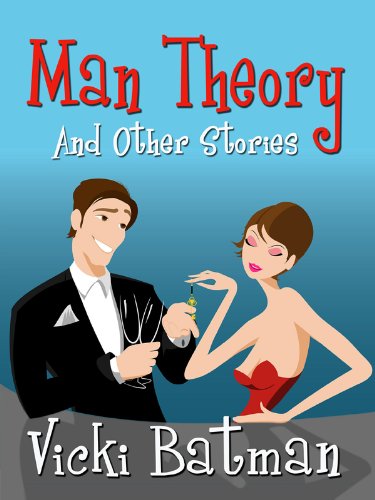
Vick Batman is an award-winning and Amazon bestselling author with three kids, two dogs, and a husband named Handsome.  She’s sold many romantic comedy works to the True magazines, several publishers, and most recently, two romantic comedy mysteries to The Wild Rose Press. She is a member of Romance Writers of America, Sisters in Crime, and several writing groups as well as an avid Jazzerciser, Handbag lover, Mahjong player, Yoga practitioner, Movie fan, Book devourer, Cat fancier and Best Mom Ever who adores her Handsome Hubby. Most days begin with her hands set to the keyboard, thinking “What if??”

And yes, Batman is her real name.

Temporarily Insane – “unpredictable combination of humor, romance, and mystery,”
“entertaining from the first page,” “fresh and endearing”

Synopsis for Temporarily Insane:  No man. Bad job. And Murder. Hattie Cooks is still searching for her dream job and one might be available…in the Big Apple, far from friends, family, and Allan Wellborn, the man who still makes her heart race. In the meantime, she finds temporary employment at an accounting firm where two auditor friends turn up dead.  Detective Allan Wellborn dropped Hattie for a Blonde Bimbo who, coincidentally, is employed at NLB where fishy things are taking place. When Allan interviews Hattie, he must determine why all signs point to her as a suspect.  Can Hattie discover why Allan dumped her and who is murdering auditors before death strikes again?


Thanks, Vicki!  And now, The Questions:

What’s your writing background?

I blame my friend, Susan, and she takes credit for it, too. She challenged several of us with a silly car game question: write the opening paragraph of a book using the word window. Two days later, I had eight chapters. She read them and said, “Keep going.” So I have.

What are your favorite books?

There are two books that wowed me instantly. I closed the covers and had a cool moment, then reread them. Come to Grief by Dick Francis and A Knight in Shining Armor by Jude Devereaux. Then there’s Rebecca by Daphne du Maurier.

Why mysteries?

Reading mysteries goes back to the Bobbsey Twins, Nancy Drew, Trixie Belden, Agatha Christie, the romantic mysteries of Mary Stewart, Emilie Loring. I just like them. I’ve added Dick Francis, Elizabeth George, Janet Evanovich.

Do you see the need for all these sub-genres or do you think we’ve become over-specialized?

I haven’t thought about this before. For a while, I didn’t like getting out of my comfort zone in my reading. I found a book that showed if you like so and so, you might like so and so, which for me, was Dick Francis. I also didn’t want to waste time reading something I might not like. Once I joined a book club, I got over that. Even if I don’t like a book, I’ve learned something.

Why writing and not ceramics, or gourmet cooking, or anything else really? If not writing, then what?

I’ve always been a huge reader, but I was fortunate to have a crafty mom. Every Monday, the women in her family met at my grandmother’s house. They were always making things, crochet, sewing, quilting, tatting. At age nine, my grandmother taught me embroidery and that continues to be a part of my life. A while back, I taught myself needlepoint and enjoy those projects. I truly believe those creative outlets fire my writing.

From where do your ideas come?

Sometimes, people say the craziest things. Sometimes, I say I am going to write a story about xyz. I’m a pantser and [like to] let it flow.  That said, I do know there’s a beginning, middle, black moment, the end, and lots of stuff in the middle.

What’s your routine? Do you work out while writing, take breaks, or simply gut it out?

I’m up at six and go to my workout. Back by 8:15 and shower, followed by eating breakfast and reading the paper. By 9:30 I’m working. Take a break for lunch or errands and back to work until 4:30 or 5. I don’t work on weekends since Handsome underwent cancer treatment eleven years ago.

What is your favorite place to walk?

On Sundays, Handsome and I walk to Starbucks with our malti-poos, Champ and Jones. Otherwise, I just enjoy walking, except when very very cold.

Do you think writing is a form of therapy and, if so, has it helped you work through anything in particular?

Writing has challenged me in a way nothing else has. When I told Handsome I’d started a book, he said, “You’ve changed.” I think he was uncomfortable with the change at that time.

Do you work outside of writing, i.e., do you have day job?

I basically quit the day job after two years of working for Handsome. He started a company and began travelling way too much. Our family life was a wreck. So once he could replace me, I stayed home. We had our moments monetarily, but pulled through.

Your perfect day – go.

I love being with friends and family and sharing laughs.

What has been your greatest writing lesson? How about life lesson?

For my first book, an author critiqued. She said to write tight and suggested a book on the subject. That made a great difference. As for life lesson…like I mentioned, Handsome had cancer. It was rough and still has to undergo treatments to fix what radiation did. Being with loved ones is the most important thing ever.

If you could be a character in any novel, what character would you be?

You’ll laugh. Bridget Jones.

And the last question.  Do you think writing can save the world?

Through all kinds of writing, a reader experiences life events. And it is educational. An educated society will carry the next generation through.

 

Want more?  How about a Book Excerpt from Temporarily Insane:

Trixie had some nerve.

“Stop it, Hattie!”

Her reprimand, the one which had shot a stabbing pain to my right eye, sounded terribly out of character, like she had little patience for me. Ordinarily, she was the nicest person I knew, didn’t have a mean bone in her body. The kind who rescued animals, picked up trash at Somerville Park, and prepared food for the elderly.

Not today. I narrowed my eyes and crossed my arms across my chest in a school girl flaunt.

Trixie tilted forward in her desk chair, her bosom almost resting on her desk. “This non-sense has to end. Your moan sounded like an obscure breed of a bizarre…untamed…wounded animal.” She returned to an upright and seated position and in tiny increments, rotated her chair from side-to-side, waiting for me to say something not stupid.

In truth, Trixie had pounded the nail on the head. I had nothing to add. My whole life had turned into an obscure, bizarre, bad reflection of itself, thus wounding me to my core. I sighed and pouted an if only.

Don’t go there.

My fun sister friend owned the employment agency Jobs Inc., and on occasion, she’d happily assisted me in finding temporary work since my dream job had been flushed down the proverbial toilet a few months back, thus soiling my picture perfect life. For this newest assign-ment she’d located, I’d be employed as an administrative assistant for the managing partner at Northside, Lancaster, and Brookside, Certified Public Accountants, headquartered in my hometown of Sommerville.

At first, she’d sounded oh-so pleasant when we began our yak about the opportunity. “Think accounting,” she’d teased, followed by a small chuckle.

Her laugh had spoken volumes of Encyclopedia Britannica proportions.

pjlazos 4.10.17

Posted in Uncategorized | Tagged , , , , , , , | 8 Comments

I Am Not a Soprano

I Am Not a Soprano

I went to a Catholic grade school where the nuns ruled. When I was in 4th grade, I wanted to join the choir. At that time, I had no clue about my abilities as a singer or otherwise and was totally dependent on the nuns for guidance because that’s how we’d been taught. Tryouts for choir were right after school and when I walked into the classroom Sister told me to stand next to her desk — a heart-pounding experience in itself — and to sing, “My Country ’Tis of Thee,” a tough song for anyone who is not a soprano. It’s taken decades to figure out that while I’m a terrible soprano, I’m also a halfway decent tenor, but at that time my musical experience and vernacular were extremely limited — I had no idea what soprano and tenor even meant — so I did what I’d been taught to do and that was listen to the nuns.

I’m standing next to Sister, squeaking out a verse of My Country ’Tis of Thee, warbling and cracking the whole time, and when I finished she said, “Fine, you’re in.”

Wait, what?

Did she even hear how I’d botched the song as I strained to reach those notes? Might she have suggested something more in keeping with my limited range? Or was it because church dirges, I mean hymns, were written one way and there was no messing with that way? Shouldn’t she have realized that I was not a soprano? She was the music teacher after all. Or was she, like everyone else, just doing her job and looking to get the day over with as soon as possible so she could have gone home and watched TV.

In 4th grade, I was very much in the mindset of a lemming, playing follow the leader. Decades later, I know better, but I can’t help but wonder, “What if anyone had been paying attention to my desires instead of their own? What would my life have looked like? How might it have changed if someone would have seen my gifts instead of trying to fit me inside their gift bag along with everyone else? Would I be New York Times bestselling author by now? A rocket scientist? A musician?

We’re a species that thinks linearly and in duality. Perhaps it’s the nature of the planet — black and white, night and day, summer and winter, minute follows minute, year follows year. Or maybe our brains are the cause, the Corpus Callosum which separates the right and left hemispheres of the brain, much like Pangea, the supercontinent that the world might have been before the receding flood waters, or earthquakes, or meteors, or God himself split Her apart. Is it possible that our two hemispheres were in the past one whole unit, that somewhere along the way we were severed into two mirror images? Could this explain why our very nature is divisive?

We strive to overcome our differences with an ever-present hope of reconciling the two sides of everything, wanting to bring ourselves back into harmony and alignment, but why? What if we just made ourselves happy and left everyone else alone? What then? When you’re happy you tend to let the little things go, tend to overlook someone else’s negative or selfish behavior, tend to accentuate the positive. When you’re happy, that happiness spreads exponentially to your friends, your neighbors, the people with whom you come into contact. Could our overall happiness make room for more peace in the world? More harmony? More joy, without any of the hard work of trying to make it so? What if, instead of following everyone else’s guidance we followed our own? What if we allowed everyone to be exactly who and what they intended themselves to be?

What then?

pjlazos 4.2.17

Posted in Uncategorized | 19 Comments

We Are the World Blogfest


We Are The World Blogfest

       The last Friday of the March marks the start of the “We Are the World Blogfest”, a fledgling operation that we all hope will become a blogging extravaganza of peace and positivity.  WATWB seeks to promote positive news instead of the constant stream of negatives that we’ve become so accustomed to, and to showcase stories of love and light that demonstrate the compassion and resilience of the human spirit.  Hearing these stories helps to increase our hope in our ever darkening world, bring a smile to our faces, boost our sagging immune systems, and remind us what the heck we are here for — to love each other and make each other laugh.  Lighting the candle always dispels the darkness.

        My contribution to the first #WATWB is this story of an irate customer at the Starbucks drive through who realized that her state of mind was not helping the state of the world.  She went back the next day to make things right with the barista, proving that Mom was right and it’s never too late to say sorry.  Oh, and that politeness is the bedrock of a civilized nation.  #bepolite

Read the story here:  Starbucks customer surprises barrister.

And because I adore good news of all kinds, particularly when it involves gifts from the Earth, I’m leaving you with this one about a man who has spent a lifetime collecting some of the world’s most unusual and impressive rocks.  One crystal is as big as a car.  As all parents do, he believes his children should stay together, so he’s on a quest to put the entire collection into a museum.  They aren’t just rocks, you know, but “the foundation of a dream he wants so share with the world.”

Know anyone interested? #rockstars

http://http://www.cbsnews.com/news/rock-stars-crystals-mined-masterpieces/

Thanks to these fabulous hosts for this We Are The World Blogfest #WATWB:

Belinda Witzenhausen, Lynn Hallbrooks, Simon Falk, Sylvia McGrath, and Damyanti Biswas

Want to join the #WATWB?  Click here to sign up.

Just want to check in?  Like the WATWB Facebook page.

p.j.lazos 3.30.17

Posted in Uncategorized | Tagged , , , , , , , , , | 18 Comments

Loving Lady Lazuli

Loving Lady Lazuli

According to Romance Writers of America, romance books garnered $1.08 billion in sales in 2013 and accounted for 34% of the fiction market. With stats like that, I’m wondering why I didn’t choose the romance genre but then I remembered — I have no talent for it. Ah, but Lady Shey does. Loving Lady Lazuli is the classic storyline of boy meets girl, boy loses girl, boy meets girl again, but told as a relentless, breathy romantic mystery.

It’s been decades since I read a bodice-ripper if you don’t count the Outlander series by Diana Gabladon which markets itself as romance, but is really a hybrid — the love child of Romance and Historical Fiction — and I may have never read another one if I didn’t chance upon Shehanne Moore’s blog and struck up a friendship with the Lady Shey.

Now, announcing your desire to read a virtual friend’s book and write a review can be a tricky process even if they don’t live across the street from you because, well, the blogosphere has limits, too, writer’s tend to travel in the same circles, and you just don’t want to hurt anyone’s feelings. Thank GOD that I just adored this book because all that worry is now a moot point. After reading a few chapters of Loving Lady Lazuli, I was hooked. Moore writes a self-described brand of romance that she calls “smexy”— a cross between smutty and sexy — a classic pot-boiler of a book with the trademark characteristics of historical fiction adding to its allure.

Loving Lady Lazuli is the story of Sapphire, the renowned London jewel thief who no one has ever seen. Sapphire’s greatest defense has been her invisibility. Her many costumes and identity changes have allowed her to remain elusive and because of that, the most successful jewel thief in England. But one evening Sapphire makes a terrible mistake. Her “mark”, the famous Wentworth emeralds, are in her grasp, but the escape route is not. Her partners have let her down and there is no way out except a long trek across an open field in winter, and in an evening gown, no less.

Complicating matters, there is a witness, the rich, young, handsome Devorlane Hawley who happens upon the bewitching Sapphire while driving by in his coach. The unsuspecting Hawley has no idea what’s happening when he offers Sapphire a ride. It all happened so quickly, that kiss, that hand where hands should not be when strangers are involved, the pawning off of the Wentworth emeralds into Hawley’s pocket without him even knowing, and her alighting from the coach before he could catch his breath and clear his addled brain. Months later, he’s been enlisted into the army, the rich man’s version of punishment for a theft, preferable to hanging from the end of a noose, but still a high price to pay for a crime he didn’t commit. She caught him all right, with a breathy kiss and a swift goodbye and he will use all his resources to exact revenge.

For ten years Devorlane harbored his enmity, for ten years, he replayed the events of that night, and for ten years he swore that one day he would find and catch Sapphire and make her pay for ruining his life. Ten years of feeding and nourishing that hatred which festered like the wound to his leg when, upon his return, he is met with a sight that makes his heart both soar and shatter — it’s her, Sapphire, sitting in his drawing room. Now who’s caught?

Want to find out? Then read Loving Lady Lazuli, a romantic page-turner of first order. You may want to ditch the tea and crumpets for something stronger!

Want more?  Go here to read an INTERVIEW with Shehanne Moore.

pjlazos 3.25.17

Want more?  Here are the links to all of Lady Shey’s books.

The Unraveling of Lady Fury

The Viking and the Courtesan

The Judas Bride

Loving Lady Lazuli

amazon author page 

wordpress blog


Posted in Uncategorized | Tagged , , , , , , , , , , | 28 Comments

World Water Day 10-Gallon Challenge

[photo depicts waterless urinals]

World Water Day 10-Gallon Challenge

     Today, March 22 is World Water Day.  The U.N. Sustainable Development Goals (SDGs) are a set of 17 Global Goals designed to end poverty, provide a quality education, provide affordable and clean energy, and create sustainable cities and communities, to name a few.  My personal favorite is SDG #6 which seeks to ensure access to water and sanitation for all by the year 2030.

Clean water is a basic human right, right?  While the answer to that would be yes in industrialized nations, the practicality is that in developing nations, many go without this basic right.  So to raise awareness for the plight of 1/3 of the people in the world who lack this access, I’d like to play a little game, a challenge if you will.  Why, you ask?  Well, let me tell you.  And while I’m gathering my thoughts, let us remember that humans can only live for four days without water.


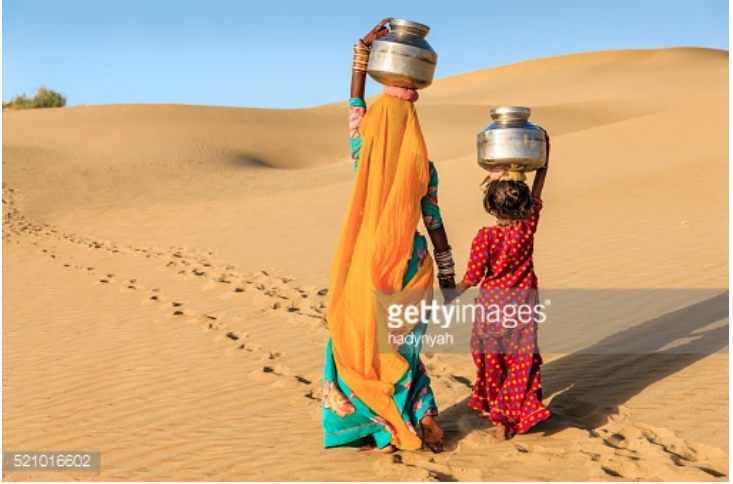
[In India, woman collecting water

Question 1 — do you have access to clean water?  If you answered yes, do you have access to a shower, a tub, a toilet and running water?  If you answered yes again, you are ahead of about 1.6 million people in the U.S., most of them Native American, or living in Appalachia or in pockets of New England.  Worldwide, 783 million people do not have access to clean water.  That’s 1 in 9.  Are you the unlucky “1”?

[Little Outhouse on the Prairie]

Two, do you have adequate sanitation?  If so, you are better off than about 2.5 billion people who don’t have access to a toilet, who may be forced to defecate in an open field or an alleyway, or who are made physically unsafe because of this lack of access.

22 May 1980, Niagara Falls, New York State, USA — Original caption: Clean up efforts have started in the Love Canal. Signs have been posted all over the area with a special warning to all residents to KEEP OUT. Most of the residents have taken that advice and have moved to Motels following a press statement yesterday in Washington. — Image by © Bettmann/CORBIS

Third, do you live in a town where some quasi-governmental agency pumps water from the ground, treats it to assure it’s clean, and delivers it to your faucet where all you have to do is turn on the tap to let it flow?  If so, you are in better shape than 2.2 million people who die annually from diarrhea caused by water-related diseases, the majority of them children.

The average American uses 400 gallons of water a day, about 70% of those gallons in the bathroom. In developing nations, where women walk to gather water, people use about eight gallons of water a day.  So . . .

IF YOU ANSWERED YES to all three questions, I challenge you to use no more than 10 gallons of water in a single day.  That’s 10 gallons for everything:  washing, sanitation, hygiene, cooking, teeth brushing, the whole works.  I gotta tell you, it’s hard!  The only time I’ve been able to do it is when we’re camping. Yet 1/3 of the world’s population does it every single freaking day.

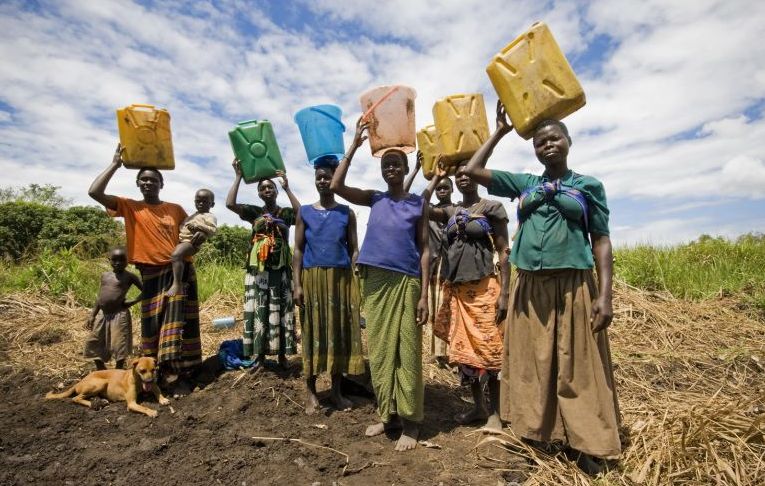
And while you do it, remember these gals walk for miles to gather water, 200 million work hours worth of collecting water, in a single day. #womencollectingwater #worldwaterday #10gallonchallenge

Let me know how you do it and how you found it.  Hard, easy. impossible?  Stop back and tell me, tomorrow, next week, even next year, it doesn’t matter.  The only thing that matters is that you realize how precious water is to you and to us all.

#lovewater

p.j.lazos 3.22.17

Posted in Uncategorized | Tagged , , , , , , , , , | 5 Comments

Mystery Mondays: Author P.J. Lazos on Writing Exercises

Many thanks to Kristina Stanley for hosting me on her blog!

Ready for a little writing fun? Well, come along and try this!

Kristina Stanley's avatarKristina Stanley

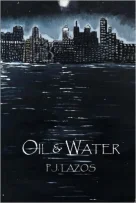
Today on Mystery Mondays we welcome author P.J. Lazos. Also known as Pam, she wrote OIL WATER,  about oil spills and green technology. She’s also an environmental lawyer, so I’m guessing she knows what she’s writing about. Sound interesting? You can find out more after her guest post.

If you need help getting your creativity working, this is the blog for you. Over to Pam.

A Prompt Prompt Prompted Me Promptly by P.J. Lazos

Prompt. The word is fascinating and versatile. It’s a noun, a verb, an adjective and an adverb. Holy guacamole, how often does that happen? It’s like winning the EGOT — Emmy, Grammy, Oscar, and Tony, a laudable goal shared by only 12 lucky and hardworking people. It makes you wonder, is there anything a word like that can’t do? (I found a blog post on the internet that listed 56 similarly situated words (https://onweb3.wordpress.com/2013/08/14/663/); prompt…

View original post 1,199 more words

Posted in Uncategorized | Tagged , , , , , | 7 Comments

Would you speak for peace? Announcing ‘We Are The World’ Blogfest #WATWB

Beginning the last Friday in March and continuing every last Friday of the month, consider sharing a story that spreads the love and lights up the world. I don’t know how long this blogfest will last, but I guess until we see peace and equilibrium restored in the world. Thanks for playing! #WATWB #peace

Belinda McGrath Witzenhausen's avatarBelinda Witzenhausen

watw-turquoise-badge-275-x241-white

If you spend a great deal of time on social media you will no doubt at times be overwhelmed by much of the negativity and hate that comes through our streams.  We might not able to stop the negativity but we can change how we react to it. The “We Are the World Blogfest” is our reaction to negativity. We hope to bombard social media with the positive stories that show us the best of humanity! Please read below to see what we’re about! 🙂


Social media and news in recent times has been filled with hate and negativity. Just as you cannot fight darkness, only light lamps, Hate and Negativity cannot be fought. You need to bring Love and Positivity forward instead.
I bring to you the We Are the World Blogfest, along with these fabulous co-hosts:

Belinda Witzenhausen, Carol Walsh,Chrissie Parker, Damyanti Biswas,

View original post 395 more words

Posted in Uncategorized | 9 Comments

Creating Characters That Pop!

Creating Characters That POP!

Have you noticed just how many of the articles circling the blogosphere involve a list? Every day, dozens of headlines promise to turn your life around in minutes if you just know how to count. Ten amazing slow cooker recipes to ignite your appetite. Eight ab-busting exercises to give you a summer six-pack. Five special tricks to keep your man happy in bed. Seven sure-fire methods to assure your toddler’s good behavior. It’s exhausting, really, and to a certain extent, lacks vision. Can’t we accomplish anything without a list? Is there no way to impart information other than to count it out?

Perhaps, but why start now? Because right now you are only three steps away from creating characters that POP! Ready? Here goes.

1. Understand Why: Understanding is not as simple as recounting a story, and knowledge doesn’t qualify as understanding. Anyone can read a book about the U.S. Civil War being the bloodiest in American history and know, from a factual standpoint, that war is bad, people died, and brother was pitted against brother, but if you were an alien, how would you come to the realization that this period was also one of the saddest in American history. It wasn’t just about war, but the very definition of America was at stake and despite Her differences, America decided to stick together in a Union to define all unions.

How did that history come alive? By understanding the characters. One has only to go to the battlefield in Gettysburg to hear history echoing down through time. You can feel the shiver of fear and dread that ran through all who died there. At the museum, you are flooded with understanding: of the farmer who left his wife and children to go fight rather than bring his crops in; of the terrified 15-year old who goes off to war to make his family proud; of the women left behind who held their families together, protecting their children against marauders, and hunger, and generals looking to replenish their own starving soldier’s supplies. The stories have come alive with understanding — letters, artifacts, firsthand accounts — and motivations. The story is no longer just a fact on the page, but a living, breathing entity brought to life through the light of understanding. Everyone has a key that unlocks the secret of who they are, what makes them take step after step in any given situation. To find that key, you must first understand your character, not just know his or her vital statistics such as name, address and phone number, but the reason why they live where they do and think the way they think, why they like chocolate instead of vanilla ice cream or why they joined the Knights of Columbus instead of the American Freedom Party. Understand your characters and they will dance before you on the page like a hologram.

2. Be Fascinated: When we are fascinated with something we can’t get enough of it. Fascination doesn’t mean you have to like your character, but you do have to like spending time with them, two distinctly different things. If you aren’t fascinated enough to want to take a journey with your characters then your readers aren’t going to be either. Some of the most fascinating characters of all time were scoundrels — Ebenezer Scrooge, Dracula, Captain Hook, Sauron, Cruella DeVil, Voldemort. We are fascinated with their vileness and like the proverbial car wreck on the side of the road, can’t stop craning our necks to see what’s happened as we pass it by. Sadly, like the news, we are more interested in the negative than the positive so you may have a harder time writing a fascinating “positive” character, but there are plenty of them as well: Harry Potter, Dorothy, Frodo, Forest Gump. What is it about them that makes you want to snuggle in close and watch? Good or evil, it’s fascination.

If you haven’t yet read, The Hero With a Thousand Faces, by Joseph Campbell, then start there. Campbell talks about the Hero’s journey vis-á-vis the archetypes running through psychology, mythology, and modern-day stories. Archetypes are your friends. They are a part of us, the secret to human character. Want to understand your own character? Figure out your archetypes. The Hero, the Dreamer, the Priest, the Prostitute, the Princess, the Warrior, the Architect, the Magi, the list goes on. Know them. Love them. Marry them if you have to, but you need to transcend them in order to understand them and you need to understand them in order to unlock the fascination, that which drives the reader to hunker down and keep reading. We need to spend time with this character because in doing so, we understand ourselves more fully. We need to abide them in our midst because of their beauty or despite their villainy. They are us and we are them. Unlock the fascination and your readers will come back again and again.

3. Emotional Integrity: Okay. Ready for the big reveal? The thing that’s going to bring it on home? Emotional integrity is the linchpin of every story. A story without emotion is not much of a story, right? But drama for drama’s sake just doesn’t ring true either. A character’s emotion has to feel real in order for a reader to be sucked in. I have a friend who swears she could watch Anthony Hopkins reading a grocery list and still get all vaklempt. Why? Because the guy oozes emotional integrity. And that doesn’t mean crying or screaming or carrying on. Hannibal lecture didn’t do any of those things, yet he managed to make your skin crawl without even uttering a word.

Take the time Sally and her best friend, Stu were in summer day camp. Every morning they set off across the street and through the cemetery to get to the neighborhood park on the other side. Sally’s mom didn’t drive, but it was the 1960’s when kids actually got themselves to things without a parent hovering about. Sally’s mom tells her that Stu is sick and she has to go herself but there is No Way Sally’s going through that cemetery alone. She knows her mother will make her so you feigns a bad belly. Telling the story that way is fine, but when you let the reader see the emotion behind the story it really comes alive. Better still, when Sally feels the emotion, all kinds of crazy happens.

Sally’s mom calls down the hall for Sally to get moving,

“Sally, time to go.”

Sally doesn’t answer because she’s bunched up in a ball on her bed, clutching her belly. She’s thinking about the gravestones, silent, waiting, and how she’s going to be so alone. Sometimes even with Stu’s company Sally can feel the icy tendrils of the dead searching for her warm-blooded body, hoping to latch onto something they can suck a bit of warmth from and Sally will be right there, all alone, with no one to hear her scream.…

Sally starts to shiver and sweat and by the time her mom reaches her room to check on her, she’s drowning in a lather of fear.

“Sally, what’s wrong? Are you all right?” Sally’s mom sits down next to her on the bed, feels the clammy skin, notices the diluted pupils, the rapid pulse. Sally looks like hell. She’s got herself so worked up she couldn’t come down if she tried.

Sally’s mom puts her chin to Sally’s forehead. “You don’t have a fever, but I don’t think you should go today. You just don’t look right.” And with that, mom holds the covers up and Sally crawls back under.

That’s it. Mission accomplished. Sally pulled it off, not because she scammed her mom, but because she was so invested in the scary cemetery story that her body actually believed in the terror and reacted accordingly. Emotional integrity wins the day every time.

And so will you if you just follow these three simple steps. Why not start now, creating characters that will resonate with your readers long after the last page has been turned. Your characters, and your readers, are waiting.

p.j.lazos 3.15.17

Posted in Uncategorized | Tagged , , , , , , , | 8 Comments

Your Assimilative Capacity Has Been Reached

[

Posted first on the Global Water Alliance‘s “Blogs and Utterings” section of which yours truly is the primary contributor.  

Your Assimilative Capacity Has Been Reached

Given the rains in California last month, resulting in the evacuation of some 100,000 people due to concerns over the stability of Oroville Dam, you would think California’s drought problems were over, but you’d be wrong. While California is suddenly rich in surface water, the groundwater, or dinosaur water as some refer to it, has far to go before it will be recharged. That process takes years, even decades, and a few rains, big as they are, won’t do much to change things.

On an excursion, a few years back to Santa Fe, NM, I was struck by how dry it was even in late fall. Yes, the climate there ranges from arid to semi-arid, but should even the snow feel dry? For me, it accentuated what’s true for much of the western half of our nation: we’re running out of water.

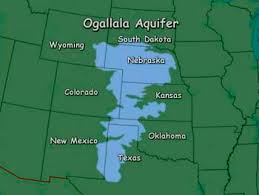
The Ogallala aquifer, a ten-million-year-old fluvial groundwater deposit, provides water to New Mexico and seven other High Plains states and is the most important water source in the region, covering an area of 174,000 miles. Eighty-two percent of the people living in the High Plains get their drinking water from this aquifer system, yet most of the Ogallala is used for agriculture. About eighty percent of the food grown in the U.S. comes from this part of the country. No wonder the Ogallala is depleting at a rate fourteen times faster than it’s recharging. Factors such as population growth, and contaminants like pesticides and nitrates have contributed to its decline, and failure to recharge means not only less water but also degraded water quality. Recharge occurs through rainwater and snowmelt combined, a paltry one inch per year. With eight states utilizing one aquifer, at this rate of withdrawal and recharge the Ogallala will be depleted in a few decades and, once gone, there is no turning back.

The main barrier to more robust recharge is impermeability. Currently, the specific yield of the Ogallala — meaning what’s available for use — is 15%. The rest of the water is locked up in the unsaturated zone where it’s inaccessible due to impermeability. Until the technology is developed to move this water to the saturated zone, the high quality Ogallala, once used for drinking without either filtration or treatment, will continue to degrade. If a water body is unable to refresh, the water quality tanks, or to put it in scientific parlance, its assimilative capacity, the level at which the water can no longer cleanse itself, has been reached.

Here in the water abundant eastern states drought conditions last seasons, but in the higher elevation arid lands droughts can last for years, turning an acute issue into a chronic one. Without attention, chronic problems tend to become emergencies. While some inroads have been made regarding the impermeability puzzle, they have only achieved small scale relief. It is high time to focus our attention locally, in cities and towns and farms, before our most valuable global natural resource is beyond recharging.

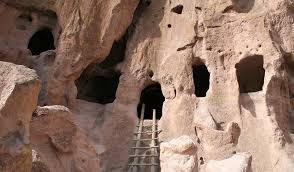
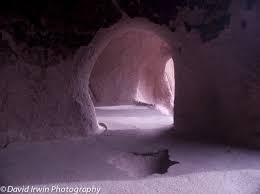
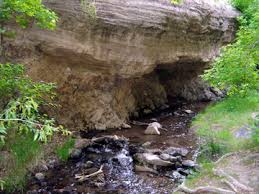
The region is not without action-oriented cliff dwelling conservationists, who have practiced water frugality for centuries. Frijoles Creek, located in Frijoles Canyon, Bandelier National Monument, is about a forty-five-minute drive from Santa Fe. The Ancestral Pueblo people made their home near Frijoles Creek, a perennial stream which provided water for drinking, cooking, bathing and agriculture. The Ancestral Puebloans were drawn to Frijoles Canyon by the wealth of resources created by the creek. Wildlife attracted to a water source within easy reach made for good hunting and the abundant plant life allowed for a diverse diet. Without the tools and other structures which are the hallmark of the 21st century (indoor plumbing!), these dwellers depended on their immediate surroundings to meet their needs. The availability of water was imperative to the quality of ancient life, and Frijoles Creek, a permanent stream in the arid Southwest, was a gold, I mean life, mine. To preserve it, the ancient Puebloans practiced water conservation. The first inhabitants of Bandelier didn’t have dams or reservoirs. They conserved water by growing staples such as squash, beans, and corn in shallow basins or sloped terraces which minimized runoff, evaporation and subsurface drainage and maximized water efficiency. These folks recognized the value of water and thanked their gods daily for its blessings. Industrialized society has forgotten this. The ease by which we acquire water has blinded us to its value. Out of necessity, the Ancestral Puebloans developed water conservation methods. Out of reverence for that which gives life to this planet, we would be wise to do the same.

Our bodies are composed of 70% water which means we need it to survive. However, our use of water far outstrips this survival threshold. The average American family of four uses about 400 gallons of water every day, approximately 70% of that indoors and most in the bathroom. A bathroom faucet puts out 2 gallons of water per minute, about 200 gallons a month if you brush with a wide-open tap. In industrialized nations, freshwater withdrawals have tripled over the last 50 years to keep up with our demand for food, goods, services, and hot showers. Compare the water usage of an industrialized nation to that of an ancient tribe and even accounting for population growth you have two entirely different scenarios.

Perhaps if we had to pay more for water? Despite its ubiquitous nature, less than 1% of water is available for human use. The rest is salt water (oceans), frozen water (polar ice caps), or inaccessible water (groundwater trapped in an impermeable state). We need water to grow or produce everything we eat or drink as well as the products we use. Here’s a few facts about how much water it takes: a slice of bread – 1 gallon; chicken – 10 gallons; a cup of coffee – 2 gallons; 1 pound of corn – 50 gallons; 1 pound of eggs – 20 gallons; 1 pound of hamburger – 450 gallons; 1 sheet of paper – 3 gallons; a cotton shirt – 100 gallons; 1 pound of wheat – 60-100 gallons.

Anyone with a checking account knows that if you bounce a check the bank charges you overdraft fees. What if we metered water usage and charged users overdraft fees in a tiered approach? Start with a flat amount for a particular class of user and as the usage goes beyond that amount, the price increases. What if we account for the true cost of food on the environment? Even valuing water at pennies on a gallon, beef is 450 times more costly than bread. If you had to pay $30 for a hamburger to cover the water processing costs, would you still eat it? My guess is most people would switch back to more plant-based diets. The upside is less cancer, heart disease and a reduction of the general physical and emotional malaise that comes from eating an overabundance of processed foods. In a water-rich world — one we are no longer privileged to be living in — perhaps these factors don’t matter, but in our modern water-poor world, this concept makes sense. Further, simply conserving water will not be enough; it’s akin to using a band aid when you need a tourniquet. We need both: a more sustainable attitude and additional water sources. We needed feasibility research and development to explore regional water use solutions, especially in agriculture and manufacturing. Crucial speed-up adaptation is needed of more sustainable watering practices such as drip irrigation, overhead irrigation, soaking hoses, the use of water efficient crops, and water-wise planting. Using your purchasing power to buy products from manufacturers who commit to using less water during the manufacturing process (ideal is the concept of water-neutrality) would go a long way to delay if not halt the impending water shortage issues. The true costs of our lifestyle on the environment and the choices we make should be accounted for by each of us before our assimilative capacity is reached.
P. J. Lazos is an environmental attorney practicing in Philadelphia, and the author of “Oil and Water,” an environmental murder mystery about oil spills and green technology. Her work and travels have shaped her water-wise view of the world; she values her carefree access to clean, potable water, and envisions a world where everyone has that same daily experience.

p.j.lazos 3.14.17

Posted in Uncategorized | Tagged , , , , , , , , , , , , | 13 Comments

Fumbling Towards Ecstasy

[Photos by Stacey Lazos]

Please enjoy this post by my sister, Stacey, about the beginning.  To find out “of what,” read on…

Fumbling Toward Ecstasy

Be foolishly in love because love is all there is.
~Rumi

As a single woman of a certain age, you start to wonder, “Is this It? Will I ever again be struck down by a love so magnetic that all past romantic failures become a distant memory as we ride off into the sunset on a white horse?” The thought wasn’t a constant companion, thank Jesus, but merely an occasional tourist stopping to take a photo. There was a certain sadness experienced when I contemplated my capacity for love and how it was so much greater than what was currently being expended.

And then something happened when I totally wasn’t looking, and it took me by such surprise that I had to play catch up with the momentum I had generated during the years of waiting for my perfect lid.

I fell in love.

It happened in less than five days and I wasn’t even aware of the change until weeks later. Heartbreak and devastation are so much more of a dramatic read, yet this story is so awe-inspiring that in needs to be told and savored with enthusiasm. I make this distinction because in the past few days I have been the brunt of ridicule by my friends for championing love. The remarks weren’t all that terrible, but they struck a chord so deep in me that I disproportionately lashed out. And although I know my response was extravagant, I ask the question:

“How broken do you have to be NOT to believe in love?”

In fairness to my friend, I will say my situation is quite out of the ordinary and perhaps begs a bit of teasing. I will let you decide for yourself. The following is my statement to petition my boyfriend (and soon to be husband) to come to the U.S. on a fiancé visa.

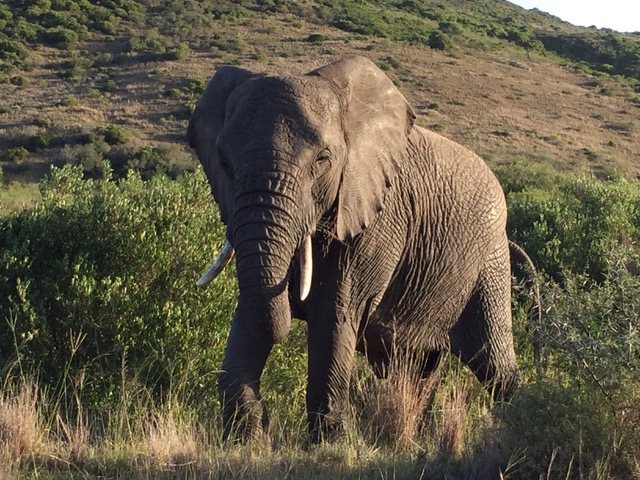
“I met LJ when we arrived at the game reserve. I was on a yoga retreat with a group of 22. The group was split into three smaller groups for our stay, each having a ranger in charge of them for the four days we were on the reserve. LJ was the ranger for our group. We spent each day together (along with the others in our vehicle), with him taking us on two safaris a day and driving us to and from our villa, yoga, and meals. 

During that time, LJ and I got on very well. We shared a similar sense of humor and his commitment to making our trip a memorable and special experience was delightful. He had dinner with our group the last two nights and we became attached, even though I thought at the time nothing could come of it. I believed the fact that we had only known each other for a few days, the distance between us and the difference in our ages meant that this could only be a magical encounter on the trip of a lifetime. I was wrong.

We exchanged contact info the last night of my trip and we immediately couldn’t stop talking (texting at first, thank you WhatsApp). We talked as I made my way home when wifi permitted and each and every day, several times a day, after that. In fact, there was only one day that we didn’t speak. We were trying to get a handle on the way we felt and how this relationship could even work. I told him to take some time to think about what he wanted. When I didn’t hear from him the next day I was beyond sad. Even though in the back of my mind, the relationship was doomed from the beginning, coming to terms with that reality was heartbreaking. Imagine my surprise then, when I received a phone call the next day. When I asked what happened, he told me he drove 11 hours to his mother’s to talk things out. And he was all in. “Wait, what?” It took me a minute to process.”

There are a million things I can say about this man and why I want to marry him. The fact that neither one of us has ever been married before and we chose this crazy situation to commit to, the way it feels like when we are together even though we are 11,000 miles apart and the feeling of having the perfect partner for me are just a few of those reasons. I look forward to cataloging the other 999,997 over the next 50 years.


stacey lazos 3.10.17

Posted in Uncategorized | Tagged , , , , , , , , , | 15 Comments