NEEDS VS. WANTS
If you put your needs before your wants and be grateful for what you already have you will always feel blessed.
Still halfway there. #atozblogchallenge
pamlazos 4.16.19
If you put your needs before your wants and be grateful for what you already have you will always feel blessed.
Still halfway there. #atozblogchallenge
pamlazos 4.16.19
If you would have told me that a world drowning in plastic could be saved, I would have my doubts, but if you then told me it was a mushroom doing the saving, I would say you’d gone totally ’round the bend.
A 2012 study by Yale students demonstrates this very real possibility. Turns out that Pestalotiopsis Microspora, a rare species of mushroom found in the Amazon forest eats polyurethane for breakfast and lunch and dinner, too, and by the time it’s pushing the chair away from the table, all that’s left of the plastic waste is organic matter. And this stout and sturdy little mushroom can do it all without oxygen giving mankind great hope for the reduction of landfills worldwide. Let’s set those babies loose on the Pacific Garbage Patch, why don’t we? More research is necessary, but odds are that once this mighty mushroom has done its work, you can cook it up and eat it.
But wait, there’s more. According to the State of the World Fungi Report, mushrooms can remove pollutants from soils, help the conversion of waste, and the byproduct of their plastics consumption can be used to create building materials. So it gets rid of waste, provides a source of nutrition, and provides fodder for building materials, truly a Renaissance fungi.
In his most recent book, How to Change Your Mind, Michael Pollan talks about how another mushroom, psilocybin, in the right setting, can fuel the spiritual and emotional transformation and maybe even the ultimate liberation of the world. A lofty goal for a little mushroom!
By taking out the trash and helping us transcend the constraints of our very existence, mushrooms could very well be capable of saving the world.
Today is Day 13 of the #AtoZ blog challenge. “Oooooh, we’re halfway there…”
pamlazos 4.15.9
When my kids were in middle school, they each had to do the at-home experiment of mixing baking soda with vinegar which resulted in a volcano eruption in the beaker. When sodium bicarbonate reacts with an acid, carbon dioxide is formed and you get this big explosion which everyone laughed about until we had to rinse off all the appliances (making it mandatory for future experiments to be performed in the driveway). The amount of carbon dioxide created from the reaction was never enough to put anyone in danger, but that is not the case for three lakes in West Africa that have experienced limnic eruptions that resulted in a terrible end for all those present.
I had heard of this phenomena before, but never really gave it much credence. I just thought it was idle water cooler chatter among a bunch of enviros, but I was wrong. Limnic eruptions are both spontaneous and deadly to all life — humans, animals and plants.
The first one occurred in 1984 at Lake Manoun, a lake situated in the Oku Volcanic Field in West Cameroon. A big boom preceded a release of carbon dioxide from beneath the lake and suddenly, all 37 witnesses (including people and animals) were dead. Responders to the noise — there was also a sulfur smell — could not explain the mystery, but the government suspected terrorism. Two years later, a similar event occurred at Lake Nyos, this time killing 1,700 people and 3,500 animals with a release of 1.6 tons of carbon dioxide.
Carbon dioxide is heavier than air so when a truck traveling near Lake Nyos stopped working — the reason for engine failure was unclear — following the eruption and the driver and passengers got out to investigate, they were immediately asphyxiated. Meanwhile, the two people who had been sitting on top of the truck were fine. Currently, the government is working to vent the lake with piping designed to remove the carbon dioxide on a consistent basis so it won’t happen again.
Lakes in Africa are not the only place where such natural carbon dioxide emissions occur. Apparently, Yellowstone National Park releases its share of carbon dioxide annually, and 252 million years ago, extreme releases of carbon dioxide may have caused a rise in oceanic pH, leading to mass extinction.
Consider this a cautionary tale in our climate-challenged world where carbon dioxide levels continue to rise every day: in the event of an emergency, seek higher ground.
Today is Day 12 of the #AtoZ blogging challenge and things are proceeding swimmingly.
pamlazos 4.13.19

Keurig really should have figured out it would be in trouble from the get-go. It’s not just the environmental effects of all those pods that produce waste in the billions of pounds, but it’s the contaminants that can also effect your health like plastic from the pod, aluminum from the pod cover, and mold that grows in the tank that holds the water. My mother had one of these on her counter, but she had rheumatoid arthritis and lived alone so for her it was a life-saver and I looked the other way.
Now, about 16 million households in America have one of these fancy pants coffee machines for a variety of reasons, but the most prevalent, I guess, is convenience coupled with the perfect cup of coffee. Yet even the inventor of the K-cup has regrets about trashing the environment. Maybe rather than regrets he can attempt to make a recyclable version that takes less than a thousand years to breakdown?
Can you think of a worse environmental result for a single consumer product? Read this great article by Home Grounds and you decide.
And then watch this hilarious video on the K-cup.
Then ditch that pod.
pamlazos 4.11.19
Jin Shin Jyutsu is a finger holding technique that helps to relax the body. Since I was a kid I had the habit of tucking my thumbs inside the remaining fingers on each hand like I was making an inverted fist. According to Jin Shin Jyutsu, cradling your thumb relieves anxiety.
First of all, who knew I was so anxious, and second, pretty prescient to have been so self-soothing all these years.
Check out this video and go take five minutes for you and relax.
Today is Day 10 of the #AtoZ blog challenge. Piece o’ cake.
p.s. I did the Jin Shin Jyutsu technique before I went to bed and I had an amazingly sound sleep!
pamlazos 4.11.19
If asked “What is the biggest threat facing humanity,” what would you say? Wildfires? Extreme Weather Events? Floods? Mass migration? Drought? Climate change? Mass Extinction? Our refusal to deal with our big issues? Ennui? If I had to pick, I’d say impermeable surfaces makes the top ten list.
“Really?” you reply, somewhat incredulous. Let me explain.
Impermeable surfaces, a/k/a impervious surfaces do not allow water to pass through them so when you combine superstorms with a whole lot of asphalt (or macadam, depending on where you’re from), you end up with a whole lot of property damage like:
Hurricane Katrina (New Orleans, 2005) – 2.5 billion in water infrastructure damage;
Tropical Storm Sandy (New Jersey and New York, 2012) – $3billion in damage to NYC’s water/wastewater treatment plants alone.
Hurricane Harvey (Houston, 2017) – over $125 billion total costs with damage to more than 800 wastewater treatment plants and 50 drinking water systems.
You’ve probably noticed that climate change is among the hot topics in our 24/7 news cycle. I’m not going to go into whether it’s real — 99% of scientists agree that it is so why are we still questioning it (a convo for another day) — but the truth is, 100-year storm events are more frequent then every hundred years these days, likely due to climate change, and now they’re starting to bunch up on us as you probably noted from the three just mentioned.
In addition:
Houston has no formal zoning code, meaning developers get to build wherever and whenever. If you’ve ever driven in Houston, it’s one long traffic light, miles of pavement and highways and byways with nary an open green space in sight. So when it rains, and rains hard, the water has no where to go because the pavement is blocking its return to groundwater.
Instead, it skitters along the sidewalk looking for the low spots, ultimately finding the streams and rivers until those back up like a basement built in a flood plain without a sump pump and then where does the water go? Well, to the streets, of course. And that’s when it becomes an emergency.
Green infrastructure can help avoid this scenario because it can: control flooding; improve water quality; act as a wildlife nursery; provide buffering from winds and storms; provide recreation and tourism opportunities; hold onto carbon dioxide to slow its release into the atmosphere; and its nice to look at!
Want to move from impermeable surfaces like highways and driveways to pervious ones like rain gardens; green roofs; bioswales; retention basins; and pollinator gardens? Instructions abound on the internet or you can email me and I’ll send you step-by-step instructions.
Let’s keep water off the roads and in the rivers where it belongs. Where you can, switch out those impermeable surfaces in your yard for something green and growing. The benefits to you and the planet, over time, will be enormous.
pamlazos 4.10.19
Perhaps I’ve gotten a bit morose. All this talk of doom and gloom and mankind withering from radiation spewing cell towers has put this blog challenge on a distinct downward spiral. So let’s take a break for a moment and put a little pep back in our day. We’ll feel better and we can always go back to stressing tomorrow.
In the meantime, be happy.
pamlazos 4.9.19
Causality is one of the central tenets of life on earth because here we live in linear time, one second ticking forward after another, year to year, lifetime to lifetime from the Big Bang (and before) and on to infinity. Even though we know from Einstein and physics that time as a construct is not linear, on Earth we experience it as such. That’s why causality plays such an important role in our lives.
Cause and effect. You do one thing that brings about a series of others. You can see it in your life where, as a child, your interest in frogs led you to a career as a biologist or your obsession with building Lego cities fostered your decision to become an architect. In these instances, the cause and effect could have been years, even decades apart, but since good things came to pass, it was an acceptable part of our history.
But what about the causes that lead to disastrous effects, the ones where we should have proceeded with more caution, but we charged ahead in the interest of human development, ease and convenience, or just making money? How will these events be judged on the scales of history?
Throughout time, there have been plenty of instances where, for the sake of any of the above, we’ve put the health risks to the population aside. A few things come to mind like: nuclear power — we still don’t have a safe way to deal with the waste; teflon — the chemical components of teflon have permeated the bloodstreams and waterways of the nation; pesticides — providing abundant amounts of food, but is it safe? And how much nutritive value is left in that carrot?; and plastic, ubiquitous, necessary to modern life, durable and reliable, yet so detrimental to wildlife and oceans (and humans when ingested as dioxin) that we are building ships just to clean up the mess.
In the distant past, companies have had plausible deniability because we were all still learning and the time lag between cause and effect gave them an out. People died from lung cancer after they smoked for 30 years, not 30 minutes, so the tobacco companies pointed to just about everything else they could think of to be at the root of an individual’s demise — he didn’t eat well or get enough rest or his stress levels were just really high — until the courts finally shot them down and told them to pay up. But what about all the lives lost to smoking, terrible deaths that could have been prevented if we only knew it caused cancer? Granted, no matter what you tell them, some people are still going to do what they want, but shouldn’t they be able to make a well-informed choice?
We never really stop to look at the environmental effects of each new technology or educate ourselves on ways to deal with them. If we didn’t know, now we do as we watch the degradation and declining populations across almost all spectrums on earth: insects, soils, air, water, species, birds, even humans if you look at declining fertility rates. Why? Because it’s easier, and cheaper, for a company to say it didn’t know and to clean up the mess afterwards than it is to make sure they didn’t make a mess in the first place. I’ll never stop thinking about the Ford Pinto as an example of a company knowing it was putting a dangerous product on the market but doing it anyway because paying the penalties associated with the lawsuits was cheaper than recalling the product.
Today’s New Frontier is technology, a shiny new gem of a toy we can’t get enough of. Here we are again on the precipice of a new era, but with each new development comes the possibility of derailment from our inability to study all sides and do our homework first. The latest development — 5G — may be just the thing that undoes us all. There’s a laundry-list of health risks and abuses that comes with 5G making the run-of-the-mill dystopian novel look like a day at the beach. If any one of use were shown this list and then asked to put a receiver that spews radiation all day long in our kitchen, would we do it? Just for convenience? I know I wouldn’t, but what if we don’t have a choice?
Equally as distressing is the ability of the provider (i.e., eventually, government because what government can resist the chance to spy on its citizenship?) to listen in on your life. You know it’s happening now. You are having a conversation with a friend. Your cellphone is in your back pocket. You casually mention you are looking for a new bike for your son for his birthday. The next time you check your phone, ads for new bikes appear everywhere. You don’t remember ever even seeing an ad for a new bike before. Coincidence? Ha! Now I don’t know about you, but I took what George Orwell said in his dystopian novel 1984 seriously and if all that doesn’t make you want to run from 5G like your hair is on fire, then you’ve got a higher threshold for pain than I do.
I’m no expert on 5G. Sometimes, I can’t even work my iPhone. But given our history, shouldn’t we be doing a wee bit more research before we run, full-out, arms wide, to the next shiny object and embrace this new, possibly humanity-decimating technology? An ounce of prevention and all that? This kicking the can thing down the road has brought us to the brink of an uncertain and possibly disastrous future. Do we want to leave anything for our grandkids that doesn’t suck?
Can we even unwind the clock?
pamlazos 4.8.19
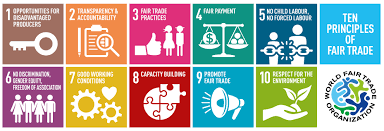
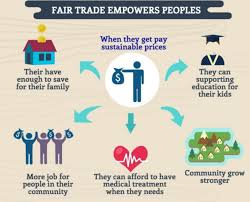
Fair trade strives for equity between trading partners. One of the foundational tenets is paying fair price for a product that provides the maker with a living wage.
People live better when they make a decent wage. They can afford health care. They don’t need a handout if they are earning enough to feed their families.
You get products made with care and the maker gets a fair price for their hard work. It’s a win-win. So next time you shop, consider buying fair trade.
It’s Day 6 of the #AtoZ challenge. Whew! I think I need a coffee.
pamlazos 4.6.19
EEEWW, Are You Going to Eat That?
We have some refrigerator food rules in our house: two days for fish, three for cooked veggies, a little more for grains and up to a week for meat products as long as it all passes the smell test. I consider this part of my personal Environmental Action Plan (for whoever is keeping track and thought that EEEWW was a stretch for Day 5 of #AtoZ), a way to manage not only the contents of my refrigerator, but my health as well. Food, especially cooked food, loses its nutritive value the longer it hangs around so I don’t want to waste calories on anything that’s not going to provide my body with a boost.
The same way you wouldn’t eat a week-old piece of fish because it smells funny you probably wouldn’t want to live next store to a landfill sputtering bubbles of methane into the air or an oil refinery spewing SO2, NO2, CO2 and other twos. We don’t need to be rabid environmentalists to want to breathe clean air, drink or swim in clean water, or eat pesticide-free food, right?
The people at LCSWMA, the Lancaster County Solid Waste Management Authority know this. An abundance of creative thinking went into their environmental action plan, a model for the modern age. If you were here on Day 3 of #AtoZ we talked about composting. What about all the other stuff that can’t be composted and spread around your garden? The plastics — oh, the plastics! — the rubber, the paper goods, the poopey diapers, where does all that go? Well, LCSWMA will take it and turn it into gold, literally.
[from the LCSWMA website — the philosophy of trash]
They reduce, reduce, reduce, bringing the trash heap down to its least component parts, salvaging heavy metals like gold, silver and lead, using every part of “one man’s trash” that can be repurposed, and incinerating the rest. Then they use the ELECTRICITY generated from incineration to power neighboring communities. There’ll be more on LCSWMA in a later post and I’ll tell you the chicken story then as related to us on the tour.
Waste is a resource like anything else. All we need is to repurpose our philosophy on it. All we need is a plan and a bit of vision.
pamlazos 4.5.19