Jesus said mother I couldn’t stay another day longer
He flies right by and leaves a kiss upon her face
While the Angels are singing his praises in a blaze of glory
Mary stays behind and starts cleaning up the place
Nancy Griffin – “Mary”
My own mother has been gone for six years now and there’s hardly a day that I don’t miss her or wish for her wise counsel. Mothers are the original influencers, our first supporters, our original protectors, our guiding lights, the ones standing guard between us and the rest of the world, giving us a little push when we need it and saying, “you got this.”
Being a mom means showing up, no matter if you’re busy, or tired, or facing a crisis of your own; of being overworked and underpaid; of working behind the scenes or out in front on behalf of your kids; of taking crap from those same offspring when you don’t deserve it; of experiencing a joy you never realized you were capable of when you see the world through their eyes; of leaving it all on the field of parenthood when what you really wanted was to hold a little bit back for yourself for later. Being a mom is not a job for sissies. It means staying behind and cleaning up the place.
So give your mother a big fat hug and kiss if she’s still around and if she’s not send her a message of love across the ethers. She’ll get it. We are all from the same power grid, just little sources of energy running around in human suits, and when the suit goes away, the energy remains, neither created nor destroyed.
I’ll leave you with this touching song by Patty Griffin, knowing that our universe is one of duality and for every dark, sad bit there’s always going to be a light, happy one to balance it out, so to the extent you can manage, remain in light.
Happy Mother’s Day to all you fabulous mothers out there. May your day be filled with an abundance of peace and positivity.
Interested? Read on about how Hermés in conjunction with MycoWorks is using fine mycelium to create a vegan bag. The possibilities are endless!
It’s the last Friday of the month. Time to share your good news on the We Are the World Blogfest — #WATWB — a monthly good news trip around the world. May we all be energized and rejuvenated by such news. If you’re interested in joining our Blog Hop, the guidelines are as follows:
1. Keep your post to below 500 words;
2. Link to a human news story on the last Friday of each month that demonstrates love, kindness, humanity, support, open-mindedness, all the good stuff, but no proselytizing, preaching or inconsiderateness toward others;
3. Post on the last Friday of the month in sharing the good news. No story is too big or small;
4. Place the WE ARE THE WORLD Badge on your sidebar and help spread the word on social media using the #WATWB hashtag;
5. Read and comment on others’ posts, play nice, and make friends;
6. To sign up, add your link to the WE ARE THE WORLD Linky List below.
Please enjoy this blog post on eco-friendly cleaning by Mark Harris, an occasional contributor to Green Life Blue Water and one of the contributors to the free DIY eco site, Awareness Toolkits.Thanks, Mark.
A clean, organized, and healthy home provides numerous benefits to its occupants, including fewer allergies, less stress, more motivation, and better concentration, to name just a few. Who doesn’t love the sound of that? Today we are sharing these simple, eco-friendly cleaning tips to organize your house and make it sparkle with chemical-free cleanliness.
Change Your Air Filter
Before you do any cleaning, change your HVAC air filter. Air filters should be changed on a regular basis to maintain healthy air quality in the home. A dirty filter can strain your HVAC system and increase your energy consumption, and there’s nothing green about that! When you buy a new filter, look for one with a MERV rating of 8. To help you save a little money on the cost of these filters, search for online savings that you can use to your advantage. For example, Target coupons and cashback offers can make this cost more manageable.
Ditch the Clutter
Your HVAC system will remove dust from your air, but what about all the surfaces in your home still harboring grime and bacteria? Decluttering can help you tackle problem areas and cut down on the amount of cleaning you need to do on a regular basis. Plus, according to Prevention, decluttering is essential for reducing stress and anxiety. When you’re surrounded only by items that you love, you’ll feel positive all day long!
There are plenty of great ways to get rid of stuff you no longer want without throwing it all in the trash. Hold a yard sale, list smaller items for sale online, and donate to local charities. Also, find out where you can recycle various broken electronics—these can leak toxic chemicals into the environment when they end up in the landfill.
Make It Easy to Stay Organized
Once you’ve removed things you no longer want, set up simple organizational systems to keep your home feeling balanced and peaceful. For example, try creating a nice space by your entryway to hang jackets, store shoes, and stash bags so these items don’t end up all over your house. Forbes recommends keeping a dedicated basket or tote bag for collecting items you would like to bring somewhere to donate. Stop adding stuff to junk drawers, give each item you own a special place in your home, and develop a nightly routine that involves tidying before bed—waking up to a clean house every morning is super refreshing and energizing!
Make Your Own Cleaning Supplies
Believe it or not, you can keep your home fresh and germ-free without using chemicals at all. Most household cleaning products release harmful chemicals into the air and waterways, hurting both you and the environment. Instead, make your own cleaning products with common pantry items. Greatist has compiled an awesome list of recipes you can try.
Rearrange Your Space
Being in your home should feel peaceful. If something feels off, you may need to do some rearranging and redecorating. Textures, colors, lighting, and even the size of objects in a room will contribute to the overall sense of balance. One way to bring balance to your home is to paint your walls in calming shades of blues, greens, and soft neutral colors. Just make sure to choose eco-friendly paints to keep chemicals out of your home’s air. Head over to BalancedBabe for more tips on making your home feel more harmonious.
Bring Nature Indoors
Finally, add a few touches of nature throughout your home. Live plants, as well as paintings and photographs that depict nature, can infuse your home with a sense of calm. Even natural elements, such as wood, bamboo, and stone, can create a more relaxed atmosphere and help you focus on any tasks you need to get done. For bonus points, choose air-purifying plants like peace lilies and Boston ferns.
A home that’s clean and organized feels great to live in. Purge your clutter, get in the habit of tidying up on a regular basis, and opt for eco-friendly cleaning practices to maintain a healthy home environment for your family.
April 22 — Earth Day. I was leafing through an oversized magazine a friend gave me when she retired entitled,Earth Week ’70,published in 1970 as the Official Publication of the Philadelphia Earth Week Committee. At only 48-pages in length, it contains op-eds; artwork by adults and kids alike; an Earth Week Public Events calendar (April 16-22); an interview with the poet, Allen Ginsberg; statements from participants such as Senator Edmund Muskie, former Governor of Maine and its first Democratic Senator (elected 1964), and the primary sponsor of five bills on environmental improvement (a huge deal); environmental activist and four-time presidential candidate, Ralph Nader whose work birthed many key pieces of legislation in consumer protection; Senator Hugh Scott, a moderate Republican and environmentalist who served eight terms in the House as a Pennsylvania representative and another three terms in the Senate, eight years of which he was Senate Minority Leader; and celebrated author, professor, and former Episcopal chaplain, Alan Watts, to name a few.
Events included the signing of the Declaration of Interdependence, a poetry reading by poet, author, and Beat Generation team leader, Allen Ginsberg, performances by the Native American musical group, Redbone, and the Broadway cast of Hair; even a Seder reading. If the black and white photos in the magazine tell the whole story, Philadelphia, or Philthydelphia as the magazine’s authors called it, was a hot mess: smog so thick you couldn’t see from one side of the city to the other, even if you were standing on Billy Penn’s hat; pipelines running along the river’s edge, joined by trash and other debris (at least not plastic yet); and bellowing smoke stacks sending yet more particulate matter into the filthy air.
The first Earth Day, founded by Senator Gaylord Nelson, environmentalist, conservationist, consumer advocate, small business proponent, and peace-lover, was held on on April 22, 1970 as a teach-in to raise awareness of America’s long-standing environmental issues. Eight years before in 1962, Rachel Carson released her groundbreaking work, Silent Spring, decrying the overuse of pesticides, insecticides, and herbicides; on June 22, 1969, the Cuyahoga River in Cleveland caught on fire for the 13th time; and in 1970, smog clouded not just the Los Angeles skyline, but cities across the country. In 1970, there were only 3.6 billion of us on the planet compared to almost 8 billion today which means, the problems are only getting worse.
The evidence of environmental degradation splattered across our nation by the end of the 60’s propelled 20 million Americans to attend Senator Nelson’s Earth Day party. Their efforts paid off: on December 2, 1970, President Richard Nixon created the Environmental Protection Agency, leading to the expansion of some of our most important national legislation like the Clean Air Act (originally passed in 1963 and amended in 1970), and the Clean Water Act (originally enacted in 1948 as the Federal Water Pollution Control Act, and reorganized and expanded in 1972). Last year, EPA celebrated 50 years of following its mission of protecting human health and the environment for all 328 million Americans, not just those of us who hug trees and care about bugs and bunnies.
The first Earth Day was a pivotal time in American history. Just this week we revisited the horrendous shooting of four college students on the Kent State campus in Ohio by members of the National Guard. Since the beginning, environmentalism has been intertwined with the anti-war movement of the 70’s. Whether that has hurt or helped the environment’s cause is anyone’s guess, but it reminds me that time is not linear but circuitous, that it may not repeat, but it definitely rhymes, and that if we don’t correct the mistakes of the past, we are destined to repeat them. Today we’re trying to leave a 20-year war in Afghanistan. History echoes.
Earth Day is an origin story. The fervency surrounding the environmental issues on display during Earth Week in 1970 mirrors the fervency surrounding the intractable problems of today. With so many of our systems in disrepair, sometimes it seems easier to list the things that do still work. And while environmentalism in the U.S. may have started in earnest in 1970, it’s roots survive today thanks to groups like Philly’s own Global Water Alliance, and many others that work tirelessly for clean air, clean water, clean soil, and to cure environmental inequities.
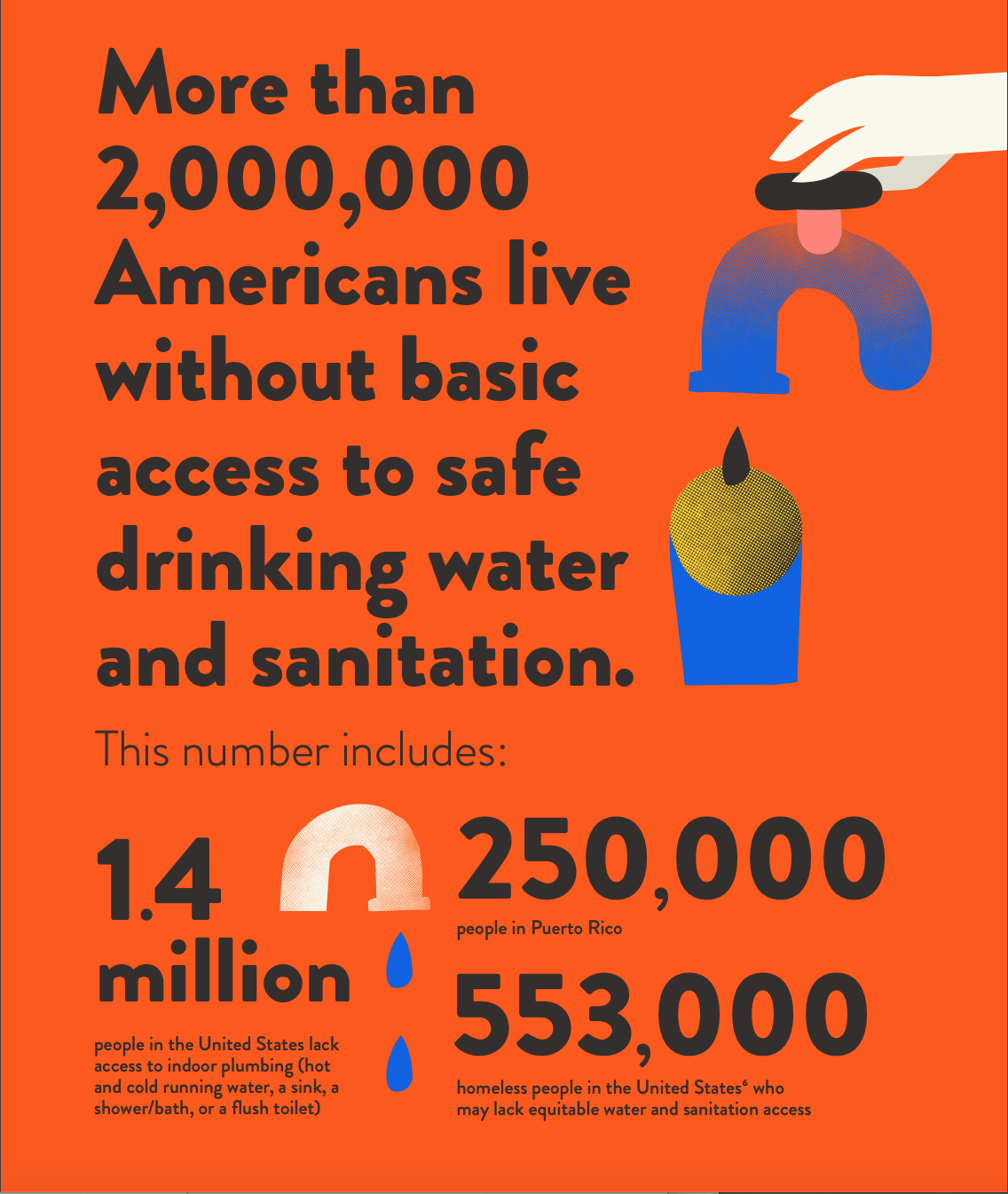
graphics source — Dig Deep
Native Americans were the first stewards of this land. Today, those living on tribal reservations are among the two million people in the U.S. who don’t have running water or indoor plumbing. It’s always been time to add equity to our conversations about the earth, water, air, and access to resources that are common to us all, but not always readily available to everyone. Let’s not make this a one-day-a-year event. Rather, let’s revise our thinking, make a commitment to community, and choose to take decisive action starting now.
Today 97% of scientists agree that we humans are causing climate change. As a society, we need to take steps to arrest it before the planet gets any hotter; an increase of one of more degrees Fahrenheit could be the cause of the single biggest mass migration the world has ever seen. Even a couple degrees of warming will make places uninhabitable for billions of people. If you think a handful of countries have immigration problems now, wait until 3 billion people are on the move.
You will get no argument from me that today’s problems are ginormous, bigger than many of us can wrap our arms around, but now is not the time for cowardice, but strength, and foresight, and action, because if we ignore the problem’s of today, tomorrow’s environmental issues will make us long for the smog-filled days of the 70’s. This is the part of the movie where long-time enemies must join forces to fight the coming doom — aliens, King Kong, Thanos, empty seas, whatever we fear most — and hope that the sheer act of cooperation will buy us some grace.
To quote President Biden, “If we act now, in 50 years people are going to look back and say: ‘This was the moment that America won the future.’”
Let’s make Earth Day every day. There is no Planet B.
Before you go, here’s another fan-favorite from Redbone with a little dancing to get you going:
Keep Fats, Oils and Grease in the Trash Where They Belong
Keep water FOG-free
In February 2021, a brewing toxic mess of waste comprised of such culprits as wet wipes, diapers, sanitary pads, cotton swabs and other detritus fused with fats, oils and grease from kitchens and bathrooms across London had congealed to form The Fatberg. Enter a group of engineers from Thames Water in London helped along by a London cleaning service and two weeks later, the workers had finally cleared the “fatberg” that had wedged itself into the sewers under the city and refused to budge. It should be no surprise that battling The Fatberg in London’s underground sewer was no one’s idea of a great day at the office.
Luckily for Londoners, these fearless workers got to The Fatberg in time before it had solidified even further, the probable result of which would have been sewer backups into people’s homes for weeks. We all wish that what goes on underground would stay underground, but that isn’t always the case with sewers because what goes into the underground often shouldn’t be there in the first place and that causes all kinds of horrible results for the people above ground.
Fats, oils and grease, or FOG as we refer to it in here in the U.S. is by-product of cooking — meats, dairy, vegetable oils, etc. — and has no business being rinsed, stuffed or shoved down a sink drain. By themselves perhaps they are not so much of a bother, but when combined with non-biodegradables such as the infamous wet wipe — if wet wipes were a person, they’d be an outlaw like Jesse James, or Wild Bill Hickok — sanitary napkins, last night’s dinner, and whatever else people flush down their toilets and sinks and you have a recipe for a fatberg.
In the U.S. federal regulation has discouraged the dumping of fats, oil and grease down the drain since the Federal Water Pollution Control Act (signed into law in 1948) was amended in 1972 to become the Clean Water Act. According to the U.S. EPA, “grease from restaurants, homes, and industrial sources are the most common cause (47%) of reported blockages. Grease is problematic because it solidifies, reduces conveyance capacity, and blocks flow.” Regulations prohibit “solid or viscous pollutants in amounts which will cause obstruction” from being sent to the publicly owned treatment works (POTW) or into its collection system which includes the pipes in the ground leading from people’s homes and establishments to the collection system.
The first of its kind — Fairmont Water Works in Philadelphia
In the U.S. under the Clean Water Act, POTWs operate waste water treatment plants in accordance with a National Pollutant Discharge Elimination System (NPDES) permit which sets standards for what can be discharged into rivers and streams where the POTW’s effluent is released, standards to deal with operation and maintenance of the plant, and standards to deal with FOG, among many other things. Those POTWs are responsible for enforcing standards for the kind of waste being sent to their facility which ensures the waste is treated to the permitted effluent levels. For some businesses, a certain amount of pretreatment prior to discharge to the POTW is required. Residences, however, are a different story.
To keep the risk of backups caused by residences to a minimum, POTWs take the public education and outreach components of their permits seriously. After all, it doesn’t matter how many health inspectors you have, you simply can’t have someone siting in everyone’s kitchen for 24 hours a day, hoping to stop them from flushing the bacon grease down the drain. And since no one wants overzealous law enforcement in their homes or restaurants, educating the public about the dangers of FOG is crucial. For all you know, a fatberg could be coalescing under your town today so best to be informed.
Thames Water, the largest water and wastewater utility in the U.K. has asked people to only flush “the 3Ps – pee, poo and paper,” and has started an ad campaign, “bin it, don’t block it,” to get people to pay attention. In fact, the most effective method for dealing with FOG is to not put it down the drain in the first place.
So be a good neighbor. Skip the drain and use that aluminum can your stewed tomatoes came in for the excess grease. Your sewer lines will remain as free and clear as a paid-off mortgage, and your local waste water treatment plant will reward you with free-flowing pipes, fewer sewer backups, and less pollution in your local waterways. You owe it to yourself and your neighbors.
And if you or anyone in your family has experienced issues with sanitation, let your local municipality know.
My friend and co-worker, Corinna Wang has written a most inspirational piece on the evolution of the toilet. Since April 7th is World Health Day, I thought this was a good day to post it. Thanks for reading.
Most conversations around bodily functions can be uncomfortably embarrassing discussions, especially those concerning use of the bathroom. Everyone has a bathroom ritual they deem necessary, one that is, to them, normal as well as socially and culturally acceptable. In general, it is common practice in the United States to use a toilet and toilet paper, but in other countries this is not always the case. After spending two years in Panama while serving in the Peace Corps, I have had more than a glimpse into this sometimes controversial topic and the uncomfortable conversations that often surround it so I decided it was time for some deep reflection (!) on issues surrounding water, sanitation and hygiene, or WASH.
Often, cultural barriers and lack of information about diseases linked to open defecation play a major role in the disuse and disinterest of using a toilet or latrine (an outhouse). Funding is another issue, impacting access to materials and to the sustainability of latrine installations and maintenance. The toilets we use today have evolved over time during which the lowly toilet went from fulfilling a sanitation need to being a sign of wealth, a time to socialize, and even a topic of controversy.
Before toilets, it was common practice for people to drop their drawers behind a tree, a bush, or even in the street and get down to business. Open defecation is still practiced in some countries where toilets are not readily accessible, available, or seen as a necessity. Millenia or even decades ago, a low population density relieving itself outside or even in public areas was thought to be harmless, but as the population grew, such issues became more concerning once many more people seemed to be pooping everywhere. I can only imagine the unpleasant smell that led to the enactment of sanitation laws because — let’s be honest here and admit it – shit stinks.
So, what DID people do in the early days of WASH? Throughout the world, societies created their own way of dealing with waste. Generally, people are not interested in the history of sanitation, and as a result not much has been written about it so it’s difficult to determine when and where the first toilet was constructed. However, around 4000 BCE, archaeologists found that the Mesopotamians (the first people of a developed civilization in western Asia) built seating areas over cesspits that had an open slot at the base where waste could drop through. The waste would then travel through clay pipes to the actual cesspits.
Fast forward to Roman times when public bathhouses were considered both a luxury and a socializing experience. The facilities consisted of long stone benches with holes evenly spaced for you and your friend to enjoy together. Underneath was where the real magic happened with a simple, yet revolutionary engineering system. A channel of water ran under the seats, to carry the sewage away, typically to a stream or river, very much akin to a modern piping system. Similar engineering has been found in other areas such as Scotland, the Indus Valley, and Mesopotamia. Can you imagine going to the bathroom while sitting right next to someone else and carrying on a conversation? I can’t, especially considering the shyness I feel even with walls between me and other users in public restroom. In addition, indoor restrooms were also uncovered in the Roman ruins and located near the kitchen which would be a common health hazard now. These I can imagine were for the wealthier class.
Following the decline of the Roman Empire, people began inventing other ways to relieve themselves. By the Middle Ages, people typically used “potties” whose contents were thrown outside onto the street. For the wealthier folk, “garderobes” were built which were private rooms or closets protruding over the castle’s moat with an opening at the bottom. The sewage would just slide down the castle directly into the water or a separate cesspit. Sometimes, the sewage would even stick to the sides of the castle and residents would hope that the rain would wash it away. Public garderobes also existed but were places filled with diseases and stench. Gross!
As times changed, garderobes and public toilets were replaced with “commodes”, a box with a seat and a pot to catch your waste. Also known as a chamber pot, this was the most common way of relieving yourself for hundreds of years. These were typically made of porcelain or copper and sometimes had elaborate designs. The owners would store these pots under or near their bed in case one needed to relieve themselves at night and were used in many places late into the 19th century. Wow, right?!
not a chamber pot
While the chamber pot or the outhouse was still a favorite, during this time, other developments began to take hold, and in 1596, the first flushing toilet was invented by Sir John Harrington, godson of Queen Elizabeth I. The design was simple. It had a pipe with running water that flushed the waste out of the raised reservoir, spiriting it away. Unfortunately, Queen Elizabeth was not interested and the invention did not gain traction for another two hundred years until 1775 when Alexander Cummings developed the iconic S-shaped pipe which reduced foul odors by trapping them inside the pipe. Still it didn’t take off until the late 19th century when a man name Thomas Crapper invented the ballcock — a tank-filling mechanism still used in toilets today — that flush toilets became successful.
With the advent of all this new technology, why didn’t people embrace the toilet as a concept? Most people feared that indoor bathrooms would bring poisonous gases into their homes and apartments, leading to illness and death. Again, while shit stinks, waste itself is not deadly, but the diseases carried within the waste can be. Yet people often do what they are used to and even in New York City, people were using outhouses in their backyards and alleys which were filled with “rats, vermin and were a major source of disease”.
Despite technological advances, chamber pots remained in vogue for folks in the early 20th century for use at night. In the mornings, people would empty their pots in their outhouses and a man would come collect the waste at night – gaining the name “night soil”. This was common practice in urban areas considering outhouses couldn’t be easily moved and were typically permanent structures. So, where did this waste end up? Some ended up on empty lots, but a majority of it was dumped into nearby waterways which traveled to distances both close and far away.
Fairmont Water Works in Philadelphia above the Schuylkill River
It wasn’t until the turn of the 20th century that most medical professionals agreed that sewer gases did not cause diseases and the use of outhouses and chamber pots were the actual source of the illnesses given such close contact with fecal material, but even this realization did not make it easy for cities like New York to embrace indoor toilets as building a sewage infrastructure was no easy feat for an already existing urban area. It took more than half a century and some government legislation to bring the toilet inside. The Tenement Act of 1901 states: “In every tenement house hereafter erected there shall be a separate water-closet in a separate compartment within each apartment.” Fast forward to present time when toilets and toilet paper are the norm in the USA and while no one is afraid of the smell of sewage, no one really likes it either. People realize the benefits of indoor plumbing and it’s not a stretch to say no one wants to live without them, but it was a bit of a journey to get here. There is much more to this story than my brief history has touched upon regarding the development of sanitation in other countries and in rural areas across the U.S., all which have their own compelling saga.
Just as any kind of radical social change does, it took time for people to embrace the idea of pooping indoors. Even today, there are other countries who are making their way through these same issues: misinformation; lack of funding; and simply embracing a new idea which, when done on a societal level, comes with its own challenges. I will continue this discussion of the challenges of implementation in other countries, including the main differences I have seen in Panama and the USA regarding current bathroom practices in the next installment.
Stayed tuned.
Corinna Wang is an environmental engineer and former Peace Corps volunteer. Having built her share of latrines in Panama, she understands the importance of WASH.
So many of us are suffering right now. This past year as a result of Covid-19 has not been friendly to us humans and despite the vaccines we are not out of the tick-infested weeds yet. Whether the suffering is acute or chronic, one thing I know: suffering is universal and there but for the grace of God go we.
My grandmother had a saying: “Don’t cry with a loaf of bread under each arm.” As you can guess, it means that we need to count our blessings, or as my mom used to say, “Don’t complain; things can always get worse.”
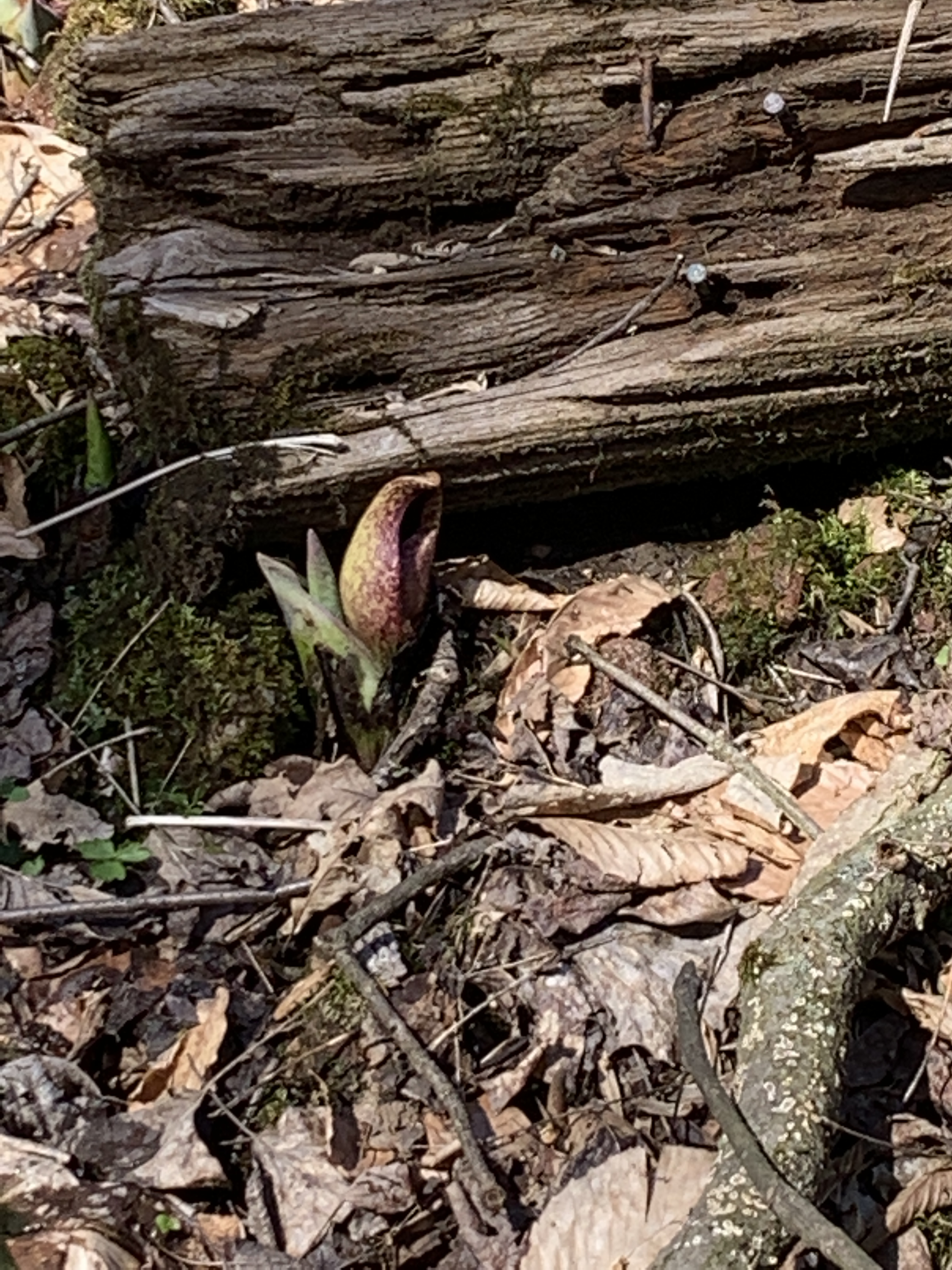
skunk cabbage — a malodorous wetland plant and one of the first signs of spring
My grandmother came to the United States at 18, leaving her parents and siblings behind to start a new life in an arranged marriage to a man who was more than two decades her senior. She didn’t want to leave, but her father thought that the chances for her success — being married to a man who owned his own little corner store — were greater in American than in Italy where she lived on a farm, growing and raising what they ate each day, always subject to the vagaries of war, weather, and whatever political party was in power. And while I have greatly enjoyed the fruits of my grandmother’s emigration, I can’t say that her life was any better or easier here than it would have been had she stayed put in Italy with her family.
My grandparents did not enjoy a happy marriage. Age was a big factor, plus the depression sucked the life out of most people, but immigrants, as they always will, had it much harder being in the bottom rung of the socio-economic ladder. Making a living sometimes meant barely getting by. My mother tells the story of my grandfather who lost his store during the depression and, as a way to keep money coming in, sold Philadelphia pretzels, pushing his cart from one street to the next, starting early in the morning until late in the evening when he would go home, eat dinner, and fall asleep in his chair. There wasn’t much money coming in, but they didn’t go hungry either which was better than many people, and my mother, the youngest of three children remembers that while she didn’t see her father much, every morning there’d be three stacks of five pennies lined up on the sideboard, one for each child, and to my mother, that was an enduring sign of her father’s love.
rainbows follow the rain
My mother and her siblings were my grandmother’s heart and soul. When my grandmother lost her only son to MS she cried and cried, so much that she eventually suffered a brain aneurysm and died at the age of 60. I was 3 years old at the time and had no way of asking the millions of questions that I would have asked my grandmother over the years if I’d only had the chance, and so I make do with the stories I have, piecing my history together like a seamstress sews a quilt.
My husband’s extended family experienced a terrible tragedy this past week, one that has left us all shaken to our roots, one that will take years to recover from, if ever. It’s times like these we question the wisdom: of our beliefs, of our religion, or of God himself. The Buddha would say that the essence of life is suffering. I prefer to think that the essence of life is a journey whose ways and means and end are unknown to us, and like immigrants to a distant shore, all we can do is disembark, take a deep breath and a good look around, and dig in using all the tools God gave us, doing the very best we can every day because that is what we will be judged on: whether we were kind; whether we cared for one another in times of sickness and health; whether we listened with compassion and reached out with arms and hearts wide open to receive whatever might come back knowing that life is an ephemeral stream, just as quickly flooded as dry.
It’s Easter week, the holiest in the Christian calendar, a time of rebirth and renewal. It’s also Passover, and the first weeks of Spring. Everywhere we see the pattern of being reborn running throughout the natural world and ourselves. The daffodils do not decry the snows of winter, but wait patiently for the sun to warm their way back to the surface. Nature’s physical rebirth is our spiritual one because, even when we forget, we are inextricably linked with the mother of us all.
So today, no matter your denomination, take a moment to give thanks for all that life has given you, the good and the bad, and nibble at the bread in your arms and thank life and all its vicissitudes. We are here to learn and to grow. Sometimes our lives are tempered in tragedy and others times in good fortune, and while no one gets out alive, it’s up to us to choose what to do with the time we’ve been given.
May we all be safe; may we all be happy; may we all be healthy; and may we live in peace and harmony with one another, forever and ever. Amen.
Stories and prophecies surrounding Mother Earth and Father Sky are abundant in indigenous folklore where Indigenous People have long protected the earth from those who would seek to abuse her resources. That’s why it is so wonderful to see that storytelling tradition carried on using today’s media outlets.
Carole Lindstrom, an Anishinaabe/Metis enrolled as a citizen of the Turtle Mountain Band of the Ojibwe tribe located in North Dakota has taken on the fight with her beautiful children’s book, We Are Water Protectors, illustrated by Michaela Goade, which recalls water as “the first medicine,” the place from which we all started, a connecting and unifying force of creation. Today, water is under siege, the young protagonist in Water Protectors says, and inspired by her grandmother’s stories, she stands to lead her people to fight the Black Snake that threatens all of creation. The fight will not be easy but if she wins all of creation will benefit.
The Seven Fires Prophecy from the Anishinaabe tribe talks of two roads before mankind, one a natural path with respect for all living things, the other a paved-over highway that continues to accelerate at faster and faster speeds through technological and other advancements — much like the movie Koyaanisqatsi depicted four decades ago — one where the earth is an afterthought.
The Seven Fires Prophecy says the Black Snake is a result of the hurried path and, if left unchecked, will blanket the world in much harm and ultimate destruction. Indigenous Peoples believe the black snake is the embodiment of the oil pipelines that have spread like ley lines across our world.
In April 2016, the Standing Rock Sioux Tribe stood up to the Black Snake in an attempt to block the Dakota Access Pipeline. It’s been years of picketing, protesting, and legal battles for the tribe and others, the latest being a win before the U.S. Court of Appeals who said a full environmental impact statement was needed before the future fate of the pipeline could be decided. The next hearing is scheduled for April 9, 2021.
Lindstrom’s protagonist says the fight will not be easy, but it is necessary if we are to survive.
By working with native tribes, those who have held the land close to them like a mother holds a newborn, we just may be able to make our way out of our climate change mess.
It’s time to take the ancient medicine and walk the road of the natural path. It’s time to return to our Mother what belongs to her. It’s time to revere that which gives us life.
When the kids were little I think I did a hundred loads of laundry a week.Okay, that’s an exaggeration, but I easily did a few loads every couple days, depending on their activity levels.At that time, I was a big fan of the large laundry detergent containers with the built-in spigots.I positioned the detergent on the shelf above the washing machine, pressed the button and let the river flow right into the machine to the count of three, released the button, shut the lid, and voilà, a great and efficient system with no need to get laundry soap all over the little plastic cup that came with it.
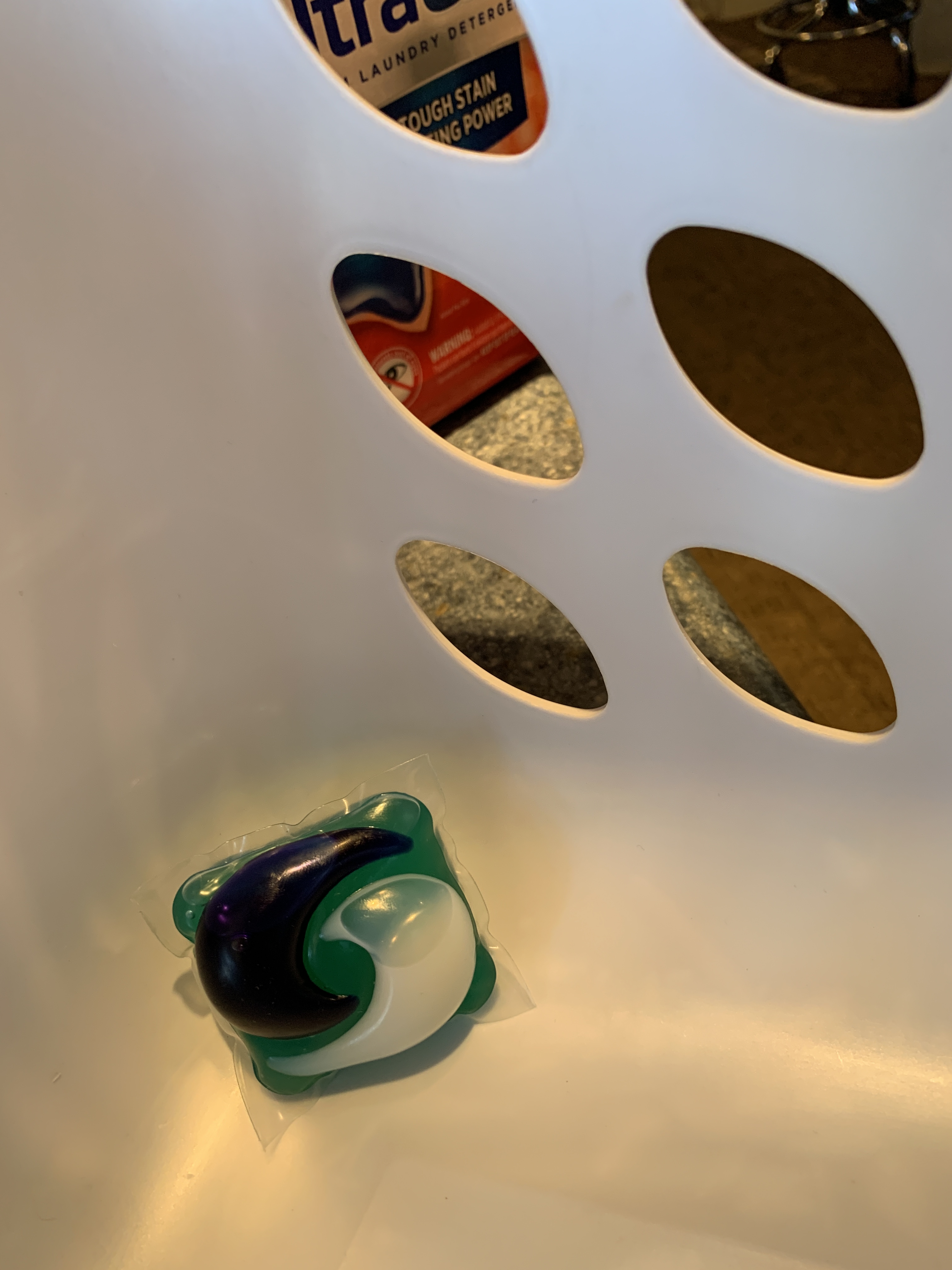
Enter the manufacturer, in this case Proctor and Gamble (they were first), who, on a constant quest to improve their products and packaging, developed the Tide pod.Everyone makes them now for laundry and dishwasher soap — a pre-measured dose of detergent, stain-remover and brightener all in one.So simple.So elegant.So easy!Toss in a pod, maybe two, depending on the size of the load, shut the lid, and you’re done.No over-pouring or under-pouring, no counting to three, just the correct amount every time.No fuss, no muss, no spilled liquid detergent, no rinsing out the little plastic cup.It was fantastic, economical, the most efficient distribution system going, an example of a perfect improvement.
Then it hit me.The “package” that the pod came in was not a perfect delivery system — it was plastic, and that sure couldn’t be a good contribution to my washing machine’s effluent.So I did a little research and at first, all I could find were the various manufacturers’ claims that the product was safe.The outside casing of these pods is made of polyvinyl alcohol, or PVA, also known as PVOH, a synthetic polymer and hydrophilic substance, meaning that it dissolves in water.
Now excuse me if I don’t always believe what the manufacturers say.We’ve all been duped before, right? — they said PFAS was perfectly safe and look at the mess that has become — so I asked a couple chemist friends to clarify, but no one could say with certainty although they all promised to look further.Despite follow ups, I couldn’t get a confirm or deny.That was about a year ago, and since I was pretty busy at the time, I shelved the topic.Then a few weeks ago I was talking to my mentee who has a science background and I mentioned my polyvinyl alcohol conundrum.
“Isn’t that what they make liquid tears from?” she asked.
In fact, it was.They call it artificial tears, and it’s available over the counter.Feeling better — surely manufacturers wouldn’t sell a product known as artificial tears if it left a plastic residue in your eyes — but not totally convinced, I dug deeper and apparently, it is true!Polyvinyl alcohol is a water soluble plastic compound that completely breaks down in water leaving no microplastics residue. See here and here.
Given that we now we have microplastics in our tea bags, in every animal that’s been studied, in our bodies, and in our beer, this was indeed good news and something that seems like an environmental asset rather than a liability. Finally, some good news on the plastics front. Also, good to know that my desire for clean clothes is not adding to the plastics mess.PVA costs more to manufacture than regular plastic, but we humans and the earth we live on are worth it.
Kudos to the manufacturers for this great breakthrough.Let’s keep it going.






















 Green Life Blue Water