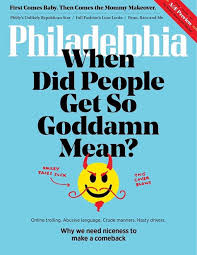
A few weeks ago, I found this copy of Philadelphia Magazine in the lunch room at work, left, thankfully, by a fellow magazine recycler who’d obviously enjoyed the issue and wanted to share — a nice guy (or gal). The cover not only caught my attention, but echoed something I’ve been fretting over years.
I didn’t grow up in Philadelphia, but I lived there for a decade and I’ve worked there for almost three, and let me tell you, monikers cannot only be deceiving, but downright wrong. The City of Brotherly Love, as Philly is known, is a rough and tumble place when it comes to manners, unless by brotherly they mean frat brothers who’ve been out on a three-day bender. It’s been over 20 years since I’ve lived in the Philadelphia, but even then I bemoaned the general lack of politeness. I’ve always maintained that it’s our civility that has allowed us to evolve as a species. Take away tolerance and what do you have? A bunch of people who want to beat the crap out of each other when they don’t like what the other guy: looks like; is wearing; is eating; is doing; has to say; the list goes on.
I guess the editors at Philadelphia Magazine felt it was time to address the City of Bad Manners in a tone everyone could understand. You can find that article here. Do read it as it’s a delight.
I think that this is not just good for Philly, but great news for the world at large and perfect for this month’s We Are the World Blogfest, #WATWB. Niceness makes a comeback. And why not?
Isn’t it time for niceness to be front and center again? What if Congress and the Senate injected a bit of niceness into every one of their sessions and said things like, “Hey, want to get a beer after work and talk about this immigration issue?” or “How can we best reduce the deficit without taking away some very important social programs that people rely upon?” to someone in the opposite political party? What good might come out of that? What if Christians and Muslims and Jews all decided to put differences aside and have a Coke together, perhaps talk religious theory instead of dogma and find their commonalities instead of their differences? What if instead of responding in anger to the driver who cuts us off in traffic, we responded with a smile, a nod of the head and an intrinsic understanding that we’ve all been there, we’ve all had bad days, and life can be tough sometimes. You’ll never know what the other guy is going through unless you stop and ask, or even just listen.
Maybe today is the day we all do that. Imagine — a world where all sorts of people from all different places with all different hair, skin, eye color, food preferences and religions, simply got along. How nice would that be?
2. Link to a human news story on your blog, one that shows love, humanity, and brotherhood. Paste in an excerpt and tell us why it touched you. Accentuate the positive!
3. No story is too big or small — as long as it Goes Beyond religion and politics — into the core of humanity.
4. Place the WE ARE THE WORLD badge or banner on your Post and your Sidebar.
5. Spread the word on social media. Use the #WATWB hastag. Let’s start a movement!
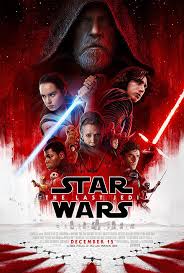
After weeks of trying to get to the theatre, of sold out shows and unexpected snow events, of sickness and schedules that wouldn’t sync up, we finally saw Star Wars, The Last Jedi. It didn’t disappoint, and I was still thinking about some of the psychological motivations for the characters days later. Yet, as much as I loved it, I have one nagging, perhaps really dumb question:
Why is Kylo Ren so mad?
Kylo Ren, (Adam Driver), is a beast of a man/boy who explodes in a blinding rage whenever he doesn’t get his way. You know the type — the kid who was the center of everyone’s attention, who got every darn thing he ever wanted, and who never heard the “N” word, as in “No, you can’t have that,” or “No, you can’t do that.” Now, if your mom is off being a general in a war of good vs. evil and trying to save the universe (great and sad last performance by Carrie Fisher as General Leia Organa), and your dad has a tendency to go rogue and galaxy hop a lot, well, maybe you didn’t get the kind of attention you needed. Perhaps he was raised by nannies, or little Yoda acolytes who spoke in backwards sentences and metaphors that he didn’t understand, or maybe I missed a movie that explained all this, and right now you’re rolling your eyes and thinking, “Holy crap, does this woman know anything about Star Wars?”
If that last bit was your reaction, I direct your attention to the subtitle, above. Even though I’ve been following this series since it first came out when I was in high school, I’m not a Star Wars zealot, obsessively questioning every plot point and executive decision so I’ve probably missed a few things along the way. I get that the Supreme Leader compromised Kylo Ren’s soul and all, and that could be more than a little disconcerting to a young man, but Ren teeters between extreme composure and extreme rage in such exacting bipolar behavior that one wonders if he’s more than internally conflicted, but also chemically imbalanced.
Kylo Ren’s inexplicable anger aside, there were so many things to love about this movie. One is the fact that this past summer, I was with my expat Irish now American friend, Barbara, who, over a two-week period, graced me with a tour of a lifetime around the Emerald Isle. While on the Dingle Peninsula in County Kerry, we were a short boat ride away from Skellig Michael, the little island to where Luke had retreated to live out his days, an island that was once home to Medieval monks who arrived sometime in the 6th century and stayed for hundreds of years thereafter. They built those beehive houses and the beautiful steps leading up to them and maybe also did some transcribing of the Bible while they were there (see, How the Irish Saved Civilization). Those huts, paeans to sacred geometry, were built all over the Dingle Peninsula so we got to experience Luke’s world firsthand, and had a taste of how cold it would have been to live in one since, despite being summer, it was rainy, cold and blustery that day. Had the weather not been so crappy, we would have gone to Skellig Michael, but in retrospect, I’m glad we didn’t because this Unesco World Heritage Site risks being trampled to death by tourists, clamoring to experience the pristine beauty of the island and relive the Star Wars experience. Tourism can be great, keeping a national or world treasure alive and in shape with the influx of cash it provides, but it can also be the death knell for a more delicate ecology as is the case with Skellig Michael.
Then there’s Rey (Daisy Ridley), a character who you just love to love, so full of a grit for goodness that her enthusiasm sweeps you along even if you don’t want to go.
The combination of naiveté, curiosity, and a belief in The Force, this unexplained and inexplicable energy that was always bubbling inside of her, created a fully balanced character with a zest for life that didn’t waiver even when the search for herself did. Knock Disney all you want, but they’ve come a long way since the days of Snow White and Cinderella. They’ve been doing this women’s empowerment thing for a while now — Beauty and the Beast (1991), Pocahontas (1995), Mulan (1998), The Princess and the Frog (2009), Brave (2012), Frozen (2013), and Moana (2016) (I’m still singing the songs of the last two), to name a few — and be it prescience, trend setting, or just good marketing (in 2016, there were 1.06 women being born to every 1 man so catering to women tastes makes good business sense), my daughters have grown up thinking, heck, knowing, that girls can be fierce and fiery and in charge if they want, i.e., masters of their own universe. That’s what The Force is all about, right? Being in control of yourself — the opposite of Kylo Ren, I might add — and as a result, mastering control of the natural world around you? With the #MeToo and #TimesUp movements experiencing a groundswell of support following the many sexual harassment allegations against so many famous men, maybe the 21st century will be the time when, to quote Annie Lennox and Aretha Franklin, Sisters Are Doin’ It for Themselves (Eurythmics, 1985).
As for the movie itself, finally we get a plot line that balances male and female energies. Rey and Kylo are practically kids. They have a lot to learn about life in general, yet they both have mad Force skills and they’re not afraid to use them. You just know their story is only beginning. That they could talk to each other across the airwaves — facetiming without cell phones — was a nice touch. We’re not really that far away from such times, considering the advances in technology and our continued evolution and understanding of the human brain.
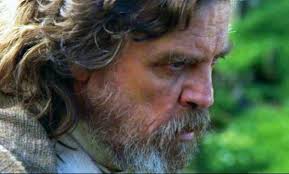
Of course, the struggle of a handful of rebels against the humongous evil empire has always been there, some eras more than others, like in today’s political climate — as of this writing, the federal government in the U.S. is partially shuttered because our esteemed politicians can’t seem to come to agreement on anything — but it’s especially poignant when the original Star Wars heroes are being phased out like baby boomers out of the 21st century workforce. The Last Jedi refers to Luke Skywalker, of course, and his self-imposed exile follows a self-inflicted fall from grace. How many of us have done the same, made mistakes that we never forgave ourselves for, allowing the rest of our lives to be hijacked by grief and self-flagellation. The Mark Hamill scenes were some of the most poignant of the movie, the denouement for a character that’s captured the hearts and minds of several generations of kids so many of whom are now parents, and maybe have their own demons to wrestle.
But best of all is this: the Force is democratic in nature. Not as in Democrat vs. Republican, but democratic, meaning, socially equitable, egalitarian, and available to anyone and everyone if they are just willing to feel it in their hearts. In an age with so much infighting, where politicians can’t be trusted beyond your line of sight, where everything seems lost or on the verge of it, Star Wars, The Last Jedi gives you hope: for greater equality, that cooler minds will prevail, that even when things are decimated beyond what we ever thought possible, we can still rebuild. Hope, and a reason to dream. Isn’t that what great movie making is all about?
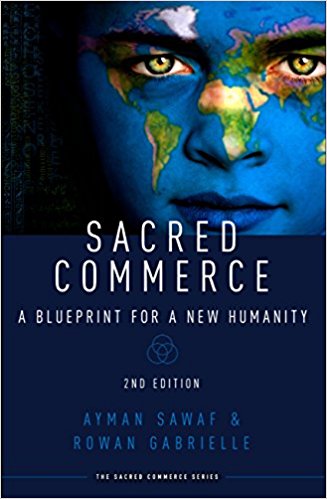
I recently reviewed, Sacred Commerce, A Blueprint for a New Humanity, by authors Ayman Sawaf and Rowan Gabrielle. In their brilliant book, Sawaf and Gabrielle talk about the emotional alchemy practiced by the merchant priests of ancient Egypt. As the name sacred commerce suggests, transacting can be an enlightening experience, not the greedy, capitalistic one that we seem to feel is necessary today in the 21st century, but one that assures all parties are equally respected, get the benefit of the deal, and that in every transaction, be it for an ounce of spices or a ton of brick, the parties are gratified, a win-win. For the merchant priests, emotional alchemy was their stock-in-trade and to practice it, they followed the path of Beauty, Goodness and Truth, no easy feat given that the people of ancient Egypt were so invested in “root” chakra thinking. Their main concern was survival and a bad business deal could mean no food on the table during a period in history where you couldn’t just put the week’s groceries on your credit card. By focusing on Beauty, Goodness and Truth, the merchant priest was able to elevate an entire marketplace with his resonance, expanding the field farther and farther beyond his person like a supercharged bubble of light and positivity. Just being inside the bubble changed you into a calmer, fairer, more gracious version of yourself.
It’s hard to think of a modern-day equivalent. Traders on Wall Street want the best deal for their clients and all the yelling and screaming is designed to elicit that singular deal for their clients alone. Our current leadership with its message of “America First” has not sparked the community problem-solving/brain-storming sessions that we will need to avoid the environmental Armageddon that seems destined to take us out if we don’t change course soon. Of all the Peoples of earth, perhaps the closest equivalent to the merchant priests are the Buddhist monks who spend hours chanting for the health and well-being of people they will never meet. But one small group in a world of over 7.5 billion people is not enough to elevate us all.
In the routine business dealings of the last century, the only thing that mattered was the “bottom line,” i.e., how much profit a business made. However, in 1994, John Elkington, an author, advisor, and entrepreneur who is known as a global authority on sustainability and corporate responsibility thought differently, coining the term, “triple bottom line.” In addition to profits, businesses should strive for and be guided by social and environmental/ecological goals. This assures a win-win for everyone and the planet and sounds a lot like merchant priest-speak. Similarly, by introducing spirituality into every exchange, you elevate that transaction above the 3-D world by including the “4th bottom line,” a/k/a, “spirituality.”
As an exercise to understanding the mindset of the merchant priest, Sawaf and Gabrielle recommended focusing on the 12 virtues of the merchant priest — honor, loyalty, nobility, virtue, grace, trust, courage, courtesy, gallantry, authority, service, and humility — to “automatically lift us to a higher octave of being.”
As a personal exercise for 2018, I’m going to take their advice and focus on one virtue a month until the year’s end. For the month of January, it will be “honor.” I like this idea of concentrating on one thing for an entire month. It’s so un-2017 where I focused on 14 different things every three seconds 24/7. It’s exhausting, frankly, and not all that good for your brain. So I’m taking the time to settle in, think it through, breathe a little, and when I’m ready, I’ll report out. Perhaps I can increase my own resonance in this manner, and in a small way, uplift my little part of the world.
A most happy and healthy New Year to you and yours. May this year be the one where we wrangle less over trivial matters, look within rather than without for answers to what really matters, and lift our heads to the sun, and each other, more frequently. May we each find nothing but love reflected back to us from every face we see — for that is the real gift of resonance.
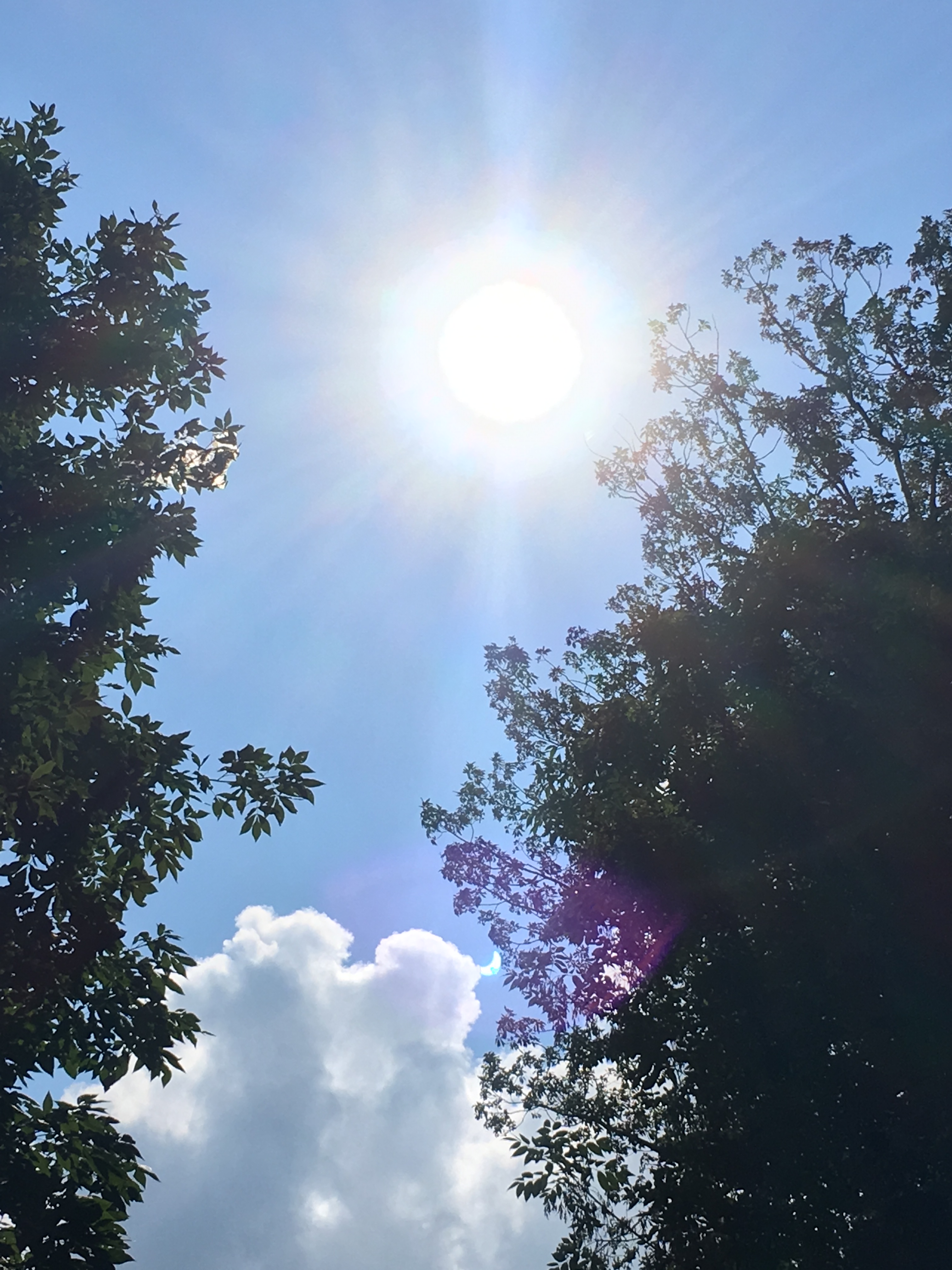
Since the fall equinox, the bringer of earth’s light, that heliocentric fireball we spend our days and nights circling has been getting more and more stingy with its gifts, about 55 seconds a day more stingy. The winter solstice, on December 21st, is the moment when the north pole is tilted farthest from the sun, giving the earth the fewest hours of sunlight in the entire year. This year, sunrise is at 7:16 a.m. in NYC and the sun clocks out at 4:31 p.m., giving us a whopping 9 hours and 15 minutes of daylight. It’s no wonder the ancients threw parties and held feasts at this time of year. They were coaxing the light back into the sky and hoping a good party would be the way to do it.
There are other stories of the season. Greek mythology tells of Demeter, the goddess of the earth, agriculture and fertility, and the mother of her adored child, Persephone. When Hades kidnapped Persephone and brought her to the underworld to be his wife, Demeter lost her mind and took her desperation out on earth’s inhabitants, causing everything to wither and die. The people were starving so they prayed to Zeus who intervened, sending Hermes to retrieve Persephone and bring her back to the land of the living. But Hades tricked Persephone who had refused all food or drink until this time, and knowing Hermes was on his way, he told Persephone she was free to go and handed her a pomegranate. Well, by this time, the kid was starving so she had a nibble. When Hermes arrived and said, “Let’s go,” Hades said, “Hey, what’s that on your tongue?” Turns out Persephone had six pomegranate seeds in her mouth which meant that for the rest of her life she would have to spend half of each year in the Underworld with Hades. So goes the myth of how we came to have the seasons. When Persephone was topside, Demeter was joyful and there was a bountiful harvest, and when Persephone was away from her mother, the world became dark and cold and desolate.
For years, people prayed to the sun, thinking it was an actual God and the source of their abundance. Without the sun, earth was in a perpetual state of night, a dismal place like the endless winter of Demeter’s dismay. Yet winter wasn’t all Demeter’s doing. Apollo, the sun god of the Ancient Greeks, the bringer of light to the earth and the one who tipped Demeter off to Hades’ abduction was also involved. Without Apollo, crops didn’t ripen and the earth didn’t warm. Apollo still took to the skies every winter morning, but his solar beneficence waned on those dark days as he streaked across in his gilded, horse-drawn chariot, holding his brilliant warmth back in solidarity with his fellow Olympian who was grieving her lost child.
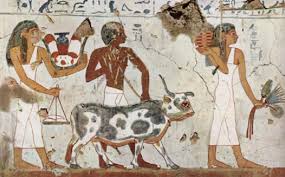
The hieroglyphs of Ancient Egypt also portray early man’s fascination with and dependence upon the sun. The Egyptians prayed to Ra, the Sun God, the bringer of light. Over time, the Pharaoh, who the Egyptians believed to be a physical embodiment of the god Horus, one who “sits on high”, and Ra became inextricably intertwined — possibly because they both bore the symbol of a falcon’s head, but more likely because they both were bringers of light and wisdom to the Egyptian people — so much so that eventually, Ra, Horus, and the sitting Pharaoh all presented as one and the Pharaoh of Egypt became a god to his people.
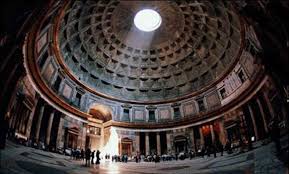
Sun worshipping and pagan rituals weren’t even cast aside when the Catholics came to town, but were subsumed by the Church to assist with the pagan conversion to Christianity, a brilliant plan, really, and one that made subjugation more palatable and the pagans more pliable. One only need look at the Pantheon in Rome to see such brilliance in action. In continuous use since the 7th century, the Pantheon was built by the Romans as a sacred place of pagan worship and later co-opted by the Catholics as a church dedicated to St. Mary. By replacing the iconography of ancient gods with that of modern-day saints, the Pantheon stands as a testament to how pagan rituals informed and transformed modern religion.
The winter solstice, celebrated by the pagans as the day the sun stands still —sol, meaning sun, and stice, meaning still — was intertwined with the birth of Christ, a day that the world stood still. No one knows on what day Christ was actually born, but the first celebration of his birth was December 25, 336. By melding the two, christianity successfully co-opted a pagan ritual.
With the advent of science and the discovery of the heliocentric nature of our solar system by Nicolaus Copernicus, and his theory’s later championing by Galileo Galilei, man’s perceptions changed again. That the earth revolved around the sun and not the other way around was considered blasphemous by the Catholic Church, and Gallilei went on trial as a heretic. He recanted to save his life (who can blame him?), but few believed the confession, and modern science forged ahead.
Our perceptions are still evolving. That amazing, vibrant body composed of hydrogen and helium, and a few other (about 9) elements, which form a hot dense mass capable of sending enough heat down to fire up our entire planet, our very own combustible source of energy and light, stands ready to be harnessed. According to NASA, the sun produces enough energy to supply the United States with 13 billion years of energy, and that’s in one second! It’s time we used it by developing environmentally beneficial, sustainable technology that’s good for mother earth and for us.
The good news is, the technology is here. Now if we can just get Congress to incentivize solar technology instead of giving all the tax breaks to oil and gas.
It’s 6 a.m. My last kid at home, a high school senior, told me before she went to bed some time way too long after midnight that she wanted to get up and study for her (insert subject du jour) test over breakfast. I’m in support of this because she stays up way too late studying, procrastinating, acting all ADHD and OCD, spinning in tight circles and carrying on about the work she should be doing, checking her Snapchat streaks, and scrolling through texts on her phone, anything but the task at hand. Our argument is the same every night. I say stop procrastinating and finish your work because your brain needs sleep. She says okay and then does what she wants anyway which is basically the opposite. (My mother says I used to do that all the time as a kid, so, karma?) I’d rather she get up too early than go to bed too late so I give her a gentle shove in that direction.
I don’t think it’s intentional, but everything takes her twice as long as it should. Simple things like putting away her clothes become a monumental event with all the distractions. A shower can take over an hour, the water running and running (a sustainability nightmare!). I try a laissez-faire approach on the pile of clean laundry on the bed, waiting to be folded. The pile grows and by the end of a week, I finally give up and fold it myself. If I don’t, she sleeps under the pile as if it wasn’t there.
Her time management skills are, shall we say, in development. Was I like that, too? I don’t remember. My mother had rules, lots of them, and chores had to get done before anything else. I was a little more lax with my kids. Perhaps I encouraged them to spend more time at being creative since I felt I hadn’t had enough of it. Apparently, she took it a bit too literally. Still, no one plans not to get enough sleep and that’s really the thing I care about most.
She’s currently studying sleep patterns and circadian rhythms in Psychology — all about how lost hours of sleep deprive a growing brain of something critical, how protein chains misfire, how the eyes are the last to heal after a long day of using them, and how sleep is crucial to all of it. Maybe she’ll get it now? She fell asleep super early one night, got up at 2 a.m., studied a bit, went back to sleep until 6 a.m., following her own circadian rhythms, a tough thing to do in a 24/7 society, but a good start in listening to what your body needs. I tell her how Leonardo da Vinci, one of the most brilliant minds of the last 2,000 years slept 8 hours of day, but only for 4 hours at a time (and look what he produced!). I worry about how we as a society are failing ourselves and our kids by not insisting on rest, how we talk, almost to the point of bragging, about how little sleep we get.
Rather than lead by example, I wake up early in an act of solidarity because she’s terrible at getting up on her own, and even though my brain is craving its own communion with my Higher Self, I go where I am needed. I make her eggs, brew her tea to take to school, pack her lunch, make sure she takes vitamins, cater to her like a visiting dignitary. My oldest was so self-sufficient by sixth grade that I rarely packed her lunch. Same with my methodic, second child who got up half an hour early so he could eat a leisurely breakfast, pack his lunch and take a 20-minute nap before school. But this one, no way. My husband says I need to pull back, let her figure it out, but as we round the corner of her last year at home and what will inevitably be an empty nest for us (if you don’t count the four-legged kids), I could no more stand by than I could miss senior graduation.
I don’t think we ever lose the desire to have someone care for us, no matter how self-sufficient we become. I remember way back in first grade, sitting at mass, or maybe it was an assembly. St Francis elementary school was building a new church and it took awhile to raise the funds so for a time, mass was held in the cafeteria/social hall which doubled (tripled?) as a church. The day before Christmas break we were sitting in the social hall and a noise behind me drew my gaze. I saw someone walking past the doorway, carrying bags, and a thrill ran through my body. In that instant, I knew we’d go back to our classrooms and find a special Christmas treat on our desks. When the assembly was over we returned to find a candy cane-shaped mesh bag full of sweets. To a first grader, this was magical, like Santa himself had come for a visit. Secret acts of caring. I indulge the memory and it restores my faith.
Top line drivers don’t get there alone. They need their pit crew, waiting on the sidelines, ready to deal with any emergency, and even though we have one that’s made it through college and one halfway through that process, there are still emergencies. The time I spend in support of my kids is paramount to almost anything I’ll ever do with my life, although competing interests sometimes threaten to knock us out of the race. My understanding of all of this is palpable, and I never regret my chosen role, in fact, I relish it.
Now if I can just stay awake until the race is over.
Wow, did we go through a whole cycle of the moon already? It seems like a minute ago we were here, spreading the good news, uplifting each other and ourselves. And given that this time around the We Are the World Blogfest, (#WATWB) is the day after Thanksgiving, it’s only appropriate that this post is one of giving thanks. Here are three stories of thanks-giving that I’d like to share:
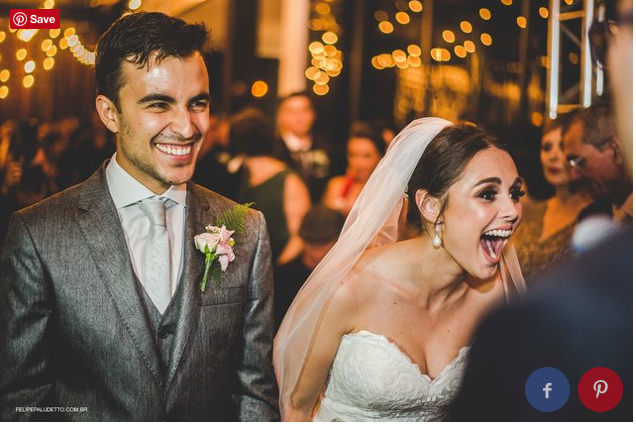
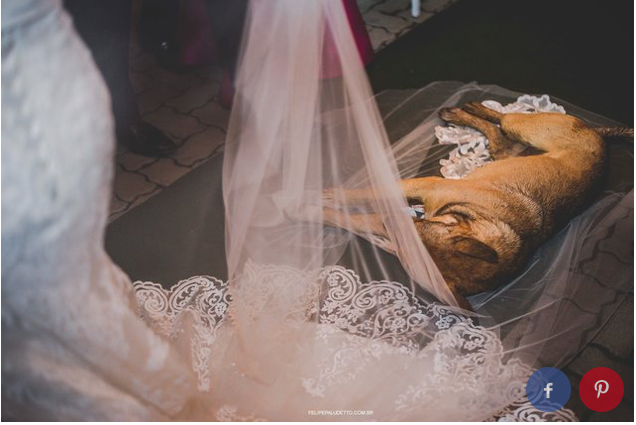
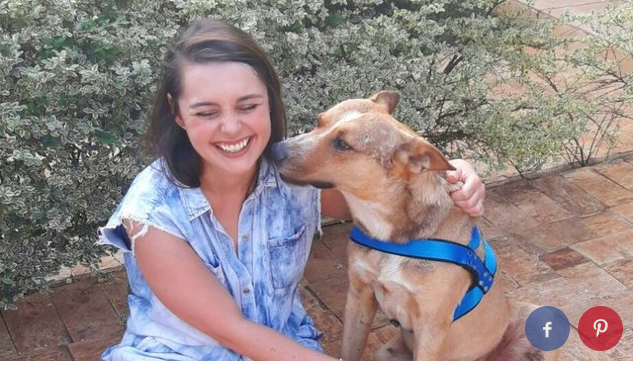
The first is about a Brazilian couple who met their future dog on their wedding day. The dog, a stray, crashed the wedding and then, despite being shown to the door a time or two, stuck around for the nuptials and even took a nap on the bride’s veil. Check the story out here:
Want more inspiration? The Greater Good magazine out of Berkeley, California offers tips on becoming more grateful. Check them out here:
And finally, one of the most forward thinkers of our time offers us “The Thanksgiving Reader” for those who want to immerse themselves in family, gratitude, and possibilities.
The quotes and thoughts therein will provide inspiration for making a ruckus of a grateful noise around your Thanksgiving table.
I know these stories will provide your heart with the lift it needs.
In case you forgot the guidelines for #WATWB, here they are again:
1. Keep your post to Below 500 words, as much as possible.
2. Link to a human news story on your blog, one that shows love, humanity, and brotherhood. Paste in an excerpt and tell us why it touched you. The Link is important, because it actually makes us look through news to find the positive ones to post.
3. No story is too big or small, as long as it Goes Beyond religion and politics, into the core of humanity.
4. Place the WE ARE THE WORLD badge or banner on your Post and your Sidebar. Some of you have already done so, this is just a gentle reminder for the others.
5.Help us spread the word on social media. Feel free to tweet, share using the #WATWB hastag to help us trend!
Tweets, Facebook shares, Pins, Instagram, G+ shares using the #WATWB hashtag through the month most welcome. We’ll try and follow and share all those who post on the #WATWB hashtag, and we encourage you to do the same.
What do you call the New Age these days? If the New Age dawned in the 70’s, then it’s getting pretty long in the tooth, coming up on its semi-centennial, so wouldn’t a new designation almost be a necessity? What if what we consider New Age is actually as old as the pyramids of Egypt, older even, while the ideas contained therein have been rebranded for the modern world? Does that make it less new? Rhetorical questions, yes, but if you want some real answers about how to improve your business and life, read Sacred Commerce, a Blueprint for a New Humanity, by Ayman Sawaf and Rowan Gabrielle.
Sacred Commerce plays like an ancient melody, resurrecting and restoring the concept of conscious capitalism, bringing it to life through the quality of resonance, a trait that surely must be part of our human DNA for all our predisposition to it. It’s no secret that negativity breeds negativity, and that one person having a bad day can ruin everyone else’s (the one friend that is agonizingly grumpy all the time) be it with a dour countenance or some serious negative juju (any one of the public shootings happening with so much more frequency), but if you buy into the concept then the reverse is also true, someone with a super positive attitude can raise the energy level of everyone around them. Such was the job of the ancient merchant priests who were skilled in the art of “resonance,” the process of lifting the energy level of everyone around them by elevating their own vibrations. It’s a skill that took years, perhaps decades to perfect through meditation and conscious creation and its based on three elements of the Soul: beauty, truth and goodness.
The merchant priests drew sustenance from these concepts, meditating on them and incorporating them into their activities of daily living. By doing so, they were not only themselves elevated, but were able to elevate the entire marketplace, expanding their own energy and sending that positiveness out into the world much like a tuning fork resonates with another when its struck. In ancient times, life was base and chaotic, marked by fear and a whole range of lower emotions that lived side-by-side with people’s survival instincts, while life and death were viewed much more indiscriminately than they are today. Imagine having someone who could elevate the thoughts of everyone around them simply by holding a higher vibration. As the merchant priests focused upon the concept of beauty, for example, sitting off to the side in the open air market, their entire aura changed and they were able to spread this supercharged energy to everyone around them. This in turn brought out the principles of democracy, emotional intelligence, fairness and conscious commercialism as a means not just to sell things, but to bring out the best in the individuals affected. In this manner, every transaction becomes a brush with the Divine Feminine.
According to Sawaf and Gabrielle, our current system of capitalism, of bottom line dollars and greed above all else, is killing us and the planet. But fear not! We are on the verge of a renaissance, a return to the themes of beauty, truth and goodness, of conscious capitalism, of all for one and one for all, of the time of the merchant priest. Sacred Commerce recommends focusing on the 12 virtues of the merchant priest — honor, loyalty, nobility, virtue, grace, trust, courage, courtesy, gallantry, authority, service, and humility — to “automatically lift us to a higher octave of being.” If you want an inkling of what this new old world order will look like, read Sacred Commerce and immerse your Self and the world around you in a higher vibration.
Can we just agree that nothing screams “civilized society” like a well-kept public bathroom. Costs. maintenance, vandalism, and the like have resulted in the dwindling of this precious amenity, but if society is to retain its sense of propriety, then public toilets are a must. Sometimes in the early morning hours, the urine smell at the entrance to my office in Center City Philadelphia is so bad that I have to hold my breath. Sheltered by a roof and sitting back from the street, this particular space offers a bit of privacy, and while I don’t condone peeing in corners, if you’re homeless, it’s the perfect spot. But it isn’t just the homeless who need to avail themselves of a public potty. When you’re touring a new city or just out for a day around town, eventually, you’re going to need a place to wee, and since most establishments follow the rule that bathrooms are “for customers only,” that leaves the public toilet.
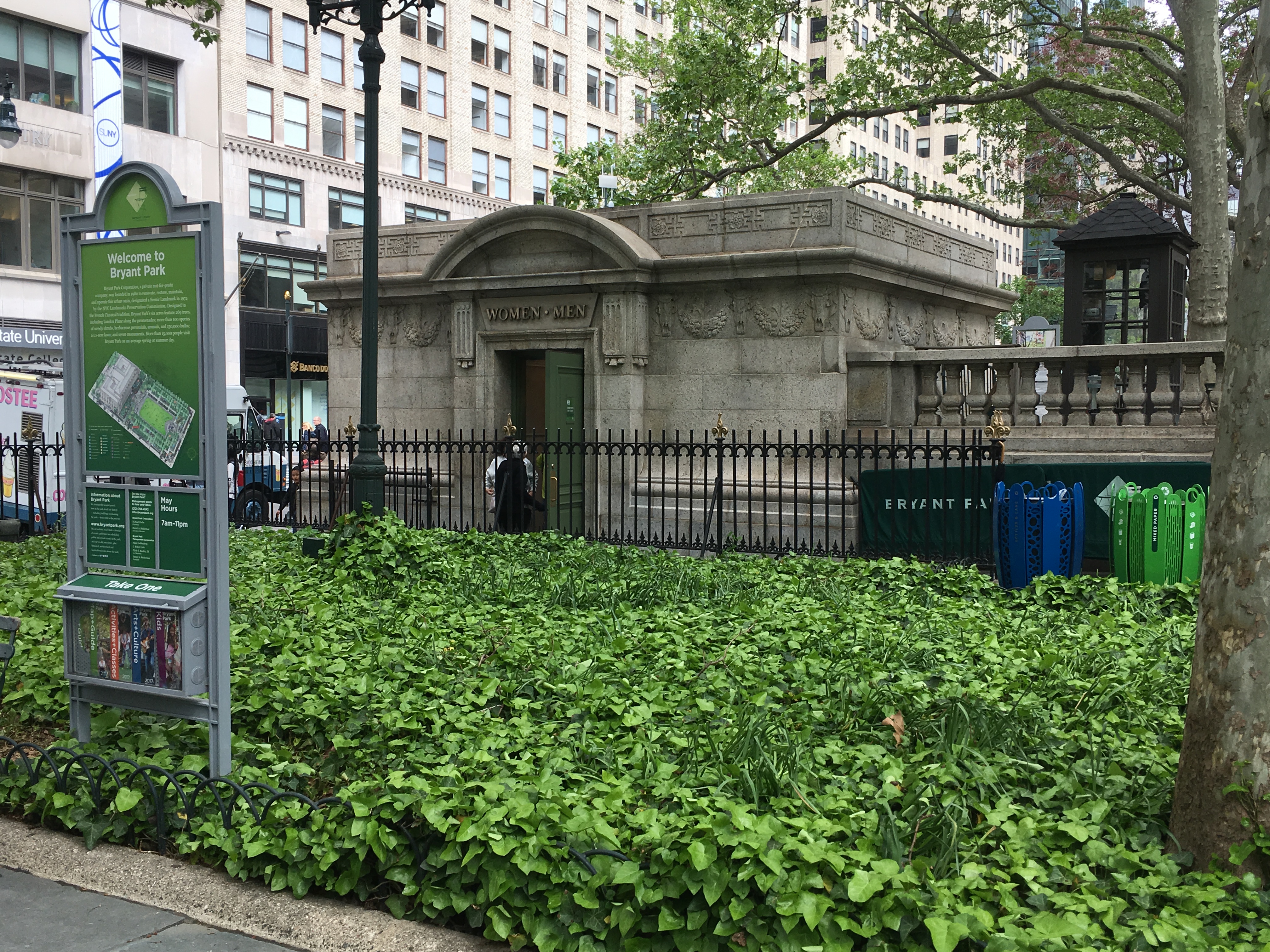
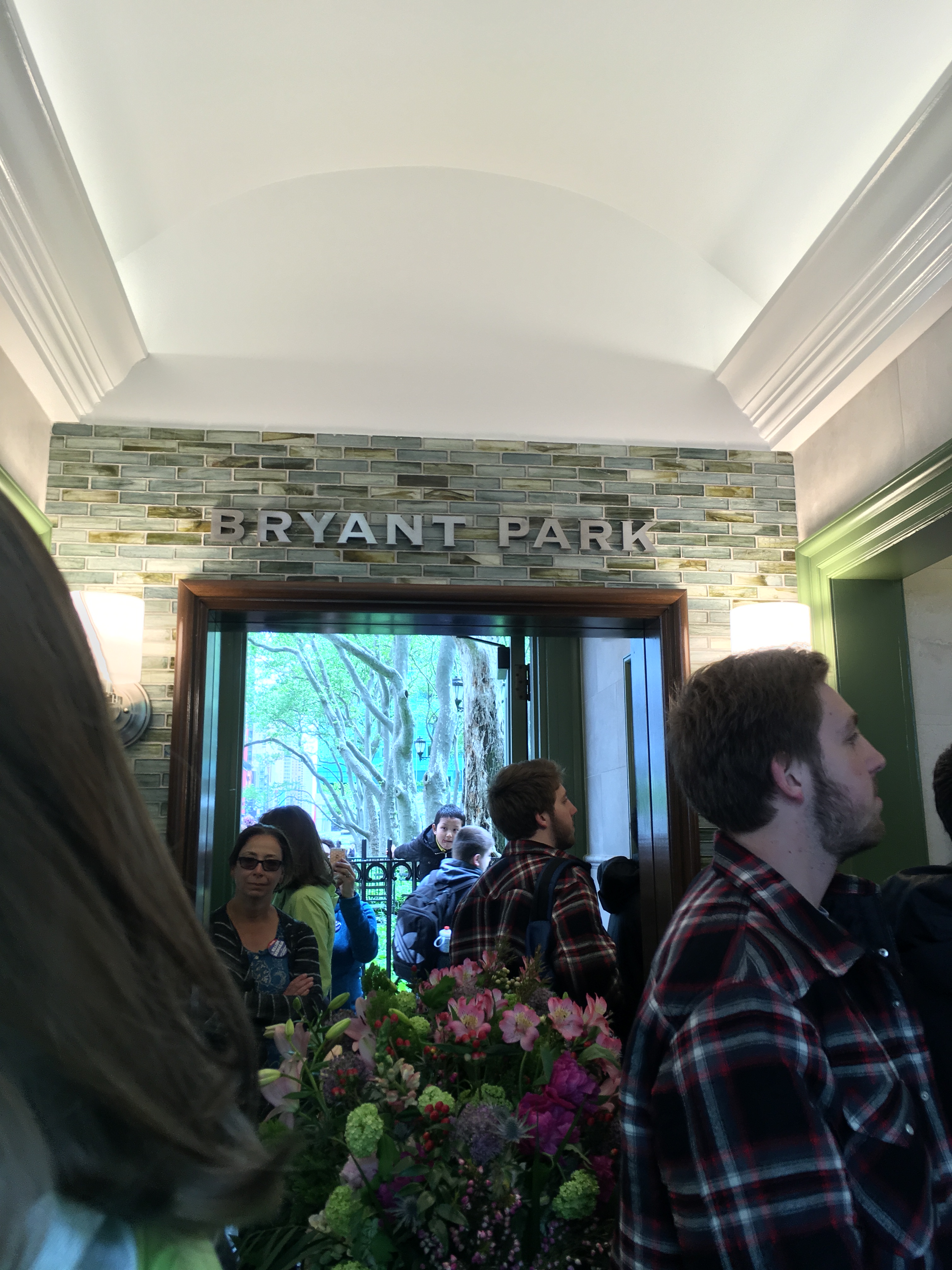
Let’s start with what I consider to be the gold standard here in the U.S.: the public bathrooms at Bryant Park in NYC, a gorgeous 315-sq. ft. Beaux Arts structure which would be equally at home in a 5-star hotel, one that The New Yorker calls “the Tiffany’s of public restrooms.” The 25-year old bathroom recently got an upgrade and now it’s even more divine.
Upkeep runs about $270,000 a year which covers over 14,000 roles of toilet paper as well as attendant’s salaries, and about $14,000/year for flowers (yes, real flowers!). Attendants earn between $25,000 and $30,000/yr., all paid for with private donations and sponsorships. They play classical music in the Bryant Park bathroom and any change to the lineup has to be run by the staff. In other words, the workers are invested. If you need to pee in NYC, Bryant Park should top your list.
Other NYC public bathrooms include the ones across from Washington Square Park, also attended, also clean, and large enough to accommodate the masses, as well as the Loeb Boathouse in Central Park, an indoor bathroom servicing the restaurant,
but which isn’t for patrons only. The bathrooms at Penn Central are a little less glamorous, but well-used and much needed after a long train trip. None of these bathrooms share the opulence of Bryant Park, but opulence isn’t the defining criteria for people who need to pee — access is.
A continent away, we have the communal toilets in Paris. In the glamorous attention to detail for which the French are known — or is it that everything seems more glamorous in French — as public toilets go, the French may have it all over us. Communal toilets in Paris were a product of the 19th century, a step up from the bed pan which, after use, was dumped out the window into the street or French drain. Disease was rampant and the average home was a hotbed of bacteria. It’s a wonder anyone made it out of the 19th century alive; today’s homes are sterile in comparison. As Paris became increasingly moderne, communal toilets, or chalets de nécessité, were built, and women — dames pipi — hired to monitor them. In the 21st century, nearly everyone in France who enjoys the comforts of a residence also enjoys indoor plumbing. Sadly, it is this very luxury which may prove to be the downfall of the remaining dames pipi. About a dozen women, all immigrants, have sued the city to reclaim their jobs, caught in the city’s revitalization efforts which included charging people to pee. The company that bought the remaining public toilets 2theloo wanted to create an extraordinary bathroom experience for the average Parisian, whatever that might mean, and the dames didn’t fit 2theloo’s vision so they were let go. The dames pipi filed a lawsuit and lost and now Paris has to pay to pee. Not to make light of the plight of these noble women who’ve cleaned the public’s toilets for decades only to be unceremoniously dumped (sorry!), but what about the people who still have to wee??
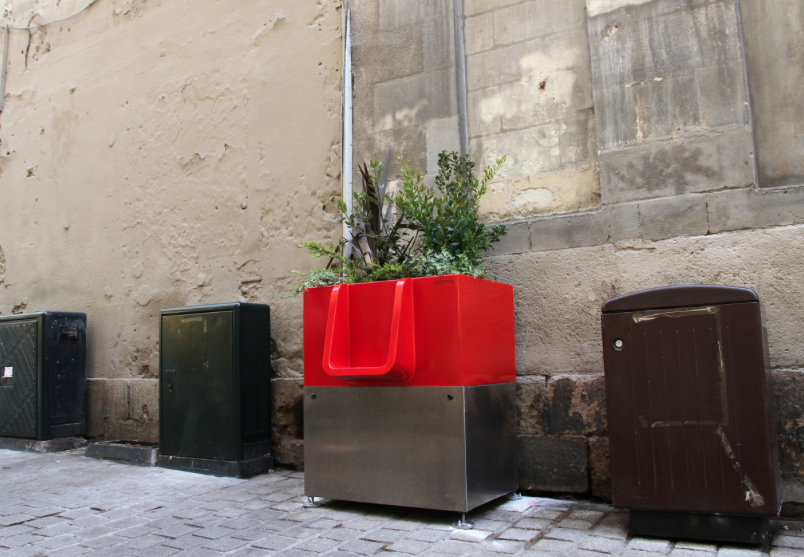
Two decades ago as many as two dozen toilets in Paris were free, but no longer. So where do people go when nature calls for surely not everyone can pay? Perhaps it was when the lamp post fell on a cab driver after one too many dogs had peed on it, causing the base to erode and the post to fall, or maybe it’s the persistent smell of urine in the streets and alleyways, but whatever the reason, France needed a solution. Paris’ current answer is the Uritrottoir urinal, a composting public toilet that also grows flowers and whose composted material may be used for fertilizers. It’s a truly sustainable product, beautifully well-appointed, well-tended, and a welcome relief if you need it, although I’m still not sure how women are able to use it given that it’s “open air.”
Other venues offer different solutions. For the city that wants accessibility, but doesn’t want to give up too much prime real estate, there are the beautiful, compact phone booth toilets such as the ones in Switzerland.
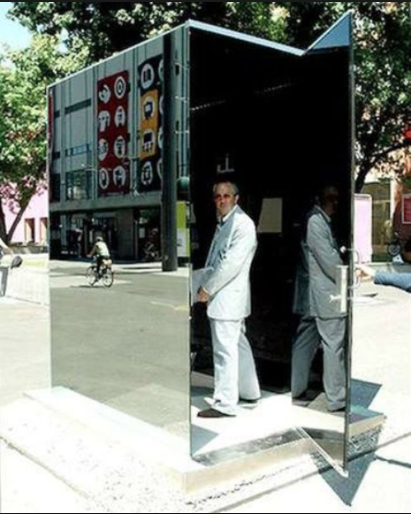
Other options are the two-way mirrored toilets, practical and able to be used on any street corner. You can watch the world go by while you’re in there doing your business, an unnerving experience, maybe, if you’re worried about the two-way mirror failing.
Of course, NYC has it’s on version of this cutting edge commodity of personal hygiene:
If you’ve ever desperately needed a bathroom, you know how welcoming the sight of any one of the above options can be. So perhaps it’s time to “give a shit.” Whether you’re here or abroad, November 19th is World Toilet Day.
To celebrate, why not do something to help alleviate the suffering of some of the over 2.4 billion people who don’t have access to a toilet? Donate to a charity that builds public toilets, contribute to financing a micro loan to help a family add indoor plumbing to their living situation, educate yourself on the state of wastewater in your country and the world. Due to our combined efforts, maybe someday everyone will have a place of their own to wee.
It’s time again for the We Are The World 🌎 Blogfest, #WATWB, occurring on the last Friday of each month. Started by a fine group of bloggers who wanted to focus on the good news as a way of expanding its reach, the #WATWB is like a balm for our battle-weary souls. Face it, it’s rough out there and more often than not, a bit of good news helps.
Here are the guidelines for the #WATWB:
1. Keep your post to Below 500 words, as much as possible.
2. Link to a human news story on your blog, one that shows love, humanity, and brotherhood. Paste in an excerpt and tell us why it touched you. The Link is important, because it actually makes us look through news to find the positive ones to post.
3. No story is too big or small, as long as it Goes Beyond religion and politics, into the core of humanity.
4. Place the WE ARE THE WORLD badge or banner on your Post and your Sidebar. Some of you have already done so, this is just a gentle reminder for the others.
5.Help us spread the word on social media. Feel free to tweet, share using the #WATWB hastag to help us trend!
Tweets, Facebook shares, Pins, Instagram, G+ shares using the #WATWB hashtag through the month most welcome. We’ll try and follow and share all those who post on the #WATWB hashtag, and we encourage you to do the same.Have your followers click here to enter their link and join us! Bigger the #WATWB group each month, more the joy!
Enjoy this story about a few groups in Madison, Wisconsin and Douglas County, Kansas who want to raise their vibrations one carrot, squash and string bean at a time. What’s that you say about raising vibrations? Well, you know, the best way to do that might just be to eat right — healthy, organic, non-toxic, non-pesticide-laden food grown in small batches, as opposed to acres upon acres of the same product, lovingly cared for by a group of like-minded individuals who know the value of community. Who knows? Maybe more than a few of them whistle while they work and that’s got to be great for the watermelon.
The groups are focusing not just on food, but on developing a “sustainable local and regional food system that supports equitable access to healthy, culturally appropriate food, nutrition education and economic opportunity.” Another one of the goals is the creation of a better food pantry so that those who don’t have access to this kind of healthy food can share in the bounty.
You can access the article here. Sustainable agriculture — locally grown, small-batched, organic food — is a must if we are going to make it, nutritionally speaking, into the 22nd century. Agribusiness with its acres and acres of a single, non-diverse product is not. Maybe you’ll want to start a community garden in your neighborhood. Together, we can make a greener, more verdant world, one little community garden at a time.
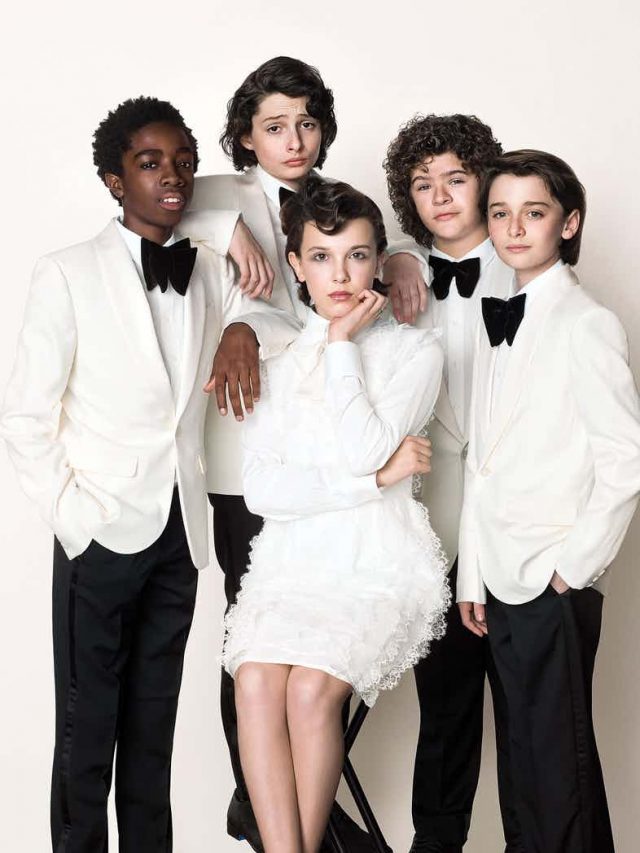
Winona Ryder, how we’ve missed you. Back in the 80’s and 90’s, Ryder was working so much it’s amazing that she had time for lunch, Heathers, Beetle Juice, Edward Scissorshands, Little Women, Girl Interrupted, The Age of Innocence, Reality Bites, iconic films that shaped decades of entertainment. In Stranger Things, a circa 1980s show that comes with all the fixings — the big hair, the fantastic music, the terrible architecture, even the acne — Ryder shows us why she’s still one of the most relevant actors of her time. She plays Joyce Byers, a divorcé whose younger son, Will (Noah Schnapp) has gone missing. Ryder’s Joyce is raw, unnerving, intelligent, almost unhinged, her life held in check, but barely, by sheer force of will, her own and her older son, Jonathon’s (Charlie Heaton). She and we both know that no matter what anyone says, something is definitely going bump in the night and if she doesn’t find her son, no one can.
The problem is, Joyce is considered a bit of a whack job around town so at first, no one believes her which makes Joyce even more hysterical. Prepare to experience heart palpitations right along with her.
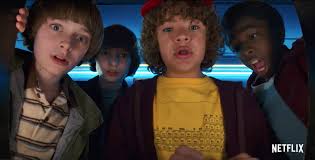
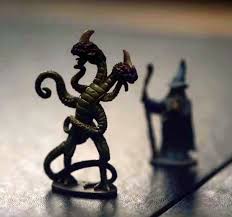
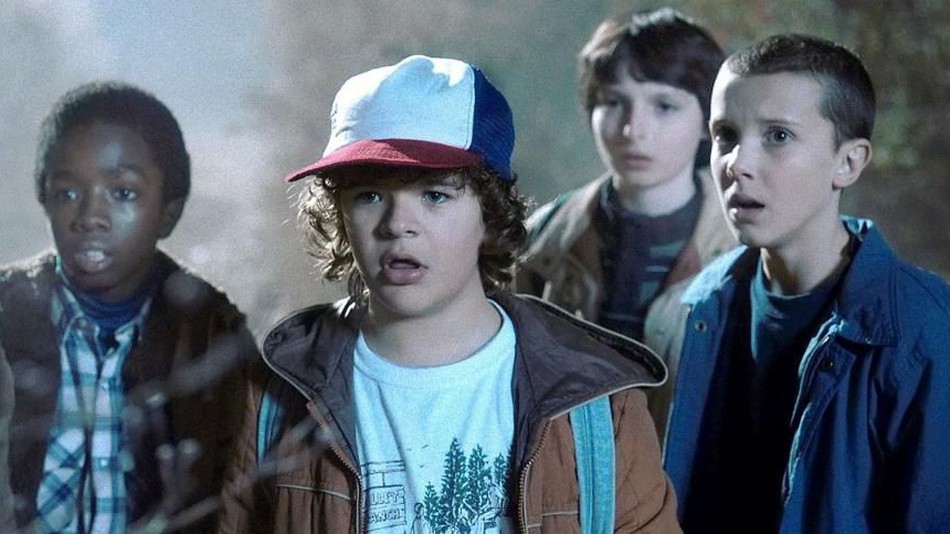
The story opens with four friends and science geeks, Will, Dustin (Gaten Matarazzo), Mike (Finn Wolfhard), and Lucas (Caleb McLaughlin), playing Dungeons and Dragons. They’ve been at it for the last 15 hours. When Mike’s mom calls the game, there’s a moment of confusion — the die is lost and Mike goes upstairs to negotiate more time. The die is eventually found, but it’s not good news for Will who decides to play it straight. In a move that foreshadows the entire season, Will is captured in the game by the Demagorgen, the game’s worst of the worst as monsters go. Rather than cheat, Will comes clean, remarking to Mike on the inevitability of fate before Will, Dustin and Lucas mount their bikes and head off into the darkness. (It’s still the 80’s and parents didn’t worry as much about stuff happening to kids out alone at night as they do now.) As the kids race home, Will chooses a shortcut through the woods, splits off from Dustin and Lucas and disappears. Will realizes a bit too late that he’s being pursued. Despite making it home and loading a shot-gun to fight the beast, the Demagorgan still gets him, but no one realizes it until the next morning.
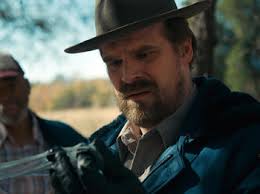
It’s The X-Files meets Stand By Me and the rest of this Netflix Original Series, eight episodes in total, focuses on the town’s search for Will led by Chief Hopper (David Harbour) and propelled by Joyce’s urgency. The day after his disappearance, the Byer’s receive a phone call. No words are spoken, only breathing on the other end, but Joyce is sure it’s Will. The call ends abruptly when an electrical jolt buzzes through the line (yes, in the 80’s phones had wires connecting them to a box on the wall!), with enough voltage to shock Joyce and scar the mouth and ear pieces of the phone. Lights have been flickering on and off in her house, a boom box randomly plays Will’s favorite Clash song, and Joyce believes
Will is trying to contact her through the electricity. She buys boxes and boxes of Christmas lights, strings them up everywhere, and writes letters below them, creating a life-size Ouija board so she can talk to Will. Time is limited. Joyce knows this.
Shades of the X-Files overlay each episode — the government conspiracy; the crusty cop, good at heart, but decimated by a life event that left him with a fatalistic edge; the creepy dark way the series has been filmed, adding to the broody horror of the story.
The home run of “Stranger Things” though, is the relationship between the four friends, plus the add-on of “11” (Millie Bobby) who appears soon after Will disappears and is the key to all the crazy unfolding events. Mike, Dustin and Lucas find 11— who they rename “El” — in the woods while searching for Will. She’s scared and hungry and they decide to hide her, stashing her in Mike’s basement while his parents carry on upstairs. Turns out, some creepy shadow government guys, particularly Dr. Martin Brenner (Matthew Modine), who plays mean magnificently, really are looking for El, so now it’s not just clueless parents the kids have to outsmart. Each of the characters has their own hero’s journey, and every episode has life or death consequences, especially for the kids.
My own kids turned me on to Stranger Things, but I couldn’t wait for them to finish watching and blew through all eight episodes in less than a week. (Seriously, try to find eight hours in a week just to watch TV. It’s not that easy.) The satisfying final episode resolves many of the strands even while leaving a giant cliffhanger for us conspiracy theorists to cogitate over until the start of Season 2 which is now upon us!
At a time when many of the movies and much of TV programming consists of stories about a dystopian future — one that looks strikingly similar to the place we are living now what with one environmental, military, and hacking crisis after another — it’s great to have a nostalgic throwback to a time when we only thought that government conspiracies existed. Retro aside, to me it feels shiny and new (and I invite you to call me, Netflix, if you need help with the soundtrack).
So grab the popcorn and the remote, people. The next eight-episode installment of Stranger Things begins on October 27, 2017 and all episodes will be released at once. I know what I’m doing this Halloween. May the best Demagorgen win.




































 Green Life Blue Water