
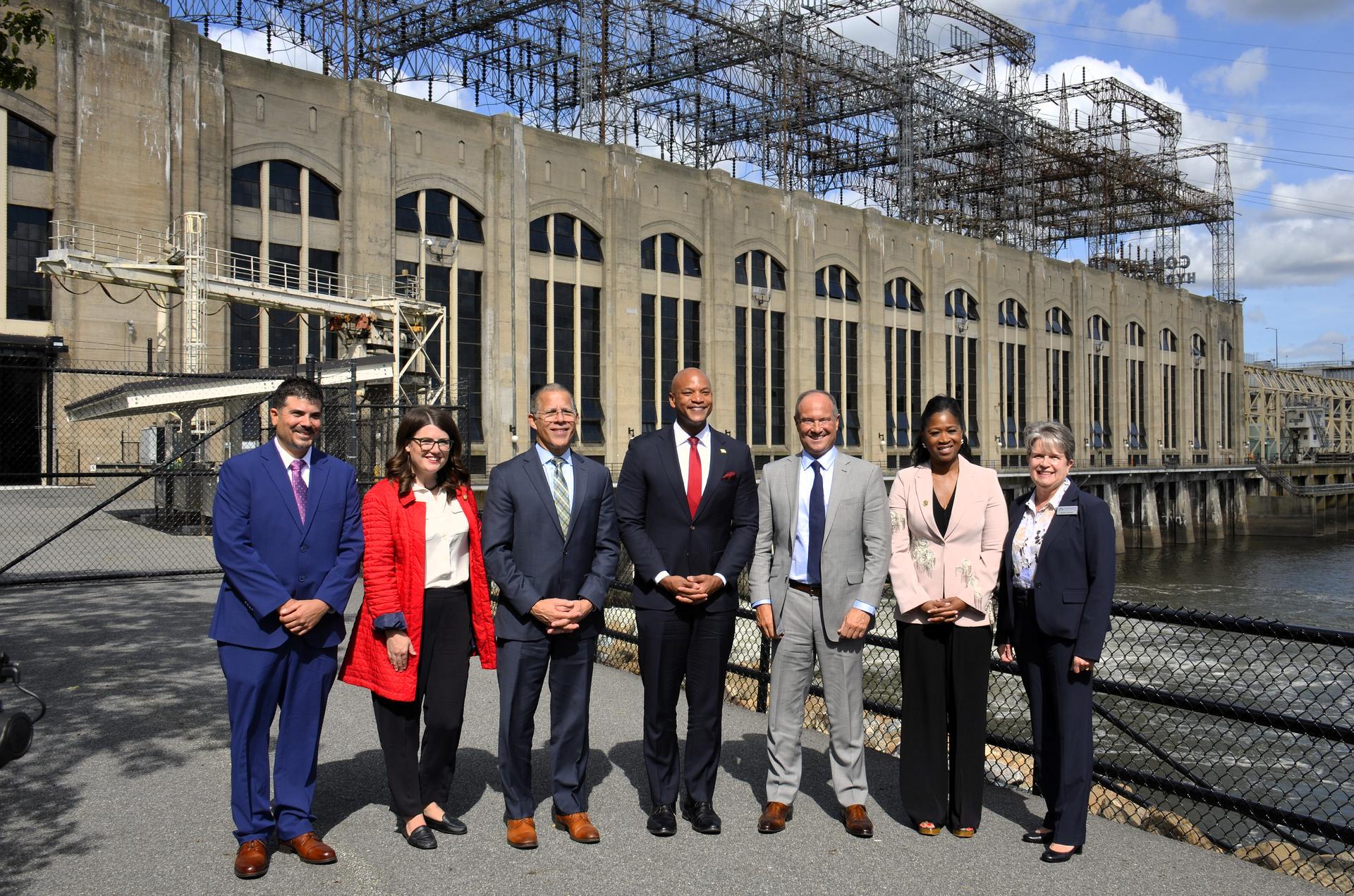
Conowingo Dam settlement day, September 2025
Well, it’s been a hot minute, and if you’re wondering why I’ve been so quiet for so long, it’s because the 11th Volume of the International Journal for Water Equity and Justice came out this month. While I’ve been an issues editor for the last decade-plus, this was the first time I worked on the entire issue, sharing editing responsibility with Emma Denison from The Water Center. It’s been well over a year of reviewing, accepting (sometimes rejecting), and editing scholarly journal entries and the other cool additions we’ve paired with the scholarly vibe: a photo essay on the eagles at the Conowingo Dam, a series of videos about the pollution at the Conejohela Flats on the Susquehanna River, and even a bit of short fiction regarding water rights.
I also have an article in this issue — Where Equity Meets Advocacy — about the very successful and long-overdue Conowingo Dam settlement and why a good advocate is worth their weight in gold.
Thanks to The Water Center and Global Water Alliance for supporting this Journal.
This issue has something for everyone. Please enjoy, and thank you for reading.
Pam Lazos — 11.11.26










I wondered where you’d gone!!! Good tos ee you oh talened one!
LikeLike
Thanks, Lady Shey. And a happy birthday to you!
LikeLike
Thanks for the update, Pam, and for the invaluable work you’re doing.
LikeLike
Back at you, Rose! Hope all is well.
LikeLike
What a great and informative piece Pam. Ted and the LSRA are doing the hard work and this story really tells just how hard that work is. M Snavely
LikeLike
Thanks, Melissa! We are all doing what we can, eh? Now we need to get the plastic out of the river!
LikeLike
Hi Pam, Good article. The issue of sediment behind the dam is most challenging. I thought it was more like 300-400 million Cubic Yards in the Connowingo pool. In comparison the proposed LNG plant at Sparrows Point would of required 3 million cubic yards to be removed for the large LNG ships. That would of required a dredging operation taking 3 years at 24/7 to complete.
Kevin Magerr Adjunct Professor Temple University College of Engineering 1947 N. 12th Street Philadelphia, PA 19122 c: 302.521.2510 o: 610.321.2641 email: Kevin.Magerr@temple.eduKevin.Magerr@temple.edu
LikeLike
Hi Kevin! It’s a time-consuming and delicate process, for sure. The worst part is that contaminated sediment washes downstream every time it rains, so we can’t turn a blind eye. Hope all is well with you.
LikeLike