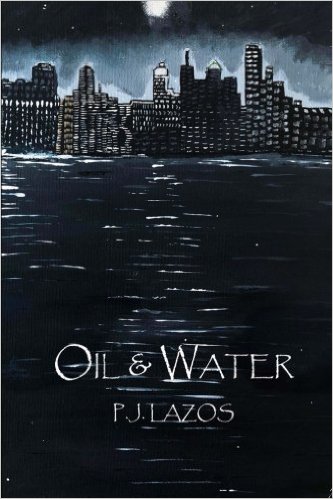
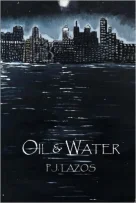
It’s been a while since I ran a giveaway so here is the first one through Amazon to win a Kindle copy of Oil and Water. A second giveaway with Goodreads will be posted once it goes live. Give the gift of reading. Just in time for Christmas!
Okay, so the #NaNoWriMo event is over, but the Blog Hop is in full swing which is a fabulous marketing tool, especially for us fledging Indie authors who are trying to be all things to all people. However, the intensity of that enterprise has caused me to lose my focus and I missed Wednesday’s Insecure Writers Support Group post. Hopefully the lovely folks over at the #IWSG will not think unkindly on me. After all, I’m somewhat insecure and terribly in need of support. 😉
December’s IWSG question is:
In terms of your writing career, where do you see yourself five years from now, and what’s your plan to get there?
Well, that’s easy. I see myself with a few more published novels and one book either optioned or in production for the movie version. Dream big or go home, eh?
As far as my plan to get there, I’m going to keep doing what I’ve been doing which is increasing my author platform by doing some small thing almost daily, getting the word about my books, engaging reviewers who I hope will speak kindly of me and my work, speaking to interested audiences, blogging about the things I’m most passionate about, and basically trying any new thing that someone with more experience than I recommends. NaNoWriMo was a new endeavor for me and I gained new writing friends just by being a part of it. In addition, my twitter followers have increased by over two hundred people in the last couple days simply as a result of participating in the blog hop and there’s still over a week to go. So there’s that.

Everything takes time. There is no Acela high speed line to your destination. Plans must be laid. Options considered. Focuses must be focused. And writing must continue. I’ve got a great start on my next novel and will be working away at that until I get a usable first draft, probably in six to nine months.
In January I’m going to speak at our local Rotary about the environment, the UN’s Sustainability goals, and our current water crisis. In February, I’m participating in #MTW, Mystery Thriller Week, on Facebook. I’ll figure something else out for March and the months thereafter. No one thing and everything will get me to my goal.
Did I do it, write 50,000 words, penning the next Great American Novel or did I fall by the wayside in ignominious defeat?
Well — neither. In fact, I couldn’t even figure out how to upload my word count, but that’s a whole ‘nother story.
What I did do was write a respectable 20,000 words, figure out — after much hand-wringing and gnashing of teeth — the who-what-where-when-and-how of my protagonist, restructure the start a few times to set the tone I didn’t know I’d been looking for (despite my admonition to myself about not looking back until the month was over — what I now realize in retrospect would have been a complete waste of time since I had no idea where I was going), and basically set myself up for a sweet winter of banging this baby out a few pages at a time. Because I’m thinking and writing in some form everyday now, and that wasn’t happening before NaNoWriMo. The whole process has helped to put me in the headspace I needed to be in much more quickly than if I would have tried to do it myself with my life’s competing interests niggling away at the afforded time.
Then there’s the length. My first novel, Oil and Water, clocked in at just under 150,000 words and was written in nine months. I think I can do this, my second one, in six, the two holidays in there notwithstanding, and come in somewhere around 100,000 words. Fifty thousand was never going to be enough words for me. I just have too much to say, something my kindergarten teacher told my mother years ago, perhaps foreshadowing a writing career? Also, maybe I’m only good for about 15,000, give or take, a month which seems to be my sweet spot, and anything over that would have been useless drivel.
So off I go to get a few pages in today. Thanks to the #NaNoWriMo folks for a great start!
A friend of mine who is a massage therapist says that symptoms that look and manifest as depression — a growing concern in our country — can generally be traced back to one of three things: bad diet, meaning eating too much sugar or processed food; lack of exercise, because the endorphins released during exercise are their own reward; and the final and perhaps most important, lack of sleep. I believe I’ve been guilty of all three at one time or another, but the one I most consistently abuse is lack of sleep, having unenthusiastically embraced that routine for the last three decades. It’s not that I don’t want more sleep. I crave more, am actually desperate for it, but in order to get it all done, it being all my many wants and desires outside the realm of my J.O.B., I just don’t seem to have enough time for sufficient sleep. This is not just my issue, but a chronic problem in our country, perhaps the world. Anyway, my friend says that if you can rule out those three things and you’re still sad, then it’s probably depression.
There are those who doubt the hand of God in ordinary events and those who see it everywhere. A chance encounter with an old friend when you take a wrong turn on an unfamiliar street. A meeting with a stranger on a train who gives you the exact information you’ve been after for months. The miracle is that on any given day, the natural order of your routine could be upended by these coincidental, often helpful, almost unnoticeable moments when we are present and listening, where a small, serendipitous event enters through the side door, carrying with it the power to change your life. And so it was for Laura Schroff who almost missed the moment. To this day, she has no idea what made her turn around, talk to the child, investigate the situation a bit further, but she recounts it all beautifully in her memoir, an Invisible Thread.
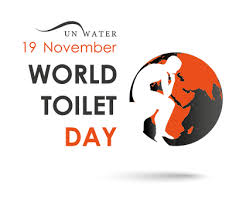
I think that if Francois Auguste Rene Rodin (1840 – 1917) knew that one of his most famous sculptures, “The Thinker” had become the symbol of World Toilet Day, a day established to raise awareness of the need for global sanitation, he would be proud.
Rodin took 22 years to take “The Thinker” from the first small plaster version to the first large cast bronze version, possibly without having a toilet himself. For while the prototype for the modern toilet was made in 1596 by Sir John Harrington, the godson of Queen Elizabeth I (who you just know had a toilet), toilets didn’t become the norm for a couple more centuries. With the improvement of the “ballcock” by Thomas Crapper in the late 19th century, and the advent of the industrial revolution, the commoners were “flush” with the improvements this new invention afforded them given that they no longer had to contend with late night trips to the outhouse.
If you’ve tuned into this blog before, you know that I have a group of friends from college — the Whales — so dubbed because of a beach house we rented for several summers running (see back story somewhere on this blog), and that as a group we like to do outdoorsy things like hike and kayak and camp and what not. Over the years our group has grown to include friends of friends, and because of our cohesiveness and delight in hanging out with each other, our children have grown up together, too. I refer to the kids as Whales-in-Training and it’s wondrous to watch them expand and change and follow their individual bliss. I especially love it when their bliss syncs with my own. So let me introduce one exuberant high schooler who thinks in terms of centuries, not seconds, who plays the trombone in the high school marching band because its challenging and they said a girl couldn’t do it, who runs track, who bakes like a banshee, and who is on the self-awareness fast track, traveling through life with all the wonder of a child while possessing the maturity of adults twice her age. Oh, did I mention she cares about the environment? (contented sigh) Read more here…
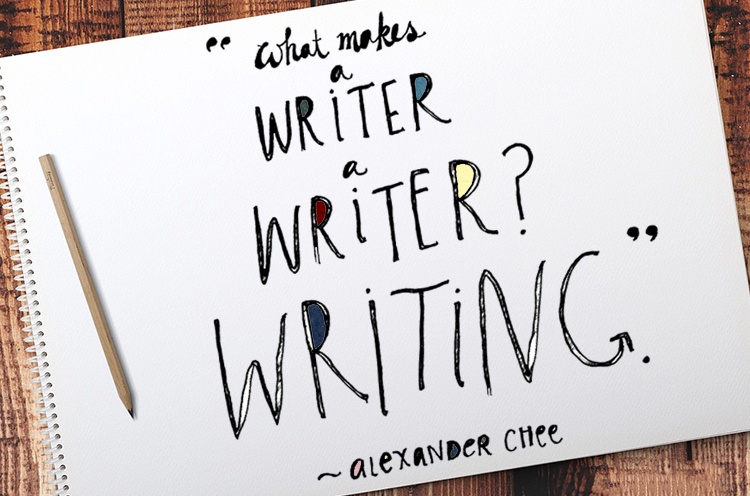
NaNoWriMo. I just like saying it. It’s a wonderful configuration and consonants and vowels and I like the way it rolls off the tongue. One of the things that makes writers writers, in addition to writing, is the attention to word placement, sentence structure, alliteration, evoked emotion, but for me, it’s especially the last one — emotion. How something makes the reader feel and the connection that comes of it is what I’m after. Also, that writing is cheaper than therapy. So off I go to write today before the actual day begins. I’m at 15,055 words as of COB yesterday which is 6,616 off the mark, but I’m undaunted. The goal for me was never to hit the word count everyday, just to get to the computer every day. And it’s happening. I wrote my (so far) only novel, Oil and Water, in nine months doing just this very thing, getting to the computer every day whether it was for 20 minutes or two hours. Thanks, #NaNoWriMo for kickstarting this endeavor. More to come. There always is.
My Greek immigrant grandparents arrived in this country sometime in the early 1920’s from Istanbul when it was still Constantinople, and while no one talks about it, I’m fairly sure they didn’t just leave, but escaped. Ethnic cleansing is nothing new across the globe: WWII Germany; Bosnia and Rwanda in the 1990’s; Syria today. For my grandparents, it was the problem of the Armenian extinction. About 1 million Armenians and half a million Greeks were killed between 1915 and 1923, but the number is sketchy because to this day, Turkey denies it even happened. (For a great book on the topic, read Black Dog of Fate, by Balakian.)
What was once the Ottoman Empire — the most culturally ambitious and religiously inclusive place the world had known, a stunning experiment of cooperation and trust — was losing ground as parts of it claimed independence, and with it, its religious diversity. When the Turks, who were Muslim, started killing the Christians, my grandparents split for America, the burgeoning City on a Hill that offered so much promise. They arrived before Lady Liberty who came from France in 1924, but way before then, everyone knew that America was the land of opportunity, the place to practice your religion and live your life as you saw fit, a place where working hard meant you could actually get ahead, the place to make a new start. Until they died, none of them could talk about the Turks without scowling or making the sign of the cross, and despite my peppering them with questions, no one would explain why. Sometimes it takes decades to solve a puzzle. (BTW, I visited Turkey when I was studying abroad and found the Turks to be a warm and gracious people.)
Some of my earliest memories revolve around political discourse, not just a couple people sitting around drinking a beer and talking genially about politics they way they talk about football, but yelling, screaming, fist-shaking, hand-wringing discussions. Being the homogenous people that Greeks are, they stuck together, and mostly every weekend we’d gather around my great aunt Thea’s dining room table for dinner or cake and coffee. (Thea means aunt. Greeks like to keep it simple.) My mother, who was not Greek, but the daughter of Italian immigrants from a small town south of Rome cringed a bit every time the party started. (BTW, my grandparents didn’t love the idea of my father marrying a non-Greek, but they got over it for the sake of family unity.)
My mother was by all measures a quiet woman, but she was no shrinking violet and while she had strong opinions, she chose to keep her own counsel. My father on the other hand was loud and boisterous and loved a good debate as much as he loved the coffee that accompanied it. So on any given weekend night, my grandmother, my aunt and uncle, and various cousins, friends, and relatives would gather around the table and talk about — what else? — politics. I was young, but I soaked it all in, so much so that there’s no denying this $#%!’s in my blood. After all, the Greeks have been arguing about politics since ancient times, Athens being the primary birthplace of modern democracy, and since we’ve not all gone on to paradise yet, or evolved to a state of utopia where we don’t need laws to govern us, the Greeks feel it is not only their God-given right, but their duty as human beings to have an opinion about things, a generally loud opinion. If you’d been sacked and attacked on your island shores and kicked out of others, you can damn well be sure you’ll always have your nose trained on the political winds. Unfortunately for my mother, she equated all that yelling with ill feelings so these evenings were not always pleasant for her. The “discourse” brought out the best and worst in my relatives and sometimes opinions would be swayed although not then and there because that would mean admitting defeat. You’d have to hit on a reason why you’d changed your mind and then argue as vociferously for the new opinion the next time. More often than not, people remained entrenched, and always there were fireworks of emotion.
Today, much of the world is in shock because of the election results and America feels a lot like Thea’s dining room table no matter which side of the aisle you’re sitting on. Right now, both halves of the country think that America, that bastion of hope and freedom and “huddled masses yearning to breathe free,” has lost her way. How did this happen, you ask? It didn’t happen over night, but over decades: we just got greedy and stopped listening to each other.
There is a Cree Indian prophecy that says: “Only when the last tree has been cut down, the last fish been caught, and the last stream poisoned, will we realize we cannot eat money.” I am reserving discussion of this ginormous topic for another blog post. In the interim, I’d like to say to the President-Elect, if you love this country, and you want it to be “great again,” then think before you act, consider the consequences of your actions on the larger whole, and understand that losing the popular vote while winning the electoral college does not give you a mandate. We all have to live here — together. Let all of our opinions be heard and considered. Remember you can’t eat money, and you’re not going to sleep well if everyone is hating on everyone else. You control both houses of Congress now, but you don’t control the hearts and minds and souls of the American people, and you don’t control how history will remember you. Hero or villain, it is up to you.
About the weekends of my childhood, I should add that after the coffee was drunk and the baklava all gone, the cups and dishes and silverware washed and put away, and the table wiped, and after all the yelling and fighting and the, “How could you believe that?”; “What are you crazy?”; “You just don’t understand what this means for the country, for the world.”; and my favorite, “That’s it. I just can’t talk to you. I’m not coming here anymore!”, after all that rancor and what seemed to my Italian mother to be more animosity than her 108 lb. frame could bear, all my relatives down to a man (and woman), put on their coats, grabbed their hats and bags, and hugged and kissed each other before going out the door, saying, “See you next week. Same time?” Okay, maybe not every single time. Sometimes it did get so heated that it seemed fisticuffs were imminent, but even then, they were back the next week. That’s love, of your family, of your country, of the world.
The Greeks have three words for love: Agape — love of mankind; Eros — passionate love; and Philia — friendship, or love between equals. We need all of them now, Mr. President-Elect, if we are going to make it through these times. And in the meantime, to borrow (and bastardize) a line from Sting, I hope our newly elected, and long-serving officials love their children, too.