I’ve written about the lovely and historic Newlin Grist Mill a couple times before. Last year, I had the opportunity to tour the Mill with the Executive Director, Tony Shahan. I had hoped to write a blog post on the extensive renovations being conducted at the Mill — not only stormwater management projects but some unique and amazing wetlands restoration projects — but time fled the scene, and I only recently found my notes. Sadly, I can barely read said notes and am left wondering what the heck they say. (My family complains mightily about my handwriting, but to think that it will somehow improve at this stage, well, that ship has sailed.)
Thankfully, my friend and former EPA colleague Kevin Magerr has saved the day by providing me with this article about the work he and his Temple students did at Newlin based on a 2020 student design. Truly, there is some fine engineering work happening at Newlin, and I encourage you to go here to read all about it.
At least I can provide a few photos from the day. If you are ever in the vicinity and want to step back in time, stop off at the Newlin Grist Mill, 219 South Cheyney Road, Glen Mills, PA 19432. You can see the past and the present pointing the way toward a very bright, environmentally sound, nature-based future. Kudos to Newlin Grist Mill and Temple University for seeing this project to fruition!
On Saturday, August 10, the Climate Action Neighborhood (CAN) will present River Pathway Connections, where art, science, and curiosity meet. Come join us for a fun-filled and educational morning filled with mural painting by local artists, Charlie Boyce,
and Krista Canoles.
In addition to the sidewalk mural installations, there will be presentations by my friend and former colleague at EPA, Jeff Lapp, who will discuss how storm drains affect water quality, a Nature Journaling session taught by yours truly, and a giant Turn off the Tap sculpture that you can help assemble.
Come learn a little about rivers, the Chesapeake Bay, nature, and plastics! All this and more thanks to the generosity of Lancaster City and the Love Your Block grant.
For millennia, nature has served as a source of healing and restoration, offering remedies and tranquil sanctuaries. In today’s fast-paced world, there is a growing movement to reconnect with ancient practices, intertwining the wisdom of the past with modern wellness approaches. This article by Rebecca Welch, blogger for the website Find The Dream Job, dives into the heart of nature’s healing powers, exploring the myriad of ways in which we can incorporate natural remedies into our daily lives.
The Essence of Essential Oils
Essential oils are nature’s concentrated elixirs, capturing the potent aromas and therapeutic properties of plants. These aromatic treasures offer a direct link to the heart of nature, providing a myriad of benefits for both mind and body. For instance, lavender, with its soothing scent, is renowned for its ability to promote relaxation and improve sleep quality.
Incorporating essential oils into your daily routine can be a simple yet transformative practice, whether it’s through aromatherapy, topical application, or even adding a few drops to your bath. The versatility and efficacy of essential oils make them a valuable asset in anyone’s wellness toolkit, offering a natural and holistic approach to self-care.
Therapeutic Plants: Nature’s Healers
Therapeutic plants have stood the test of time, serving as the foundation of natural healing practices across cultures and centuries. These plants offer a holistic approach to wellness, addressing a wide range of physical and emotional ailments with their healing properties.
Herbs such as chamomile and valerian root, as well as cannabis-derived products like THCA, are celebrated for their calming effects, providing natural relief for stress and aiding in restful sleep. The complex phytochemicals present in these plants often work synergistically, amplifying their beneficial effects when combined.
Other herbs, such as curcumin from the turmeric plant, calendula, and fenugreek stand out for their ability to reduce inflammation. As modern science continues to validate the efficacy of these plants, there is a renewed appreciation for nature’s ancient pharmacopeia and its profound impact on human health.
Food as Medicine
From the verdant fields to the depths of the oceans, nature has always offered us an abundant pharmacy of healing and nourishment. Food, in its purest and most organic form, is not just a source of sustenance, but also a potent medicine that has the capacity to prevent, alleviate, and sometimes even cure ailments.
In ancient Greece, the therapeutic powers of foods were deeply acknowledged. Honey was revered for its antiseptic and wound-healing properties, while olives and their oil were believed to fortify the body and combat diseases, particularly those related to inflammation and heart health. Apple cider vinegar was also a sought-after remedy, known to assist with digestion and overall vitality.
On the other side of the world, the Chinese have a rich history of using food as medicine. Ginger, prized for its warming energy, was commonly recommended for colds and digestive disturbances. Goji berries were celebrated for enhancing eyesight and boosting longevity. Meanwhile, green tea was not just a beverage but also a potent elixir to promote balance, vitality, and overall health.
The Healing Embrace of Forest Bathing
Amidst the towering trees and the serene hum of the forest, a practice emerges from Japan known as “Shinrin-Yoku,” or “forest bathing.” More than just a simple walk in the woods, forest bathing is an immersive experience that invites us to connect deeply with nature and its profound wisdom.
As we breathe in the phytoncides released by trees — natural oils that are part of a tree’s defense system — we’re not just taking in the fresh scent of the forest, but also fortifying our own health. Forest bathing thus becomes a bridge, a path that leads us to holistic wellness by intertwining our well-being with the ancient wisdom of the woods.
Nature’s Impact on Mental Well-being
The intricate relationship between the natural world and our mental health is as ancient as time itself. There’s a profound resonance between the human psyche and the rhythmic cadence of nature; a bond that, when nurtured, offers a sanctuary from the pressures of modern life. Numerous scientific studies corroborate the benefits of this relationship, revealing that even brief encounters with nature can significantly diminish stress, uplift spirits, and sharpen mental clarity.
Indoor plants, in particular, offer more than just aesthetic appeal. Their rich green shades, a symbol of life and growth, have a soothing effect on the human mind, and their ability to purify air quality elevates both physical and mental health. Similarly, the soft murmur of flowing water or the chirping of birds can have a meditative effect, grounding us in the present moment.
Reconnecting with nature offers a pathway to holistic wellness, providing healing and tranquility in our modern world. From the aromatic allure of essential oils to the potent healing properties of therapeutic plants, nature’s treasures offer a wealth of benefits for our health and well-being. As we navigate the challenges of contemporary life, finding solace and balance in the embrace of nature has never been more crucial. Celebrate the ancient healer within, integrating the wonders of nature into our daily lives, and fostering a future of wellness, balance, and harmony.
Thanks to Rebecca Welch for this informative article.
America is not just a country, it is an idea. And that idea belongs to everybody who wishes to serve it. ~Bono
This post was written by my sister, Stacey Lazos.
My husband had his oath ceremony last week. It was the culmination of 8 years of moving toward the idea of America and on my end at least, there were A LOT of tears. The ceremony itself was frustrating for sure (communicating with USCIS is like the most infuriating relationship you’ve ever been in but can’t leave) and beautiful (400 people and their families, all with a story worth telling, showing up to pledge an oath to an idea…cue the music swell). Some of the tears were for our personal story and the relief felt that the journey had come to an end. But most of the tears came from a different place, one that took into consideration the state of the world today, especially this idea in which we live.
When my husband arrived in America, I lived in Florida. Go ahead and make your jokes, but the beach is beautiful and I was able to both check out and be a productive adult, all at the same time. It wasn’t Eden, but it did serve its purpose and for that I’m grateful. My husband was not as charmed by its offerings and we made the decision to move and get a fresh start for both of us. We picked a town in Tennessee and although I had been living in Florida, it did not prepare me for the undertones of the south.
Every place you live has a feel, a vibe, a story. And of course, there is always a dark and light component. There is a lot of beauty here and many wonderful people and happenings all around. And there is also the history and undercurrent of racism and the patriarchy that can loom so large you wonder if you didn’t step through a portal to the 1800’s. Most days I don’t feel this, but on the day of the ceremony, sitting in the auditorium with 400 families from 88 different countries and representatives from our government who have been so vile about our immigration system, my emotions were upended. Mostly I just felt sad that we, as those in service to the idea, had so incredibly lost the plot.
Growing up, I’m sure I did not understand America as an idea. I, like most people I knew (and most I know today) was incredibly entitled in my thinking about the world. I grew up in a small bubble, mostly white, and although I expanded my circle as a young adult and considered myself somewhat worldly in my 20s, I would have to say my lens was still pretty myopic.
But these last few decades have put the world on display. The connectivity we all share is undeniable. The fact that our earth is getting hotter and our weather is getting more drastic shines a spotlight on our responsibility to our planet and each other. And yet the political climate in this idea of America is farcical, absurd and disturbing. Grown men and women shouting lies at the top of their lungs in an effort to keep what they think they have and trying to make sure someone else doesn’t get it. All the lies are coming to the surface and some days it feels like walking through a swamp to get to your morning coffee.
This writing is not about racism, the patriarchy, our broken immigration system or any of the thousands of other things I felt that day. It really is just to shine a spotlight on the stories of those 400 people and their power of belief in wanting to serve an idea much bigger than themselves. I think, in this moment in history, we can all use that reminder.
You know how they say absolute power corrupts absolutely? The fallout is on full display here in the U.S. After approximately 250 years of the grand experiment we call democracy, the wheels are about to fall off the bus. The basic tenet of our democratic nation — that no man is above the law — has come to a calamitous and chilling end with the court’s recent decision on presidential immunity.
It begs the question: What was SCOTUS thinking? (Only about themselves, obvi.) And, how will the rest of us get by if one of us — I’m looking at you, man with the orange hair — think they can “shoot someone and not lose voters,” and actually be right? Congratulations, man with the orange hair; you’re a winner! Take a bow because SCOTUS just made your Make-a-Wish dream come true. Looks like one man’s win is a loss for the remaining 333 million of us, a bleak day for America.
For his unceasing attack on precedent, Chief Justice Roberts wins the This Is Why We Can’t Have Nice Things award. Roberts has done more damage during his tenure — always with a smile, or maybe that’s why he’s smiling — than any other justice in recent history, because he not only steers the court, he’s often the swing vote. Under his tenure, only the richest among us are safe. Women, gays, trans, minorities, the homeless, the poor, and future generations themselves if you factor in the imminent and radical decline of the environment, can no longer rely on the rule of law to save them. That’s because Roberts and the other conservatives on the bench don’t care about precedent. They care only about who’s lining their pockets; who’s giving them the best vacation experiences; whose spouses got good jobs because their husbands are sitting on the bench; and what who has done for them lately.
It’s been a disatrous 24 years since Gore v. Bush was decided; Citzens United v. FEC put the power squarely in the hands of those with the moola; and the environment has taken hit after hit at the court’s hand until finally, the defining moment, the thing ultra-conservatives everywhere –the ones who put making money above all else, even dogs — have lusted after for an eternity, the death of the Chevron defense. Goodbye, administrative law! Hello, regulation-free business!
No one is above the law! That is unless you’re a Supreme Court Justice or are the man with the orange hair.
By injecting doubt into the administrative process itself, the court has assured that business interests will prevail, not because they are right, but because it will take the government eons longer to bring a judicial case instead of an administrative one, if ever. The government simply does not have the resources to try every case. Nor can it regulate every chemical.
Take PFAS regulation/litigation, currently in its infancy. The government has zero chance of regulating the 6,000 to 8,000 PFAS on the market today. It’s just not possible for an Agency to do risk assessments on that many chemicals, and without a blanket regulation to cover the entire class of chemicals, the government will never catch up because new PFAS are being created all the time.
Typically, the government doesn’t lead, excepting initiatives like the Bipartisan Infrastructure Law, the Inflation Reduction Act, the New Deal, the Declaration of Independence — okay, it does lead — but more often, it funds research and development and lets the market lead while holding the door open for everyone else, thereby assuring a level playing field for things like civil rights, human rights, women’s rights, education, and the like, so everyone gets a shot at the promise of the American Dream: equality, a living wage, a nice life — you know, life, liberty, and the pursuit of happiness.
Thanks to SCOTUS, the American dream has become a nightmare.
Imagine if Al Gore had won — BTdubs, Justice Roberts was the deciding vote. We probably wouldn’t have entered Iraq and spent kajillions of dollars, most of which went to Halliburton, mucking around in a mindset we didn’t understand. We probably wouldn’t have stayed there for 20 years, and we may have maintained the global prominence we had then instead of the global enmity we now enjoy. And maybe, just maybe the inhabitants of Planet Earth would have stood a fighting chance against climate change — because make no mistake, Mama’s gonna save herself, whether we go along for the ride or not.
But all that goodwill is gone now, and with it, much of our hope. Except — that’s what they want, right? For us to give up hope? Because if we do, they win.
“For what will it profit a man if he gains the whole world and forfeits his soul?” Matthew 16:26. All this chaos from those who call themselves devout Christians. Maybe they didn’t read that one.
You know what you have to do, right? Start with voting people who have no respect for the rule of law (or anything other than money) out of office. Follow your heart. Google the rest.
Survival of the fittest was never going to work, not without leaving a bunch of folks crushed and bleeding underfoot. Collaboration and cooperation are the only paths forward. Nothing less than survival or our way of life is at stake.
The Independence Day we get is the one we deserve.
“The greatest trick the devil ever pulled was convincing the world he didn’t exist.” The Usual Suspects
If you like horror stories, then The Climate Book: The Facts and the Solutions created by Greta Thunberg is your next read. Packed with intrigue and the terror that makes you spend the night peeking out from behind closed blinds, The Climate Book provides a detailed analysis of what’s happening on the planet because of climate change and what we stand to lose. Ms. Thunberg compiled essays from dozens of the world’s premier scientists and environmentalists writing on topics like droughts, floods, arctic warming, deforestation, methane, health, terrestrial biodiversity, government climate targets, the failed Paris Agreement, the over-carbonization of the world, and our failure to act to change the trajectory of a widespread apocalyptic future, to name a few. The book provides a starting point for educating ourselves on what is at stake and should be required reading for students, teachers, mothers, fathers, and anyone who breathes oxygen to survive.
Problematically, this is not a distant, dystopian future, but a highly probably outcome of our careless negligence, albeit our criminal stewardship of the planet, one we see play out weekly in our meteorology reports: floods, fires, tornadoes, hurricanes, atmospheric rivers, mudslides, species extinction and more, every day, somewhere on our planet, a future that continues to ramp up exponentially like melting sea ice and won’t stop until the planet cries, Reboot! and shakes us loose like fleas on a dog.
It’s not like we haven’t been warned. It’s also not like we don’t care — I mean who among us wants to see their progeny go down in flames — but we are so enamored with our way of life, with a society where a few people make all the economic rules and the rest of us go along because, hey, capitalism!, but in reality, capitalism hasn’t worked for a long time, maybe never. By the time you add up the breaks — taxes, emissions, time to come into compliance, the overuse of resources by a chosen few, and the residual waste strewn across the planet by manufacturers who race to get new products to market with nary a care for the byproduct — you have grossly overestimated the benefit of having 52 new refrigerators to choose from and grossly underestimated the environmental consequences of manufacturing all those refrigerators in the first place.
Take plastic, one of my favorite topics to go on about because it’s quite literally choking us to death, our water, the creatures living in the ocean, and now, with microplastics, the air, clogging up the whole of society: landfills bursting with the refuse, rivers, streams, and oceans catching the overflow quite by accident when extreme wet weather events hit, sending trash spiraling into waterways with greater frequency, and leaving developing countries to deal with the piles of used crap no developed country wants to landfill. Imagine islands inundated with the world’s trash as the gulf stream washes it onto their shores.
You don’t have to. Manila witnesses this daily. This kind of offloading of our waste isn’t an isolated event but recurs with systemic frequency. And guess what? Out of sight doesn’t mean gone. The waste you send to India is eventually going to end up in your tuna which means it will also end up in your body.
Did you know we’re in the middle of a sixth mass extinction? Just let that sit for a minute — 6th mass extinction. What the heck?! We could lose 30% of all plants and animals within the next hundred years. That’s quite a legacy we’re leaving our children.
Speaking of, my oldest kid told me she thinks she doesn’t want kids. With climate change lurking, the world is a dumpster fire and she doesn’t want to risk bringing a kid into this world. That’s a hard thing for a mother to hear and I get it, I do and I can’t begrudge her for feeling that way but here’s the rub: it doesn’t have to be that way, not if we stop play-acting at addressing the problems and actually take action.
Okay, so it doesn’t rhyme, but you get the point, eh?
Everything we use ends up in the water
So if we want to keep our heads above water
Before we are all in hot water
and we don’t want to end up like fish out of water
Then it’s time to test the waters and
Protect our watering holes
because water contamination is not water under the bridge,
and water conservation and preservation are imperative:
a watershed for the health, welfare, and economy of our collective.
Happy Earth Day, folks. I hope this trip around the sun leaves us more peaceful, more compassionate, and more environmentally aware — just like our Mother wants.
Consumer Notice has produced A Consumer’s Guide to Reducing Pollution, a comprehensive, yet easy-to-follow handbook for reducing consumer waste. According to Consumer Notice, We The People account for 60% of greenhouse gas emissions, an enormous and pretty frightening number, but one we can probably make a dent in if we all try a little bit harder to reduce our individual carbon footprints.
The car you drive, the household products you use, the amount of energy it takes to heat and cool your home, fertilizers, pesticides, herbicides, and all the other nasty chemicals that contribute to water pollution, the waste you create, including food waste, all create a problem for the planet that has only been on the rise since the beginning of the industrial revolution. Before that, we all lived in balance with the earth and the earth reciprocated by not sending us snowstorms in April, 100-year storm events every 5 or 10 years, and untenable living conditions in the hottest/wettest climates, something we are beginning to experience with regularity.
That is not to say that it’s all our fault. Who doesn’t want to own the newest and best appliance, automobile, iPhone, etc. We all do — at least that’s what advertisers tell us — but do we need to? My husband still uses a 50-year old John Deere tractor for grass cutting and snow plowing, a simple machine that he can fix himself. My neighbor’s $2,000 dryer broke after one year because the electronic components crapped out. The technician told him it wasn’t fixable. So is it better to have the newest model with bells and whistles that you don’t understand or an old reliable that you can work on yourself? Until you do the math on the waste stream of creation and the carbon footprint of usage for each of item, it’s hard to tell.
Yet as consumers, we should not bear the brunt of the work, but rather be equal partners with government and industry. I’ve been waiting for years for a marketable and widespread alternative to plastic, but unless someone in manufacturing makes one for us consumers to buy, we’re stuck with the fledgling alternatives that can never seem to get traction because no one is forcing corporations to take the highest road. We sure could use more environmentally correct options, but to do that, we need the government to regulate and industry to innovate by providing us with the best available environmental alternatives at all times, whether we are looking to replace big ticket items like automobiles or just trying to buy lunch. Rather than always pointing the consumer in the direction of the lowest hanging fruit — I’m looking at you, recycling — government and industry should be presenting us with the gold standard of what is environmentally achievable in the 21st century.
Take fossil fuels, so 20th century, yet we continue to rely upon them as if they are the Rosetta Stone of energy independence. If government did for nascent technologies such as wind, solar, and remediation of chemical waste in water like it does for the fossil fuel industry we could be out of the climate change conundrum and on to greener pastures, as they say. I mean, does Exxon really need another tax break when they’ve had one after another record-breaking profits in the billions in the years since Covid? Instead we have an Appointment in Samarra and no way to circumvent the climactic changes that are already barreling toward us. (If you haven’t read this classic by John O’Hara, it means a date with Death and it is a fantastic read.) Perhaps you don’t know this, but if we don’t start making some big changes pronto we are going to be facing a myriad of climate-related changes for which we have no template. Translation: things could get pretty dicey over the next couple hundred years — mass starvation, migration, floods, fires, tornadoes, hurricanes, you know, Armaggedon kind of stuff.
I urge you to take a few minutes to review Consumer Notice’s suggestions. Small changes can add up to big changes, meaning even small changes over time multiplied by 8 billion participants can and will have a drastic impact on the overall health of the planet.
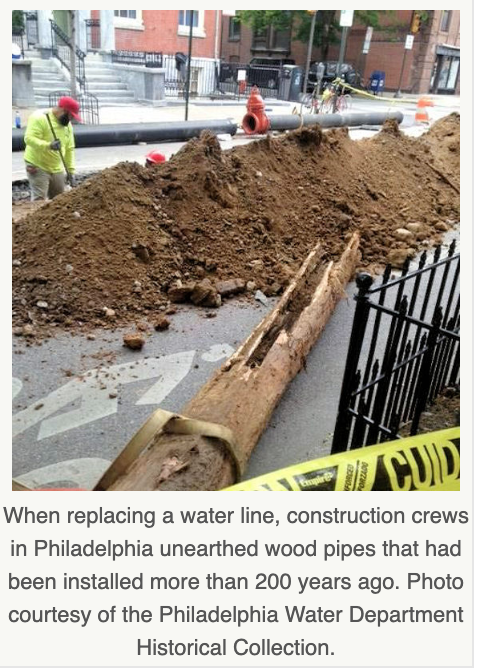
In approximately 1811-1812, Philadelphia laid its first collection system pipes and they were made of wood! As the City grew, the Philadelphia Water Department must have realized that wood wasn’t going to cut it, i.e., it wouldn’t be too long-lasting, and so it began the installation of cast iron pipes. Two centuries later, it’s unclear how many of these 200-year-old cast iron pipes remain beneath the City of Brotherly Love — Philadelphia replaces worn out collection system pipes all the time to reduce incidences of inflow and infiltration or I/I — but what is clear is that Philadelphia’s combined sewer system plus climate changes makes for a scary and sometimes dangerous rain experience for many Philadelphians.
When it rains, stormwater joins wastewater in those same cast iron pipes before heading over to the wastewater treatment plant. Problematically, when the rain is heavy or it’s been raining for a long period of time, the collection system becomes overwhelmed so the City opens the valves, bypassing the wastewater treatment plant (WWTP), and sends the water directly into the Schuylkill River untreated. On a normal day, the bacteria assists in cleaning up the wastewater, among other treatment techniques employed at the WWTP, and the remaining effluent is discharged to the river. When the city experiences a combined sewer overflow, or CSO event, the city bypasses the WWTP so as not to drown the bacteria the plant relies upon to break down the waste.
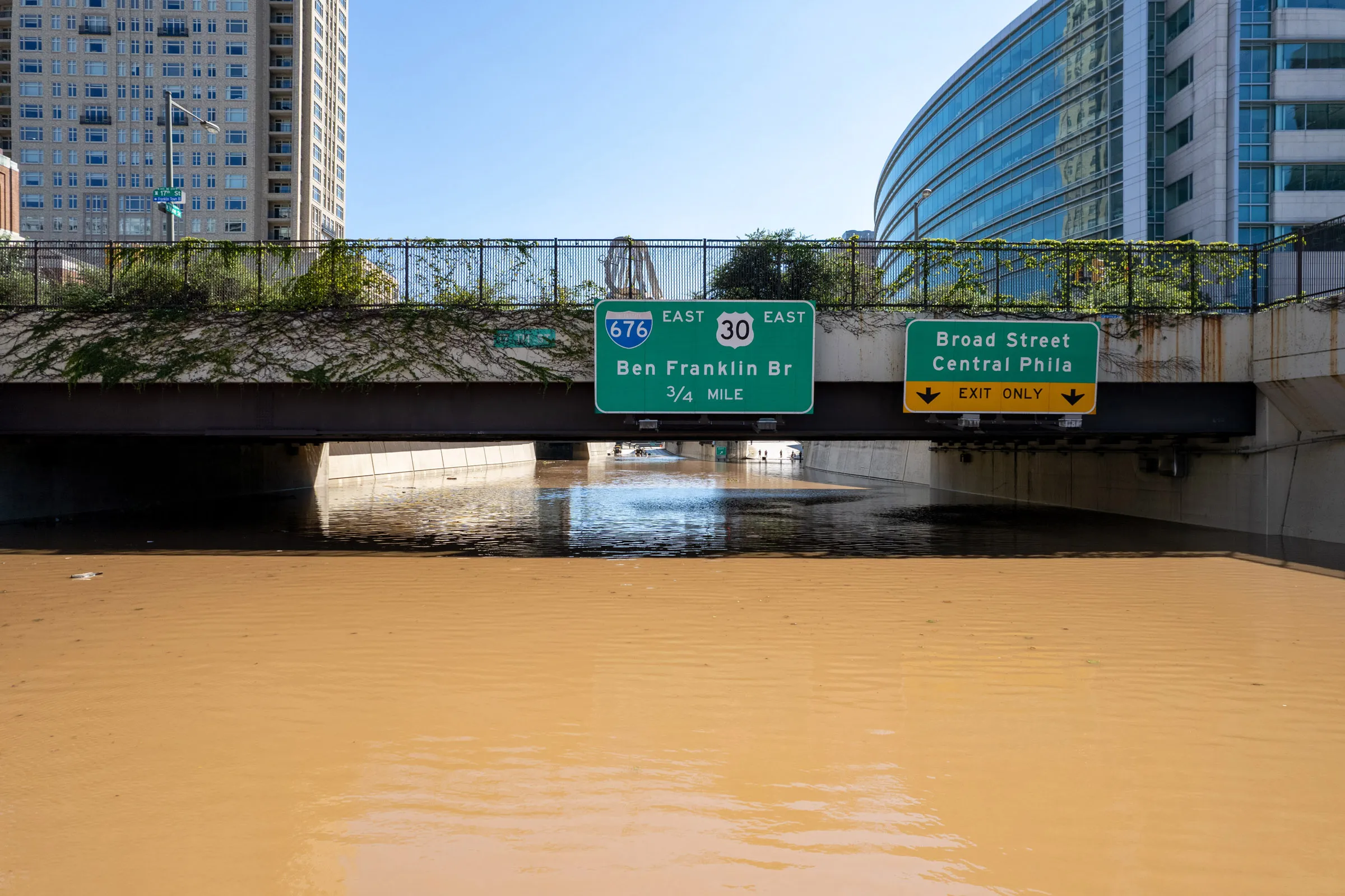
Philly underwater in September 2022 from Hurricane Ida
When Hurricane Ida flooded Center City Philadelphia in 2022, the City was unable to do much until the floodwaters receded given that the electrical pumps were about 18 feet below the Vine Street Expressway. Philadelphia has always had a flooding issue. Like most port cities, a lot of the area, especially between the Delaware and Schuykill Rivers was once wetlands. During the 19th century, Philadelphia made use of this network of streams by piping them to create an early wastewater treatment collection system thereby removing the waste stream that led to unsanitary conditions causing diseases such as typhoid. Today, that 200-year-old decision comes back to haunt Philly residents, especially those whose homes lie in floodplains where water used to go before streams became pipes.
Over the last 15 years or so, I’ve reviewed many dozens of environmental justice grants for EPA’s Grant Funding for Environmental Justice, assigning a ranking score to each one so it could be compared to all the grant applications received, and awarding grants to those with the highest scores. In 2022, I took on the role of Project Officer for a small grant that had been awarded to GreenTreks, a video production company that did a lot of water work with various partners including the City of Philadelphia Water Department. Philadelphia is currently in the middle of a 25-year program to install green infrastructure in its most vulnerable areas, thereby hoping to reduce flooding caused by the City’s CSOs in those areas.
Greentreks is a “non-profit multimedia & educational organization highlighting environmental solutions that inspire community action.” GreenTreks received an EJSG or Environmental Justice Small Grant of $75,000 under EPA’s program which was designed to find solutions to environmental problems in environmental justice or EJ areas in furtherance of EPA’s goal of protection of human health and the environment.
The GreenTreks grant focused on flooding in the Germantown area of Philadelphia which experiences high incidences of flash flooding sometimes even during minor rainstorms, and what residents could do to protect themselves from the worst of it.
Video courtesy GreenTreks
The videos have been disseminated in the Germantown community but are really relevant for any place experiencing high incidences of flooding which, when paired with climate change, could be all of us at one time or other.
video courtesy of GreenTreks
Created and directed by Barry Lewis and Maria Erades, these videos are informative, inspirational, and quite beautiful. I hope you’ll take a few minutes to enjoy them and gather some important tips on avoiding catastrophe in challenging storm-related times.
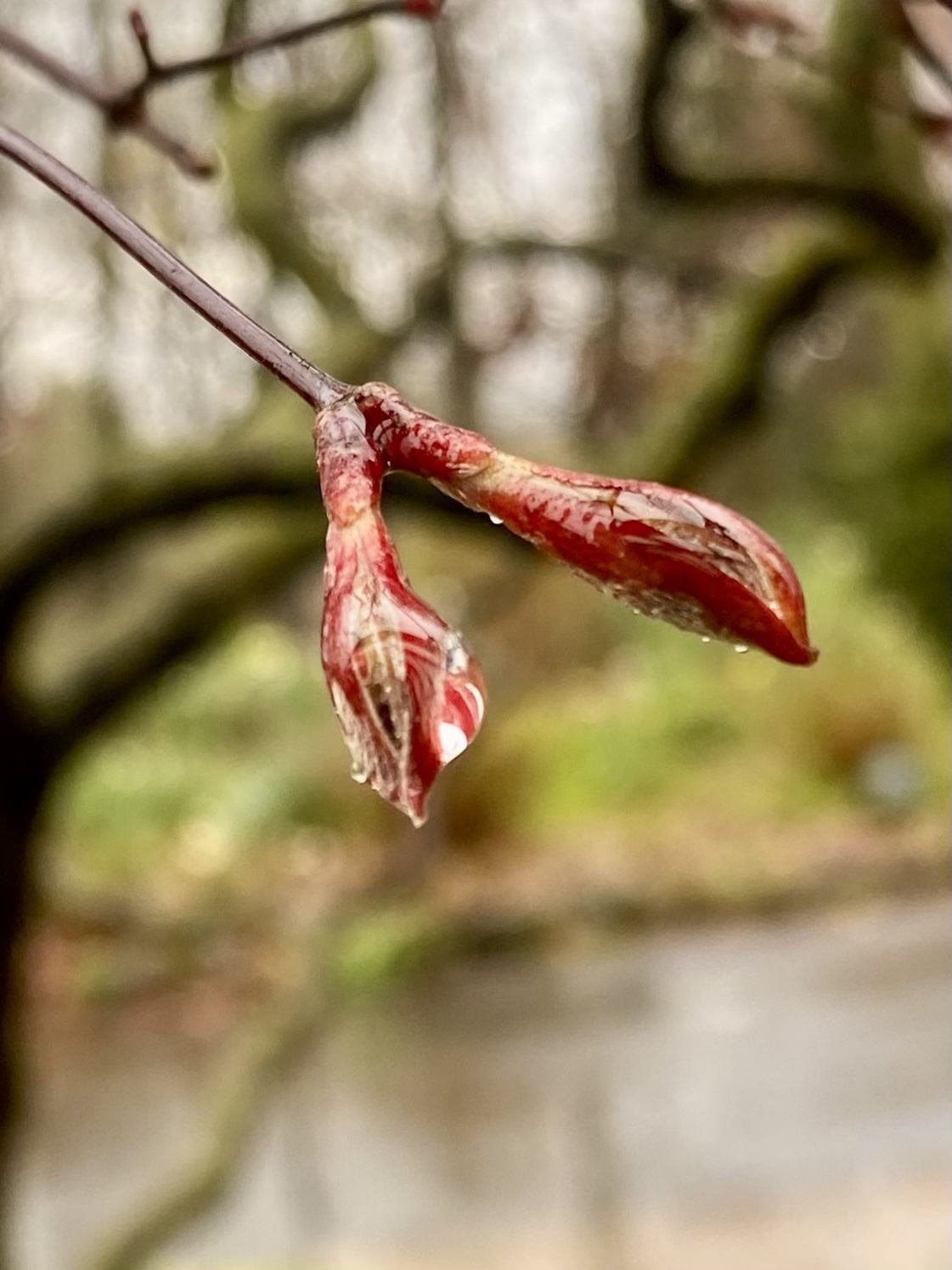
Photo by Arianna Rich
Then instead of rueing a rainy day, we can all get back to admiring nature through a watery lens.
For years, I’ve wanted to know the answer to this question. What would I do with all my free time once I no longer had deadlines and commitments? Would I go “totally ’round the bend” as my Australian friend, Bernice, used to say. Would I diligently take up one of the many causes I am drawn to and make it my life’s work? Would I start a business, write another novel, or just flake out and start sleeping 12 to 14 hours a day? Possibly all of the above?
Celestial — Spirit House
On 2/29/24 I leapt into my future, joining the ranks of the recently retired. I can’t say I’ve fully embraced my newfound freedom yet. I still retain a lot of the ticks and knee-jerk reactions resulting from full-time employment — y’all who are still hitting the snooze button every morning know what I mean — but I’m a list-maker, perhaps my single greatest strength, and if I put it on the list there’s an extremely high likelihood it’s going to happen. So off I go to make a series of lists, today, next month, next year, next decade — my “Where to?” lists — because the act of writing it down is the only way I can assure myself that my Act 3 will be worth writing home about.
I’m starting here on my blog — oh, honey, you’ve been too long in the shadows! — where I can flex and stretch my writing muscles. After that, who knows?
If you want to read more about the band Celestial, you can do so here. I love the combination of East meets West that seems present in all their music. Perfect for daydreaming. Give it a listen and let me know your answer to “Where to?”








 Green Life Blue Water