#WATWB – Summertime Summertime

Just for today, because it’s #WATWB day, I’m going to pretend my socially liberal, economically conservative, and environmental values are not imperiled now more than ever, that the Supreme Court is not about to swerve fervently to the right, that immigrant families will be treated with more kindness and less animosity, in addition to not being separated at the border, and that the Bill of Rights survives the ever-deepening and widening plutocratic state of the Union.  Just for today.

And when I wake up tomorrow from my dream and realize that there’s still much work to do, I’ll have the following stories to keep me sane and centered.  Thank God for small miracles.

First.  Picnicking this summer?  Then read this story about how the EU is both banning plastic and creating a more robust market for recycled plastics in an effort to make the world a more sustainable place. Yay, EU!

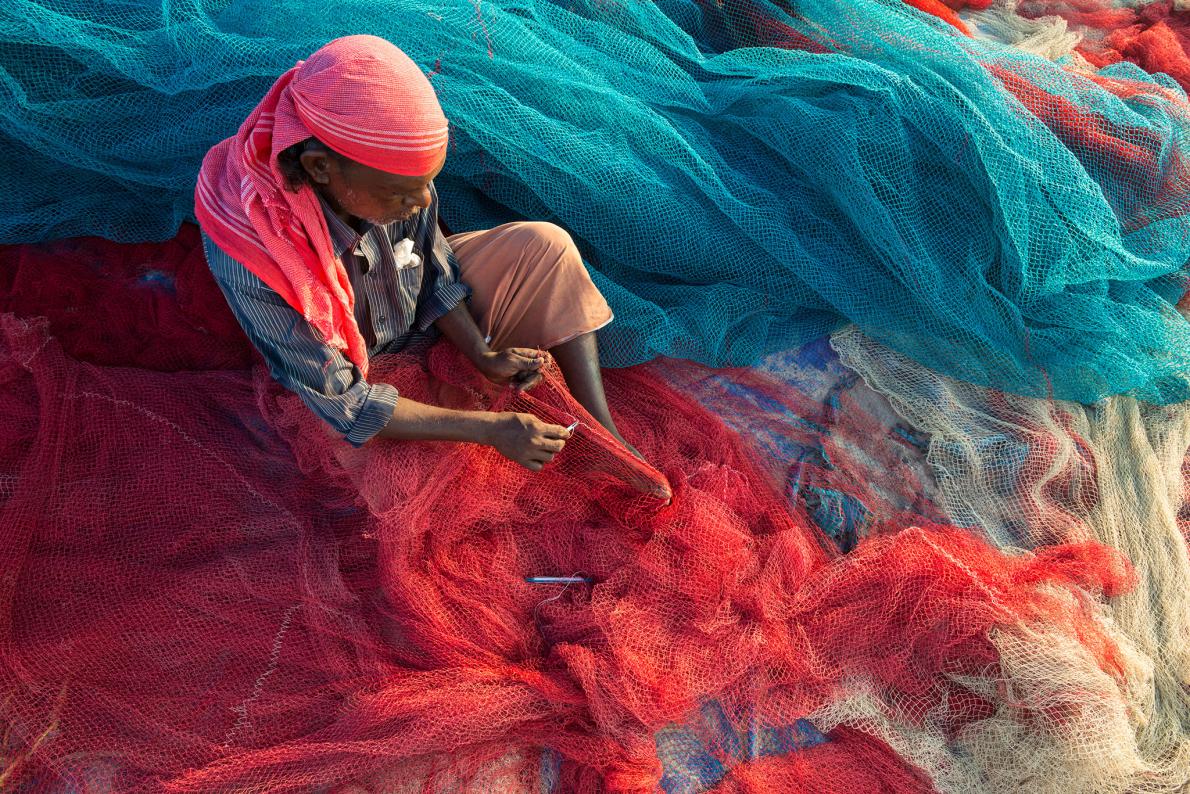
Here’s another story about how India’s fisherman are pulling plastic out of the ocean and creating roads with the refuse.  With help from a few government agencies and a bunch of local women, the boat owners in the fishing town of Kollam have started the first recycling center in the area.  So far they’ve collected 71 tons of plastic!  Go fish!

This month’s #WATWB co-hosts are Damyanti BiswasShilpa GargMary J MelangeDan Antion, and Simon Falk. Go check out their posts, and others on the link below.

Guidelines for spreading the good word are:  be brief, post feel good stories to accentuate the positive, spread the word on social media with the #WATWB hastag, and join us by clicking here to enter your link.

Thanks for playing!

pjlazos 6.29.18


Posted in Uncategorized | Tagged , , , , , , , , , , , | 33 Comments

Father’s Day Photo Caption Contest

                     (photo by Scott Eberly)

Father’s Day Photo Caption Contest

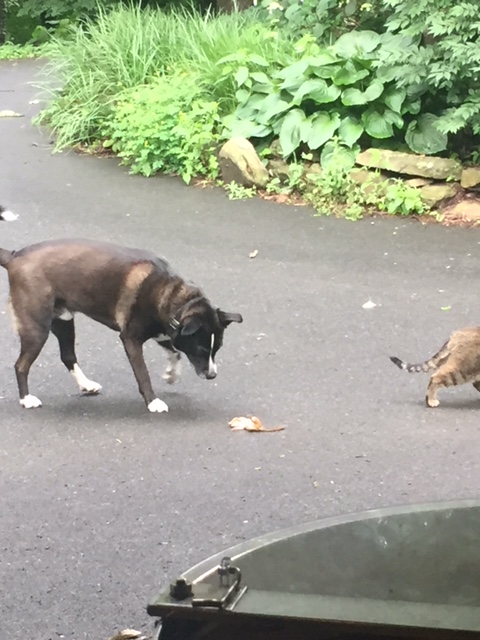
Here’s our dog, Apollo, our cat, Raul, and the poor chipmunk, a victim of an unfortunate accident, or being in the wrong place at the wrong time, that is, Raul’s line of sight.

Raul loves to chase chipmunks, field mice, voles, whatever is in range.  He’ll sit in the yard, motionless, all 9.5 pounds of him (he’s a skinny little thing), as if in meditation and then, suddenly, he’s off, across the yard, up and around a tree, through the bushes and the flowers, almost flying he’s so fast.  Raul’s such a sweet little cat that I have a hard time reconciling his killer instinct, but for him it’s not the goal, but the journey, and the chase is everything.

My husband, Scott, who had just let the Raul out en route to walking Apollo, was sitting on the porch, putting on his sandals when he saw Raul approach Apollo with a chipmunk in his mouth as if he were taunting him. Scott couldn’t get his phone out of his pocket fast enough to get that photo, but he got this follow-up, Apollo investigating the random massacre while Raul, Special Forces Operative One, walked away.

If a picture is worth a thousand words, what are yours?   I’ll give away a copy of one of my books, choice of paperback or kindle version, to the best photo caption, either:

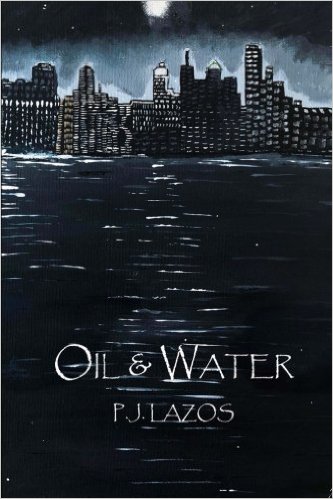
Oil and Water

or Six Sisters


Here’s my caption to get you started:  “Dude, what have you done?!”

I’ll run it for a week — all in good fun — unless you’re the chipmunk and then nothing is funny anymore.

Happy Father’s Day to all the dads out there!

pjlazos 6.17.18


Posted in Uncategorized | Tagged , , , , , , , , , , , | 23 Comments

Launch Day for Life in the Hollywood Lane

510keSqWp6L._AC_US436_QL65_

My friend, Ann Crawford, and her new book, Life in the Hollywood Lane!

Posted in Uncategorized | 1 Comment

Ethical Consumerism, Part 7 – How to Sustain the Population in 2050.

One of the things I like best about blogging is that it introduces me to other worlds, views, and opinions that I wouldn’t otherwise be exposed to, that I get great quality writing (for free!), and can also take advantage of an accumulation of knowledge that I wouldn’t have access to from my own life’s social circle. There are loads of people out there doing incredible things and posting thought-provoking, enlightening, planet-saving content to boot. The Green Stars Project is one of those truly amazing blogs that just gives and gives. If you want to be on the right side of environmental awareness, and conserve a few forests and maybe an ocean or two for your children’s children, then this is the blog for you. Thank you, Green Stars Project for all your hard work on behalf of the planet.

jkaybay's avatarThe Green Stars Project

Hi folks! In the previous post, I looked at how we can take actions as consumers to help curb population growth. This post is about actions we can take to sustain the human population without completely destroying our planet.

Population Growth Fears are Exploited by Corporations

One of the most common abuses of the population growth issue goes something like this:

We must embrace GlobalCorp’s practices because we’re going to have 9 billion people to sustain in 2050.

If the thing in question is sustainable (for example renewable energy) then you don’t even need the population argument. If the thing in question is not sustainable – and this is often the case where the population card is played – then a rising population is a ridiculous argument to use. To adopt a non-sustainable practice to support the Earth’s human population of 2050 is insanity. Particularly considering the delicate…

View original post 894 more words

Posted in Uncategorized | 14 Comments

NOBILITY

NOBILITY 

If you read my original post about The Twelve Virtues of the Merchant Priests, as suggested in the book, Sacred Commerce, my goal is to reflect upon and write about these  12 virtues — honor, loyalty, nobility, virtue, grace, trust, courage, courtesy, gallantry, authority, service, and humility — one a month for an entire year until I get through the list of twelve.  (I’m a couple months behind schedule, but what is linear time?  Really only a human construct, developed to encourage uniformity of thinking, meaning, I’m only late in some circles while it’s possible that in others I’m operating ahead of schedule.)  The 12 virtues of the merchant priest “automatically lift us to a higher octave of being,” and boy could we use some of that these days.  This month’s virtue is Nobility. 

Nobility sits on a throne of good intentions, but it’s a hard wooden seat without a cushion and a razor-straight back.  Eventually, the sitter tires of the lack of luxury, but not Nobility.  True Nobility doesn’t truck in luxury, but in getting your hands dirty.  You can be born into Nobility, but living up to it is a whole different story (although the modern royals seem to be doing a fine job).

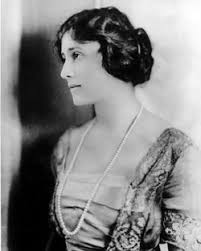
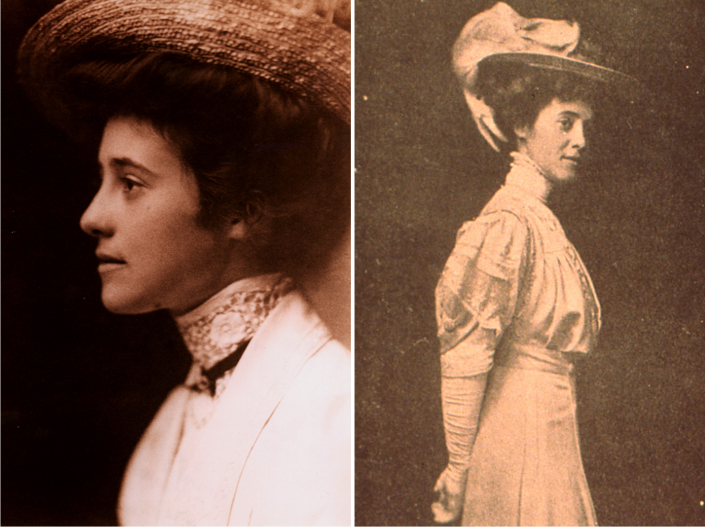
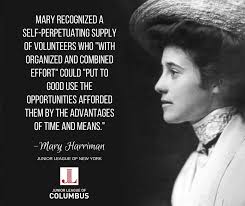
Nobility is not for everyone, but for Mary Harriman Rumsey, it was a driving force.  Born in 1881 to American royalty,  Harriman worked tirelessly to help those less privileged.  Her father, E. H. Harriman made a name and fortune for himself as a railroad magnate, but his civic-minded and philanthropic nature left an impression on his like-minded daughter.  A debutante who came of age to become a force in politics and social activism, Mary founded the first Junior League in 1901 at the age of 18 while studying at Barnard College in New York City.  

Inspired by the work of social reformers active in the “settlement movement” — the idea that those in upper echelons could and should help those less fortunate than themselves, not with just donations, but through their works and deeds — Mary and 80 of her similarly situated colleagues, one of whom was Eleanor Roosevelt, established the Junior League for the Promotion of Settlement Movements which later became the Junior League of the City of New York.  Their first project was on Rivington Street on the Lower East Side, home to a large group of immigrants.  Mary and her friends provided assistance and instruction on issues related to health, education and welfare, and social reform.  Mary thought it “almost inhuman that we should live so close to suffering and poverty” and do nothing about it.  To ensure her workforce was ready, Mary brought in lecturers and leaders in the field to train the Junior Leaguers, a practice which prevails today.

Mary continued her Junior League work for 10 years before moving on to other projects, and later, was tasked by President Franklin D. Roosevelt to chair the Consumer Advisory Board of the National Recovery Administration, which had the distinction of being the first government consumer rights group in the nation.  In between she founded the Community Council of Greater New York, opening almost five hundred playgrounds across the City, and worked with the Block-Aid program which assisted people on a neighborhood-by-neighborhood basis with food and clothing.  She also worked in politics with an eye toward social reform, and entered the publishing world by founding Today magazine in 1932 (which later merged with Newsweek), a magazine with a social conscience.  She even influenced her brother, Averell, to become active in politics and he went on to be the U.S. Ambassador to the Soviet Union and the governor of New York.  In a time when trivial pursuits were encouraged for women, even the affluent ones, Mary had the tenacity and nobility to forge a path that had not been walked before.

The legacy Mary left behind is the Association of Junior Leagues International Inc. (AJLI), comprising 291 Junior Leagues with about 140,000 women volunteers in Canada, Mexico, the UK and the U.S., women who are improving the community, improving the social dialogue, and improving the lives of those less fortunate in myriad ways.  AJLI’s mission statement includes “promoting voluntarism, developing the potential of women and improving communities through the effective action and leadership of trained volunteers. Its purpose is exclusively educational and charitable.”

It’s not often that people reach a hand down in order to pull someone up.  Through her life’s noble work, Mary Harriman demonstrated that the world itself is buoyed when we reach out in service to others, a lesson we would all do well to emulate.

BTW, it’s the one-year anniversary of the U.S. pulling out of the Paris Climate Accord — a not-so-noble thing — but thankfully, there are some brave and noble leaders determined to keep moving forward:

pjlazos 6.3.18

Posted in Uncategorized | Tagged , , , , , , , , , , , , , , , , , | 24 Comments

Teacher Not Preacher

Parent/Teacher Not Preacher

Three years ago on the summer solstice, I honored one of my mother’s dying wishes and planted her ashes beneath a flowering bush.  My mom died in October of 2014 and while I still miss her terribly, I find the ache isn’t as visceral, more like a dull throb I’ve gotten used to over time.

My mom grew up in South Philadelphia where everyone took public transportation so she never learned to drive.  When my parents married and moved to New Jersey she held firm, walking everywhere, that is, until I was 16 and she returned to work.  Now she needed a license and it had been 20-odd years since she’d been in the workforce  — two tough things to handle, especially at once.  Most people would have thought it too late or hard or scary to get their license at 43.  So did she, but what did that matter?  She wanted to help pay for her kids to go to college so she needed to go back to work, and if she needed to work, she needed to drive.  My favorite mom driving story:  we’re in the Sears parking lot about to get out of the car.  My sister and I are yelling at each other as we often did.  My mom is trying to ignore it as she often did, but it’s making her nervous as hell. We all get out of the car and start to head inside when we realize the car is still running, locked, with the keys inside.  As a new driver, my mom was mortified, but my sister and I thought it was hilarious.  We laughed about it while waiting for my dad to come with the spare keys to unlock the car and for years after that.


My mother epitomized dichotomies.  She was 110 pounds of unshakeable character and strong opinions which she often kept to herself.  She’d do anything for her kids and when my first marriage failed and I was about to have a baby, she moved in with me and helped me hold it all together (my dad had died years before).  She was an uber-mom before that was even in vogue.  She could also freeze you with a look, and as a kid, I learned to avoid that look by doing what she asked of me.  She wasn’t one to laugh easily, at least not until much later in life, but she appreciated simple pleasures and never took anything for granted.  While I turned out more like my Dad with his easy affability and spirit of compromise, I inherited my mom’s tenacity and strength, traits I’ve had to rely on many times over the years.  


When she 50, my mom was diagnosed with scleroderma, and it was her will that kept her going two decades longer than any doctor thought possible.  Even while her skin hardened, her opinions softened, and I watched her morph over time into a more flexible and open person in spite of, and maybe because of the scleroderma.  Rather than pity her lot, she embraced the challenge and doggedly pursued alternative therapy treatments, keeping whatever worked, discarding the rest.  I’m convinced this exercise gave her years more life then if she’d taken the prednisone the doctors were recommending from the outset.  Instead she chose acupuncture, NAET, shiatsu, massage, vitamin B therapy, aroma therapy, hypnosis, reflexology, and anything else that sounded promising.  Sometimes, I’d be the guinea pig, trying out a particular modality first as I did with acupuncture to see if she could handle it.  The experience changed the way I think about Eastern versus Western healing modalities forever. 

My mom’s scleroderma never stopped her from continuing her active role as my first teacher and still the best one I’ve ever had.  Here’s a few things she taught me, not necessarily in order.  It’s a list I rely on even more as I age and counsel my own kids:

  • say please;
  • and thank you;
  • always give your best;
  • use your words (not your fists, because “we are a non-hitting family”);
  • say what you mean and mean what you say;
  • if you don’t have anything to say, silence is a good thing – there’s already too much noise in the world;
  • take care of your sister;
  • respect your elders even when they’re wrong;
  • if you pay attention, you’ll always learn something;
  • family first.

It’s hard to say what I miss most about my mom.  Her companionship?  A given.  The fact that my kids will continue to grow, but she won’t be there to celebrate their victories and hold their hearts through their disappointments?  A tough one, especially since our youngest, her baby, graduates from high school next month.  Or that I no longer have her wisdom to draw on?  Selfishly, it just may be the last one.  Luckily, I took notes.

In Kabbalah, there are a series of three symbols representing the concept of “parent/teacher, not preacher,” meaning, a parents job is to teach their children the tools to get through life, but not dictate the kind of life they should live — leading by example.  My Roman Catholic mother totally embodied this concept, probably bucking the Church as she did; she gave us our religion, but never insisted we follow it.  Rather, she gave us choice in life, the ultimate freedom, by putting the clay in our hands and letting us to mold our worlds.  It was my supreme honor to be her child and I thank her every day for all her examples of strength and kindness and for her endless sacrifices.  


Miss you, Mom, oh so very much.  Happy Mother’s Day.

pjlazos 5.13.18

Posted in Uncategorized | Tagged , , , , , , , , , , , , , , , , , , , | 58 Comments

The Hate U Give


THE HATE U GIVE

Why do we Americans travel the world looking for engagement with other cultures when we have one right here, different from ours, exotic even, and instead of engaging, we put a police barricade around it?  I just finished reading, The Hate U Give, by Angie Thomas, a YA novel about an African-American high school girl, Starr Carter.  Her daddy, Big Mav, is a store owner but used to be a gang member who served three years in prison for not snitching on the “boss”.  Her momma, Lisa is a nurse at the local clinic and the bedrock of the family who manages the house like a drill sergeant.  Her family is blended in a way that most mothers would not tolerate, but Lisa does it for the kids.  

Starr goes to Williamson Prep, a mostly white, upper crust school because her parents want their children to be safe and get a good education.  Starr lives in Garden Heights, a mostly black, lower socio-economic neighborhood where gangs rule and shootings aren’t accidental.  Even though her parents could move, her dad thinks that not giving up on the neighborhood is the right thing to do.  Starr loves The Fresh Prince, dates a white boy from school, and plays basketball like a pro.  Since she’s been at Williamson, her two best friends are white, but they never come to her house.  She’s moved away, emotionally, from her Garden Heights friends and struggles with keeping the two sides of her life separate.  When Starr was 10, she witnessed her friend, Natasha, killed in a drive-by shooting, an incident that left indelible ink on her psyche. 

One night Starr’s at a party in Garden Heights with her friend, Kenya, with whom she shares a brother, Seven.  Her parents don’t allow her to go to Garden Heights’ parties so this outing is on the DL.  While there she meets up with Kahlil, her childhood BFF and first crush.  A short time into their re-acquaintance convo, shots ring out and the party disperses mad fast in all directions.  Kahlil grabs Starr’s hand and since she doesn’t see Kenya anywhere, Starr leaves in Kahlil’s car.  The kids are rattled, but manage to get away from the party intact.  They resume their catch up conversation:  Starr asks if Kahlil is selling drugs (he denies it); they talk about their families; they remember how they used to be such good friends; and all is well until they get pulled over by a cop.   When Starr was 12 she got two talks from her parents:  one about sex and the other about what to do when interacting with the police — “yes, sir,” “no, sir,” slow movements, do what the cop says or end up dead, and on.  As a result, Starr instinctively knows what to do.

Either Kahlil never got this talk from his family or he just can’t stick to the script because instead of handing over his license and registration as the cop asked, Kahlil asks the cop why they’ve been pulled over.  The annoyed officer — 11-15 as Starr will later refer to him — instructs Kahlil to stand still next to the car.  While 11-15 checks out Kahlil’s license, Kahlil opens the car door to ask Starr if she’s okay.  And that’s all it takes to end a life.  Three shots to the back — pop, pop, pop — and Kahlil’s dead.  Starr screams and rushes to Kahlil but there’s no help for him.  The cop freaks out and points his gun at Starr where it stays until backup arrives.  Later the cop will say he thought the hairbrush in the side of the door was a gun, but that doesn’t change Kahlil’s fate.  If you think I just gave the book away, well, that’s only the first two chapters.  

What Thomas does with the remaining 24 chapters is nothing short of poetry.  If you want to understand racism in America from the African-American perspective then read, The Hate U Give. The book sizzles with excitement and emotion, and despite the YA moniker, it’s not just a teen read.  I repeatedly thought about my own kids’ experiences growing up white in America and what I would do as a parent if I had to give that second talk, the one African-American parents are forced to give, and what it would sound like.  The feeling of helplessness, of being unable to protect your child out in the world, must be overwhelming, but the lack of vision from the white community is what would anger me the most. 

The title of The Hate U Give comes from Tupac Shakur.  Thug Life, Volume 1 (1994), is the name of an album, but THUG LIFE is also the name of an idea:  The Hate U Give Little Infants F@$%s Everyone.    

Thug Life refers, obviously, to how white America treats black America from infancy through adulthood, how children grow up to marginalized by society with fewer opportunities for advancement (recent studies show black males will always make less, even if they come from high income families), how the marginalization turns kids to gangs, how gang violence hurts everyone, and over and over in a cyclical loop.  I don’t know the answer to solving this century-and-a-half old problem for which there’s no today solution, and you won’t find it in the book, but understanding and awareness on both sides of the aisle is a good place to start.  Sadly, Tupac didn’t live long enough to see his work have much impact in the world.  He died on September 13, 1996 at the age of 25, the victim of a drive-by shooting.  

The fear and anger that fuels such systemic violence will never be abated unless we all stop and take stock of how we are complicit in this never-ending racial drama. Want to change the future?  Then start with the present otherwise the future will look exactly the same only the alienation and altercations between the races will have only worsened.  As Angie Thomas says in the acknowledgements section of the book, “be roses that grow in the concrete.”  The Hate U Give is an endearing and clear-eyed look at growing up African-American in this country, a look at both the roses and thorns.

pjlazos 5.6.18

Posted in Uncategorized | Tagged , , , , , , , , , , , , , , | 36 Comments

The Ocean Cleanup

[photo credit Erin Lafferty]

The Ocean Cleanup

It’s estimated that there are about 5 trillion pieces of plastic trash in the ocean, swishing around with the current, meeting up with other pieces of plastic and forming groups like the Great Pacific Garbage Patch (located between Hawaii and California). This amount of plastic kills the ocean, kills the wildlife that lives in the ocean, and will eventually kill us fish-eating humans if we don’t do something about it.

Enter The Ocean Cleanup project that has been working on a way to relieve this impossible situation.  Using advanced technologies and ocean currents, The Ocean Cleanup hopes to be able to capture half of the plastic in the Pacific Garbage Patch within five years and remove it to offshore facilities.  The first system is going to be deployed in mid-2018.  Wanna join in the fun?  Contribute skills.  Contribute funds.  Or just contribute good thoughts. Let’s clean up the ocean!

Co-hosts for this month are  Shilpa GargMichelle Wallace, Mary Giese, Dan Antion and Simon Falk, and the rules (okay, they’re just guidelines) are as follows:

1. Keep your post to below 500 words, if possible.

2. On the last Friday of every month, link to a human news story on your blog, one that shows love, humanity and brotherhood.

3. Join us on the last Friday of each month in sharing that news.  Don’t worry if your story can cut it, we love all kinds of stories as long they transcend religion and politics, and take a deep dive into what it is that makes us human.

4. Place the WE ARE THE WORLD Badge on your sidebar, and help spread the word on social media. Tweets, Facebook shares, G+ shares using the #WATWB hashtag throughout the month are welcome.

5. Read and comment on each others’ posts, make news friends and keep the old (something about silver and gold) by getting to know your fellow #WATWB compadres.

6. To signup, Click here and add your link in the WE ARE THE WORLD Linky List below.

pjlazos 4.27.18

Posted in Uncategorized | Tagged , , , , , , , , , , , | 44 Comments

Earth Day 2018


EARTH DAY 2018

The State of the Planet

and What You Can Do to Help Fix It

So here we are again, April 22, Earth Day, the one day a year that belongs to the “Mother of us all,” Senator Gaylord Nelson, environmentalist, conservationist, consumer advocate, small business proponent and a lover of peace founded the first Earth Day, held April 22, 1970, a “teach-in” to raise the nation’s awareness on environmental issues. About 20 million people showed up and Nelson’s efforts paid off, resulting in the creation of the Environmental Protection Agency on December 2, 1970 by then President Richard Nixon.  It also led to the expansion of some of our most important national legislation like the Clean Air Act, (originally passed in 1963 and amended in 1970), and the Clean Water Act (originally enacted in 1948 as the Federal Water Pollution Control Act, and reorganized and expanded in 1972).  Now, almost 50 years later, we’re still gathering, raising awareness, and trying to do right by Mom because that’s what kids are supposed to do, right?

According to the Brookings Institute,  the UN, the World Health Organization, among other organizations, and good ole’ common sense, we need to do a little better, particularly when it comes to environmental policy.  It’s no secret that the current administration is not a fan of the environment, preferring to focus on the economy and building borders, but  I believe it’s safe to say that good environmental policy = good economic policy, especially with all the new technology out there waiting to be developed, so let’s get on that, people and save the planet while we’re making a few bucks.  

In the interim, here are a few things happening in the U.S. and around the globe, like the good, the bad, and the ugly of environmental issues.  I’ll let you decide what categories they each belong in.

  1. U.S. household water use, thanks to states like California who, probably thanks to climate change, always seems to be in a drought these days, has returned to 1990 levels.  
  2. The Paris Climate Accord which hopes to reign in climate change, one of the biggest challenges of our lifetimes, is going strong, but sadly, without the presence of the U.S. who pulled out of the deal last year and is showing no signs of changing its mind.  
  3. Plastics, that ubiquitous compound that has improved our lives on so many levels, is not going away any time soon.  From a product standpoint, that’s good, but from an environmental one, it’s scary.
  4. Over 2.3 billion people don’t have access to improved sanitation (and are often forced to defecate in the open) while about 1 billion people don’t have access to safe drinking water.  Think about that the next time you turn on the tap.
  5. The water burden is women’s burden and it results in all kinds of health and economic disparity.
  6. We are going extinct and we didn’t even know it, and it’s happening at levels that were last seen when we lost Tyrannosaurus Rex.  
  7. Civility has left the building, just like Elvis.  I don’t need to give you a link for you to see this one.  Just walk out your door.  We’ve are being horrible to each other and we’ve got to stop.  

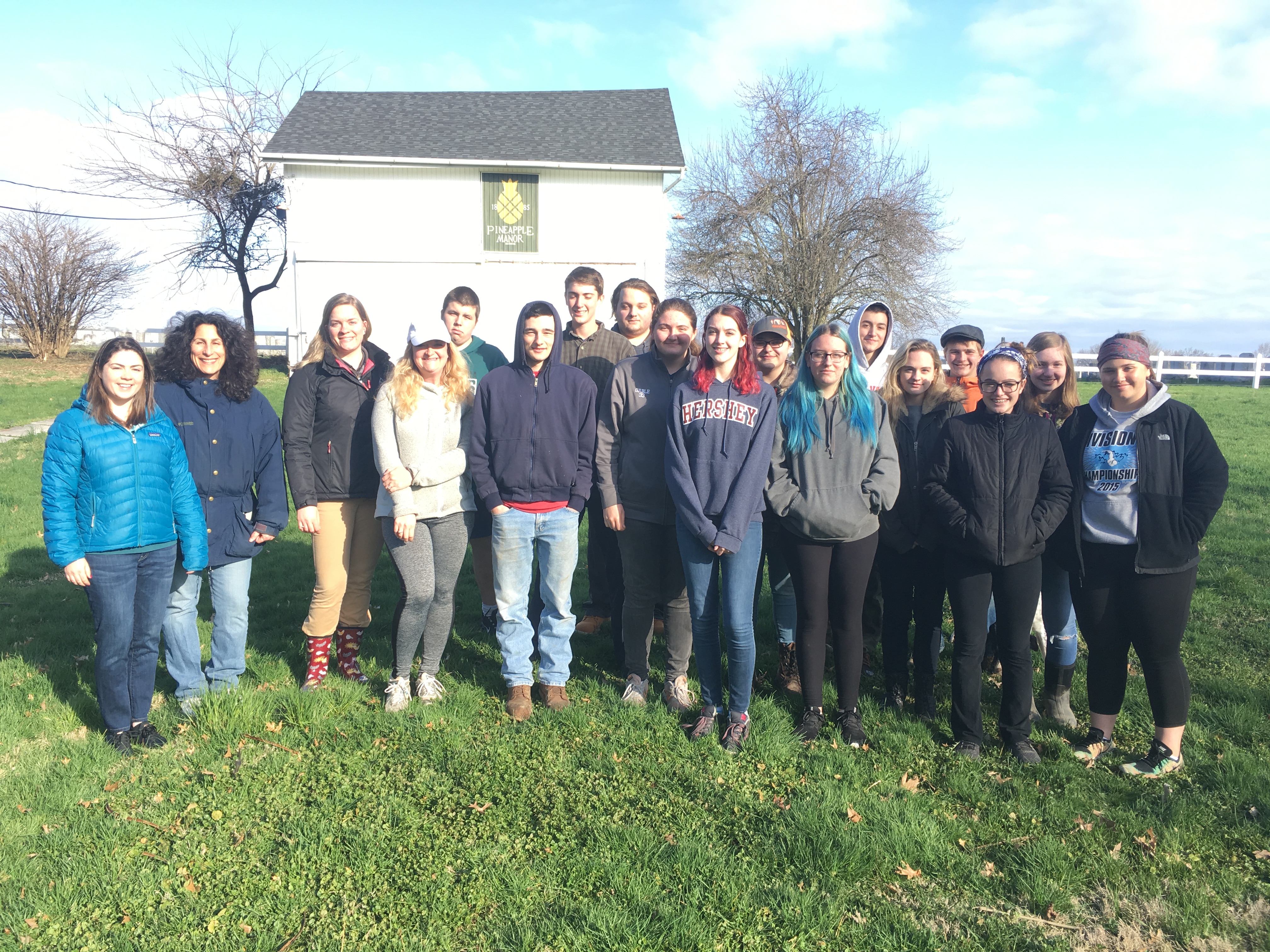
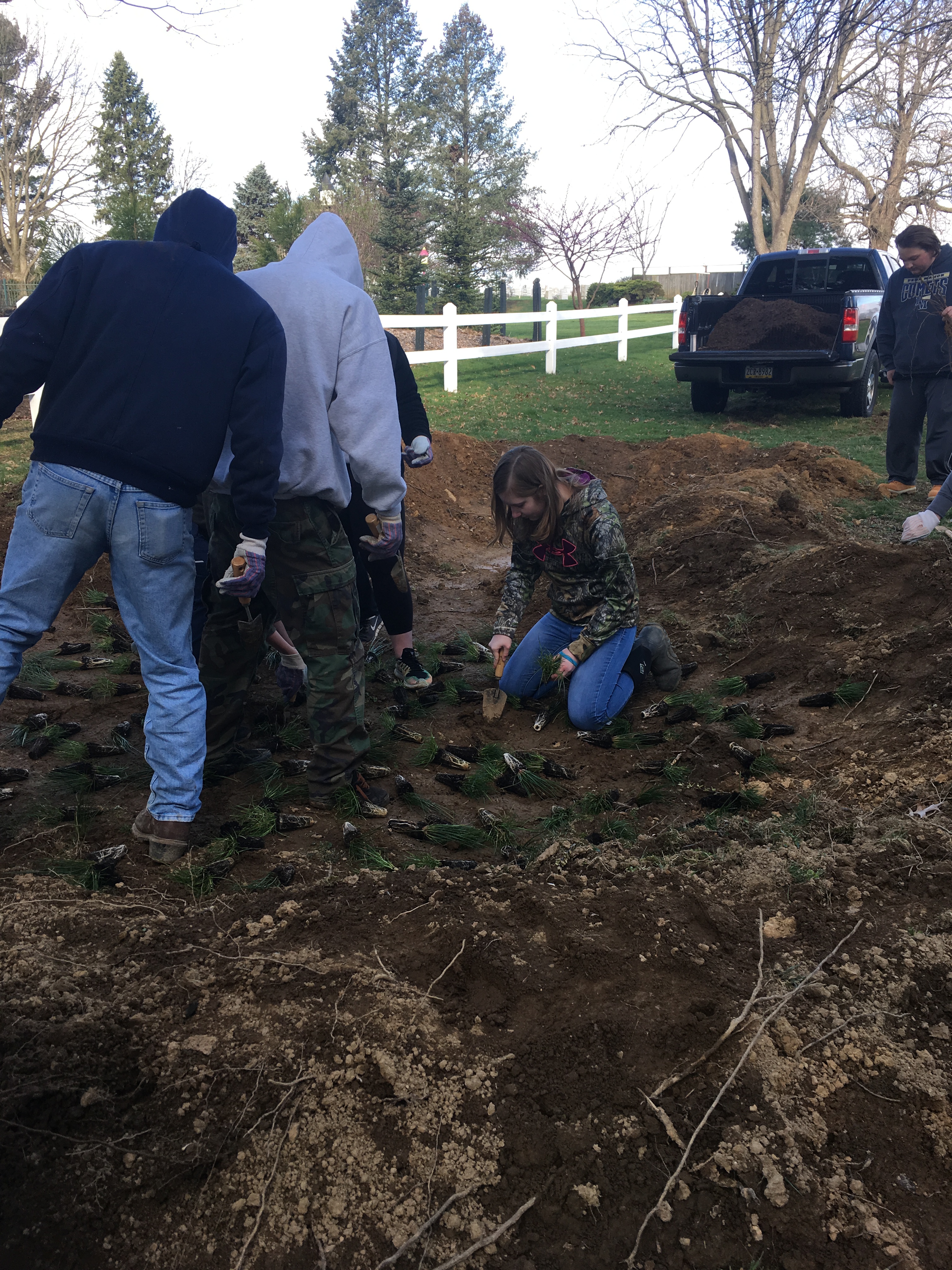
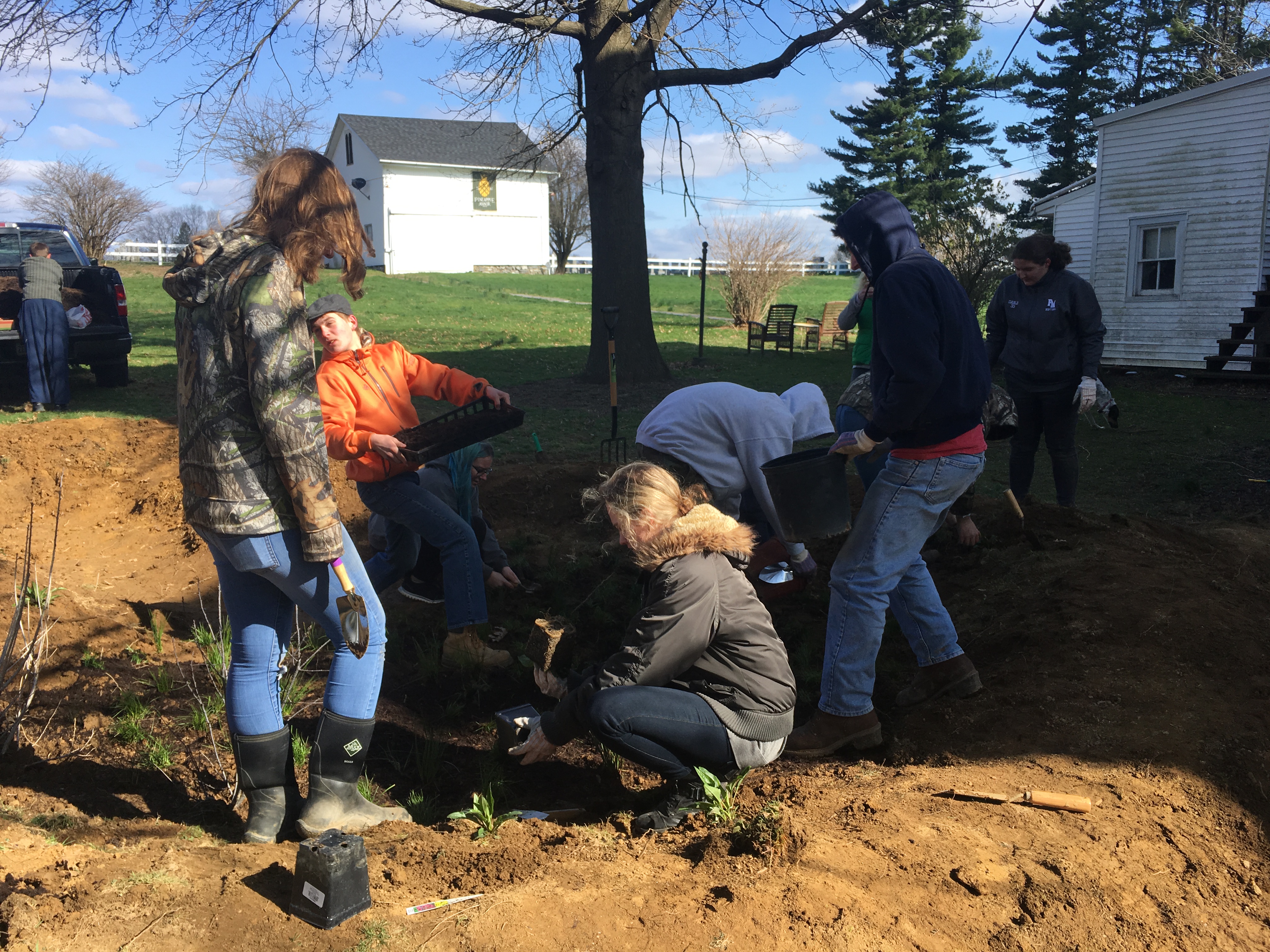
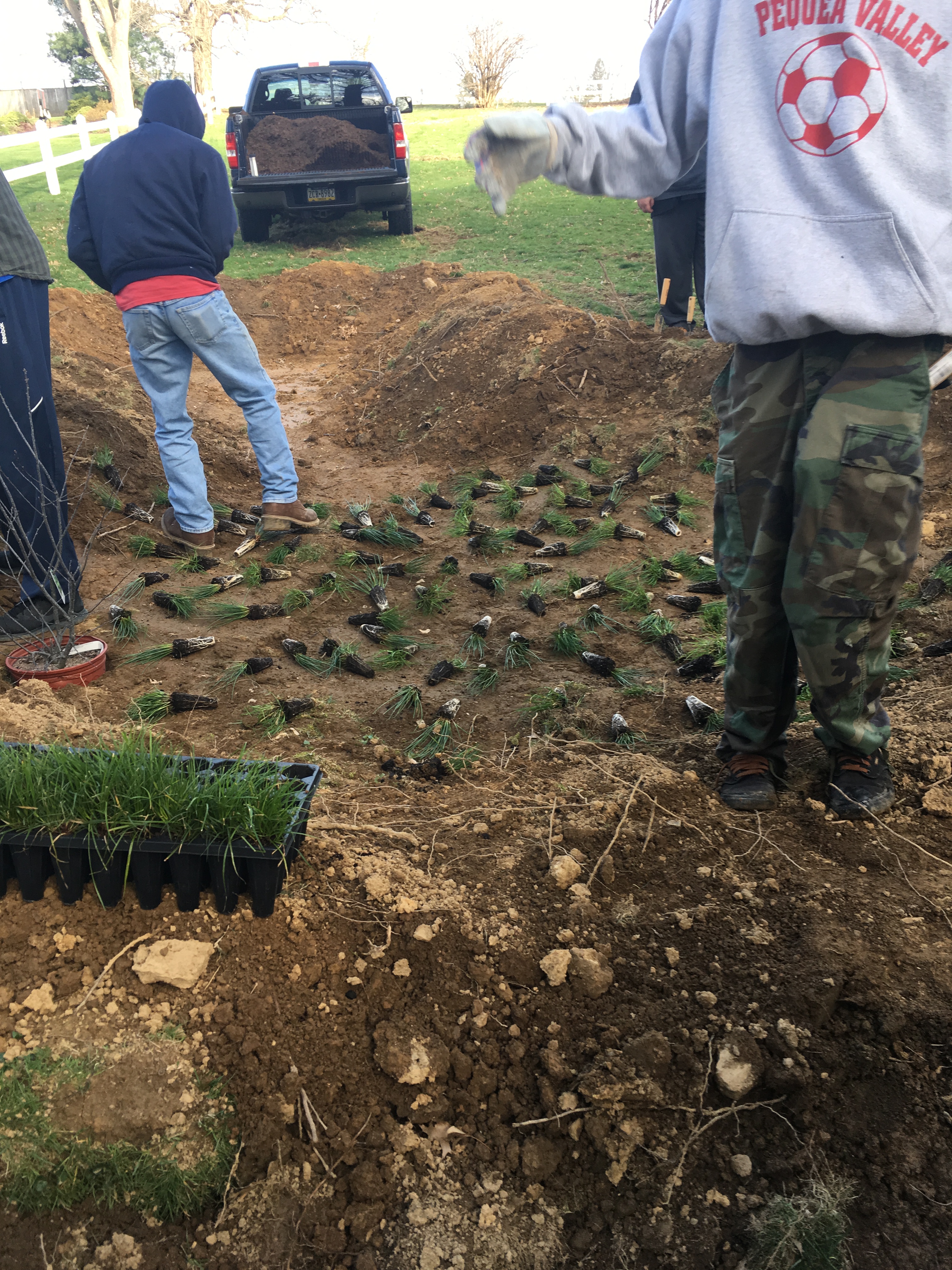
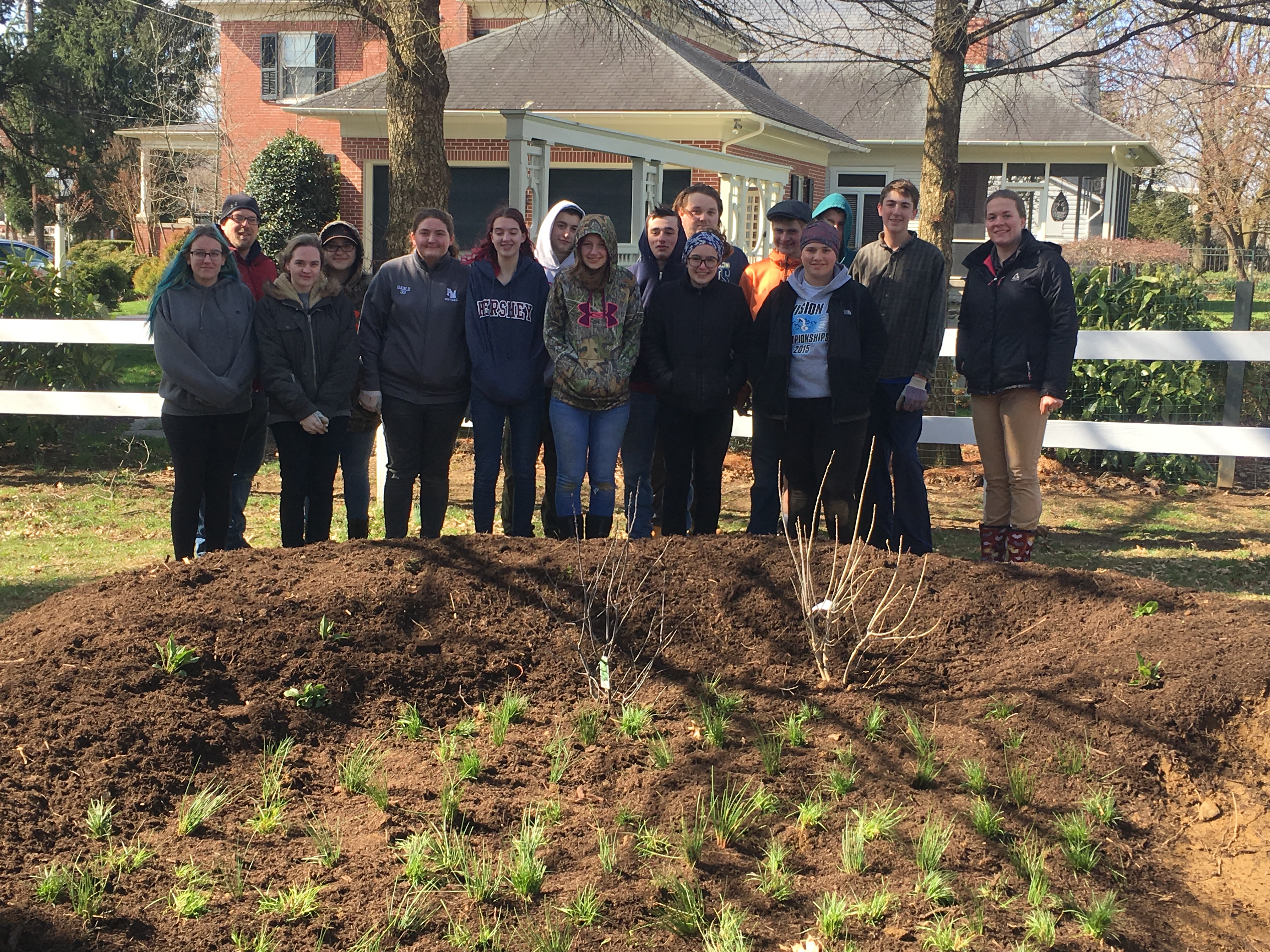
So what can you do to contribute?  There are so many things, way too numerous to mention, but anything you can do to improve your little part of the world will help.  As for me, I helped plant a rain garden with a group of high school students and some lovely homeowners who wanted to do their part for the planet.  

Rain gardens look cool, they help water hang around for a while so it can seep slowly back to groundwater rather than rush off down the storm drain, they filter out toxins and pollutants from entering the streams and rivers so they improve water quality, and it’s another connection with your mother, earth, that is.


Earth Day is not just about bugs and bunnies, but people, too.  We are part of the earth, just like the soil, the sand, and the air we breathe, and we need to replenish ourselves the same way we need to replenish our mother. So before you dismiss Earth Day as just some environmentalist fluff, remember, we’re all stuck together here on this tiny little globe so if Mom says go take out the trash, or clean up your room, or don’t throw your smelly socks on the floor for someone else to pick up, maybe it’s time to listen to her.

Make this Earth Day count.

pjlazos 4.22.18

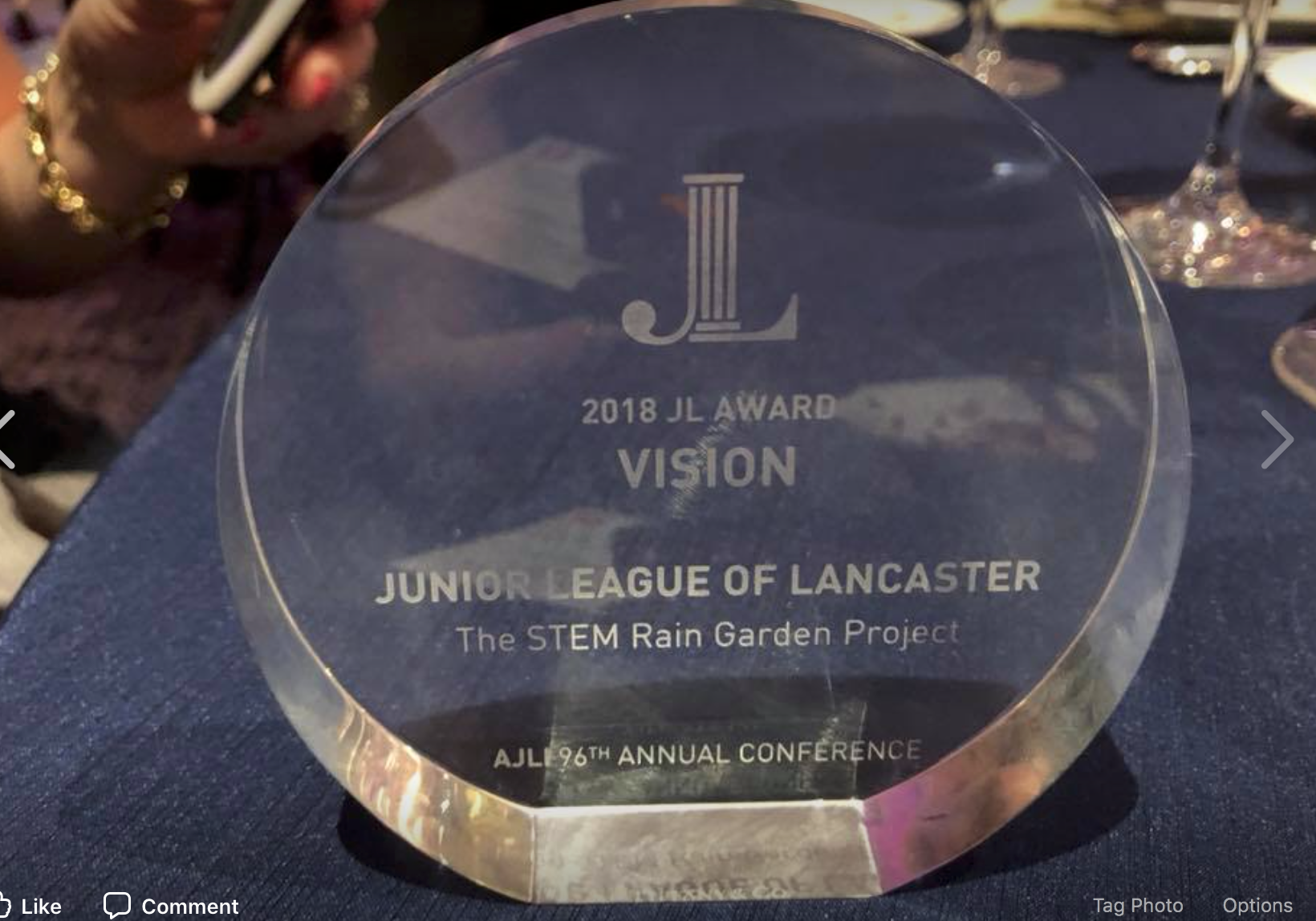
p.s. and coincidentally, just found out that we got an award for our efforts.  This is the third of four planned rain gardens this school year.  It feels awesome to be part of this team effort.

Posted in Uncategorized | Tagged , , , , , , , , , , , , , , , , , | 20 Comments

Cleanup In Aisle 7!

Cleanup in Aisle 7

We’ve all heard the term nature abhors a vacuum, meaning nature makes use of all its spaces even if it’s just a space filled with air.  We humans have interpreted it a little differently, sadly, and taken things all too literally.  Every day we watch the world’s farmland giving way to more development, our forests (the earth’s lungs) being burned and converted to graze cattle and grow coffee beans, our very identities merged with artificial intelligence (thanks, Apple and Alexa), and the rules about what it means to be a human living on planet earth blurring more all the time.

Despite the rhetoric we spout to our kids about playing nice with others, we adults don’t always heed our own advice, especially if there’s something we want, but there are times — generally in crisis — when people of different mindsets do work well together (I hope that doesn’t mean we need an alien invasion to stem the growing tide of populism, but that’s a topic for another blog post.).

So what a delight to find that there are not only people but entire organizations working well together and on behalf of the environment.  The William Penn Foundation in Philadelphia is pumping $42 million into protecting the Delaware River watershed, an enormous amount given over to an enormously important river.  The Delaware River Watershed Initiative (DRWI) is a collaboration among 65 non-governmental organizations (NGOs), showcasing the power of partnerships.

The Delaware River provides drinking water for 15 million people as well as shipping for supertankers, fishing for the most enthusiastic fishermen, kayaking, boating, swimming, and other recreational activities.  It houses industry along its shores, and preservation for some of its wetlands, all the while being the longest undammed river this side of the Mississippi.  Having a coalition to keep the pollution in check, make recommendations for improvements, and monitor water quality, among other things, was the best thing that could have happened to the river.  Great things can happen when we lead with science!

So three cheers for the William Penn Foundation.  Your benefactor would be proud.  Long may the Delaware River flow clean, clear, and unimpeded.  Truth is, there’s a lot of work to do to get to clean and clear, but never underestimate the power of commitment.

Back when I was writing Oil and Water, I did my own research on oil spills along the Delaware.  I’ll leave you with this little excerpt from the book.  Enjoy.

pjlazos 4.16.18


PART TWO

The Delaware River, the longest undammed and only remaining major free-flowing river east of the Mississippi, also lays claim to the largest freshwater port in the world. The river flows three hundred and thirty miles from Hancock, New York, and makes a pit stop in the Delaware Bay before spilling into the Atlantic Ocean. It serves as the dividing line between Pennsylvania and New Jersey and services twenty million residents of the New York, New Jersey and the Philadelphia area with drinking water. Washington’s famous Christmas Eve ping-ponging across the river began and ended on the banks of the Delaware at Trenton, New Jersey. But the river’s abundance isn’t limited to battles, boundary lines and the provision of potable water. It’s a dichotomy in uses: heavy industry draws on her for its needs as do bald eagles and world-class trout fisheries. As evidence of the latter, about one hundred and fifty miles of this magnificent river has been included in the U.S. National Wild and Scenic Rivers System.

In the late 1800s, approximately one million Philadelphians lived within the boundaries of America’s third largest city, which boasted the second largest port in the country located in the Delaware Bay. The U.S. Army Corps of Engineers, the entity charged with assuring the river’s safety, dipped its long, federally-funded fingers into a bevy of construction, flood control, and navigational projects designed to improve, among other things, the river’s navigability. In 1878, before Philadelphia had electricity or the telephone, sixteen hundred foreign trade vessels arrived each year, and six thousand coastal trade vessels docked in the river’s port. Trade vessels have given way to supertankers: seventy million tons of cargo arrive in the river’s waters each year. From sails, to steam, to the supertankers, the Delaware River and its Bay have lent their banks and waters to the growth of the interstate and international commerce of not only Philadelphia, but also the nation.

At its deepest point, the Delaware is only forty feet, which means the river can’t abide a thousand foot supertanker between her banks. Roughly the size of three and a half football fields and bearing three million gallons of oil or other cargo, a ship that size has forty-foot drafts, and sits forty feet below the water line, as deep as the river’s most navigable channel. Low tide causes the water levels in the tidally influenced channel from the Delaware Bay to Philadelphia to drop as much as eight feet which would leave a thousand foot ship incapacitated, floundering like a beached whale.

When the Corps of Engineers began its first deepening project in 1855, the depth of the Delaware stood at eighteen feet. The Corps dredged down to the current depth of forty feet during World War II and maintained this depth by periodic dredging and removal of silt buildup in the channel to the tune of about 3.4 million cubic yards a year. Since 1983, the Corps has studied the feasibility of dredging the Delaware’s main shipping channel down to forty-five feet to better accommodate the world commodities market by making the hundred-and-two mile shipping route from the Delaware Bay to Camden, New Jersey, more accessible.

To do so, the Corps would need to remove about twenty-six million cubic yards of silt and sediment from the river bottom and continue removing another 862,000 cubic yards every year thereafter at a cost of approximately $311 million dollars. Cost notwithstanding, the Corps would need a place to put all that sand, clay, silt and bedrock. While federally owned sites have been identified, environmentalists contend that the detrimental effects to drinking water, aquatic and bird life, and the potential contamination from the disposal of dredged material outweigh the benefits. That story — small town need vs. corporate greed; environmental stewardship vs. environmental recklessness; the rights of the few vs. the rights of society — has existed since the dawn of creation, and, because of constraints of space and time, is a story best saved for another day.

Chapter Thirty-Eight

The Ryujin dropped anchor at Big Stone Anchorage at Slaughter Beach, Delaware, in the mouth of the Delaware Bay. The “parking lot” in the Bay was crowded this morning with a dozen supertankers waiting to offload their cargo onto barges that would take the goods upriver to Marcus Hook or Philadelphia Harbor or Becket Street Terminal in Camden, New Jersey. Once offloaded, the supertankers were light enough to make the trip upriver. Some had been waiting as much as a week while tugs and taxis cruised back and forth, bringing food and supplies to the waiting supertankers, crisscrossing the Bay like a checkerboard and leaving white caps in their wake. The great ships were parked far enough apart to allow them to spin on their anchors, a necessity when considering the vagaries of the weather. From the air it looked like a mechanical ballet: dozens of ships turning and gliding on their axes, a synchronized dance brought to life by the formidable forces of wind and tide.

The Ryujin traveled from the Arabian Gulf and had been parked in the Delaware Bay for the last week, awaiting the offloading of a million gallons of its crude oil onto a barge which would make it light enough to navigate the Delaware’s forty foot channel upriver to the Akanabi refinery in Marcus Hook. While waiting, the Ryujin took on skid loads of food, supplies and mechanical parts sufficient to tide her over until arrival at the next port. And since the suppliers were not interested in receiving credit for these transactions, the Ryujin carried vast quantities of cash to pay for those stores as well as armed guards to protect it. The ship’s superstructure housed a three-story engine room, a machine shop, steam turbine and diesel engines, a mess hall, living facilities for her Captain and crew, and a single cat who relished the job of keeping the mouse population down. Where the mice came from was anyone’s guess given that the ship had spent the last three weeks at sea.

Beside the Ryujin sat the Sea Witch, an engineless barge a third the size of the Ryujin, but with considerably less girth. Motored by The Grape Ape, a seventy-five foot, single-screw, diesel-powered tugboat, the Sea Witch sat, waiting to remove a million gallons of elemental crude oil from the Ryujin and shuttle it up the Delaware River channel for her. Afloat on a tidally influenced body of water, both boats were subject to the fickle, yet predictable, moods of the moon.

Named for the Dragon King of the sea, an important Japanese deity said to have the power to control the ebb and flow of the tides with his large mouth, the Ryujin wasn’t living up to its name today. It seemed that the ocean, the Bay, the moon and the tides were all in cahoots, as the Ryujin spun on its anchor at the wind’s ferocious insistence, and the Sea Witch tried to make amends.

The process of lightering was a tricky one. The tanks needed to be drained one at a time in a specific order, or the Captain would have an imbalanced ship with the bow rising higher into the air as each tank was emptied, a disaster in the making. Therefore, the Captain took great pains to ensure that the oil was skimmed off the top of each of the tanks in a controlled fashion, draining some from one tank, moving on to the next, and back and forth until the process was completed.

After several hours, Captain Heston Reed was barking out orders like a man possessed. There was nothing he could do until the barge, the Sea Witch, had tied on, an event that, despite tidal fluctuations, was close to completion. The fendering bumpers, which consisted of a large piping structure encapsulated by dozens and dozens of tires, and worked like a ball bearing in between the two vessels, were lowered into place, the black scrape marks from previous lightering operations still visible on both ships. With the fendering bumpers properly lined up, Captain Reed gave the command and the Sea Witch’s crew tied on to the Ryujin. The giant mooring ropes creaked and groaned as the crew cranked down on the winches, pulling them tightly into position. Satisfied that the ships had no visible gaps between them, Captain Reed signaled the operator of the Sea Witch and gave the go ahead to his own crew. The crew began the arduous process of lowering a dozen twelve-inch round, rigid rubber pipes down some twenty-five feet onto the deck of the Sea Witch. The pipes were attached by cables to small cranes. The cranes swung them into place, enabling the deckhands to make the mechanical connection to a screw coupling which was part of a larger manifold system on the deck of the Sea Witch and which fed into the barge’s holding tanks. The deck hands inserted the pipes and, using a special wrench and the sheer torque of their body weight, screwed the couplings fast. The rubber pipes originated from a similar manifold system on the deck of the Ryujin, and once Captain Reed and the Sea Witch’s operator were satisfied that all mechanical connections were secured, the transferring, or lightering process, could begin. Captain Reed personally checked each of the connections. The individual pipes were hooked to another, larger pipe so the ship and barge operators could control, via computer, which tank would give and which tank would receive the oil.

Captain Reed gave the signal and the Ryujin began offloading its crude, the oil flowing from its holding tanks through the manifold system and into the pipes that would carry it down to the Sea Witch’s manifold system. The rigid rubber pipes lurched forward as the sudden thrust of oil was released. Frank Charlton, the manifold operator, sat in the control house on the barge electronically directing the distribution of oil into the various holding tanks and taking great pains to keep the ship balanced.

“All right?” Captain Reed stepped into the computer room to ascertain for himself the integrity of the operation. There’d be hell to pay if someone made an error on his ship. Charlton nodded and turned briefly to acknowledge his superior officer. Captain Reed took a deep breath and the corner of his mouth twitched, but he did not smile.

“Let me know when it’s done then. I’m going to see about the pilot.”

“Yes sir, Captain,” Charlton replied without taking his eyes off the computer screen.

Posted in Uncategorized | Tagged , , , , , , , , , , , , , , , , , , , | 19 Comments