
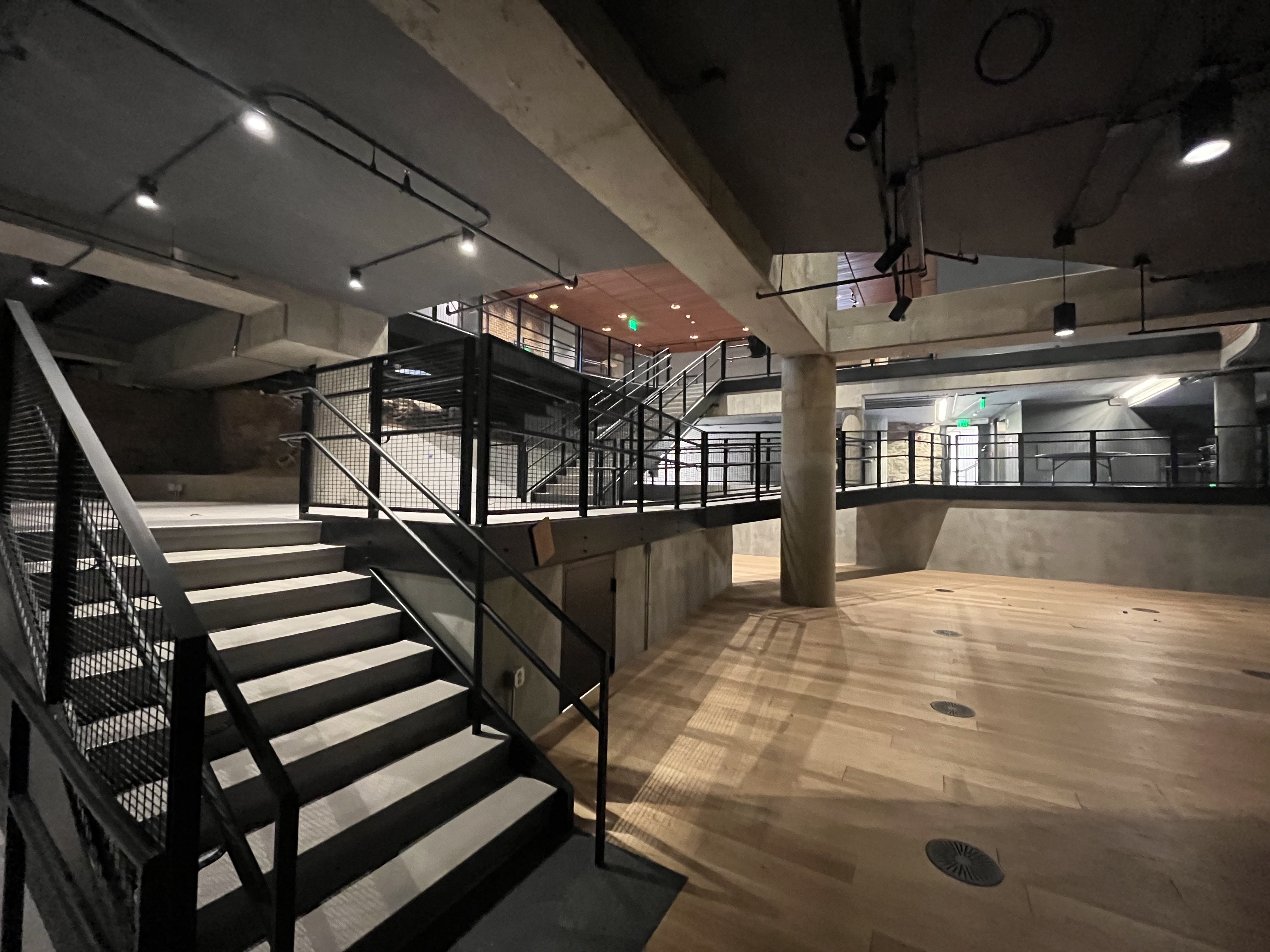
A few months ago, I enjoyed a sneak peek tour of the new Stevens & Smith Center for History and Democracy, located on the southwest corner of the Marriott hotel at the corner of Prince and Vine Streets. The museum is comprised of what used to be two houses belonging to Congressman Thaddeus Stevens — his home and law office, and the adjacent Kleiss Brewery. The bones of the museum are now finished, thanks to the fantastic efforts of Lancaster History, and the museum is currently being populated with all the artifacts that will bring Stevens’ and Smith’s lives, along with this period of history, to life. Lancaster History intends to open the museum to the public in early 2026.
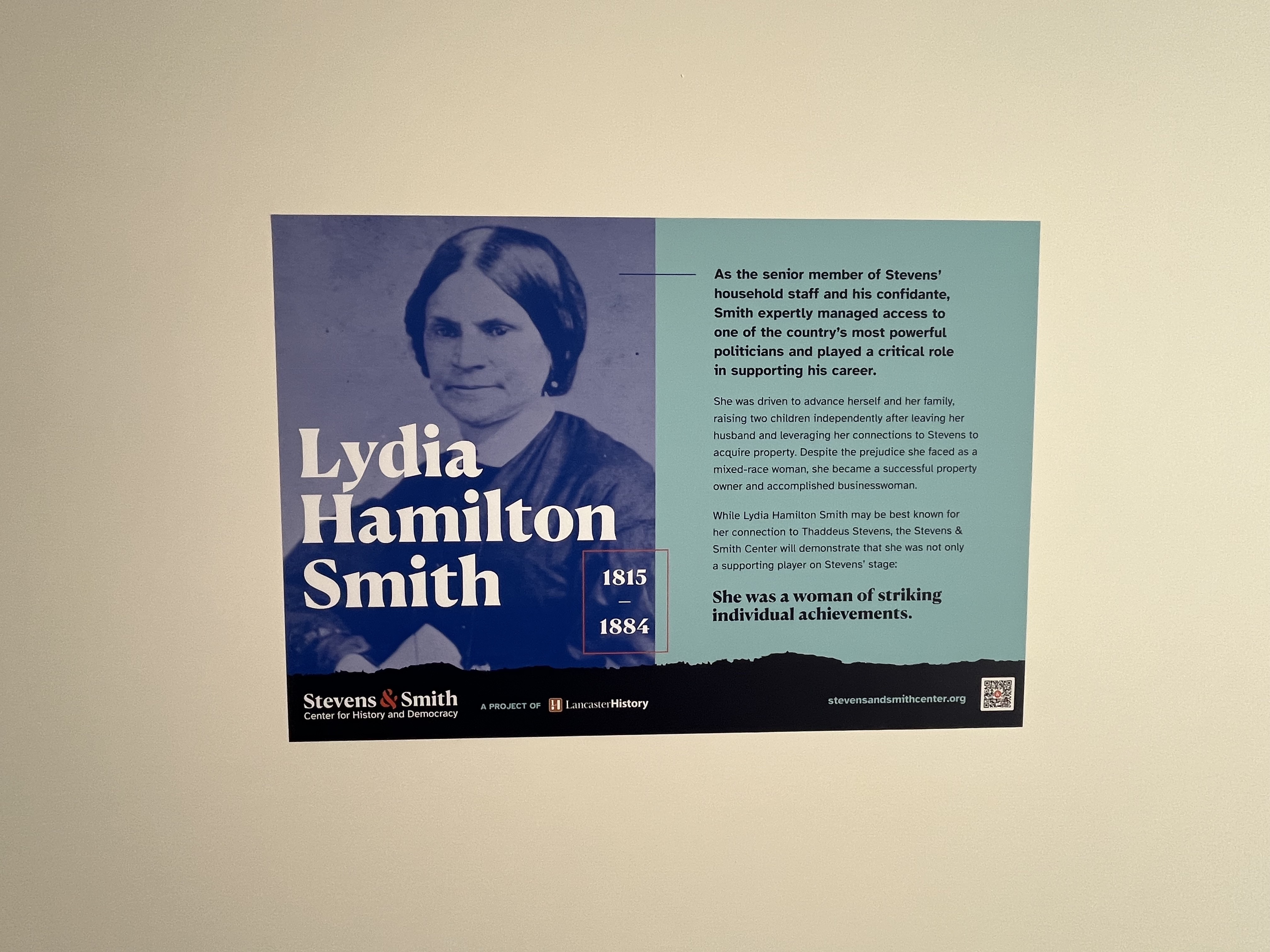
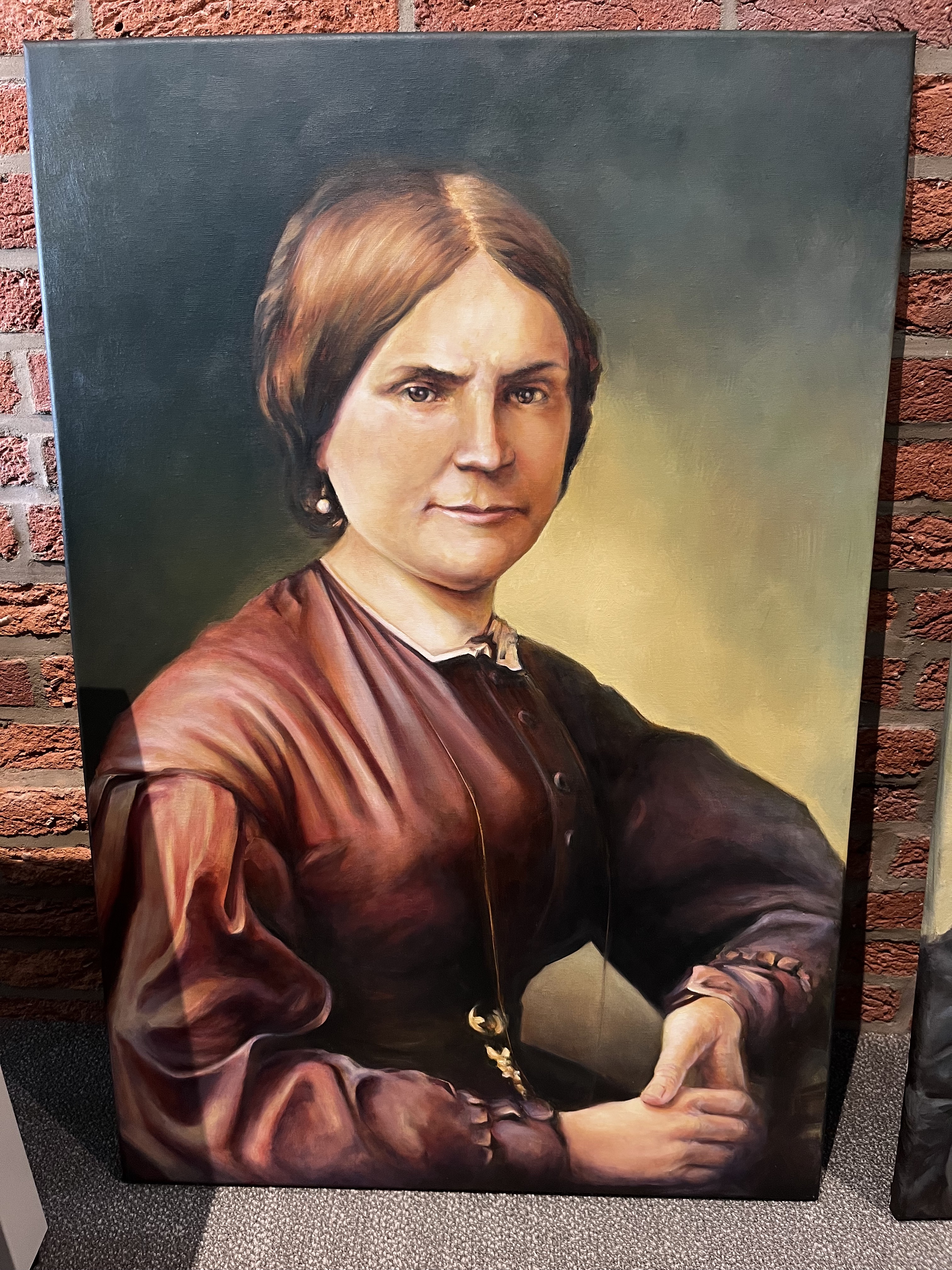
Lydia Hamilton Smith was born on Valentine’s Day, 1815, to an Irish immigrant father (although some say Scottish, and others say her father was the Tavern owner, Mr. Hamilton), and a free African American mother. She lived in Gettysburg and had two sons with Jacob Smith, a barber and banjo player who was also a free African American.
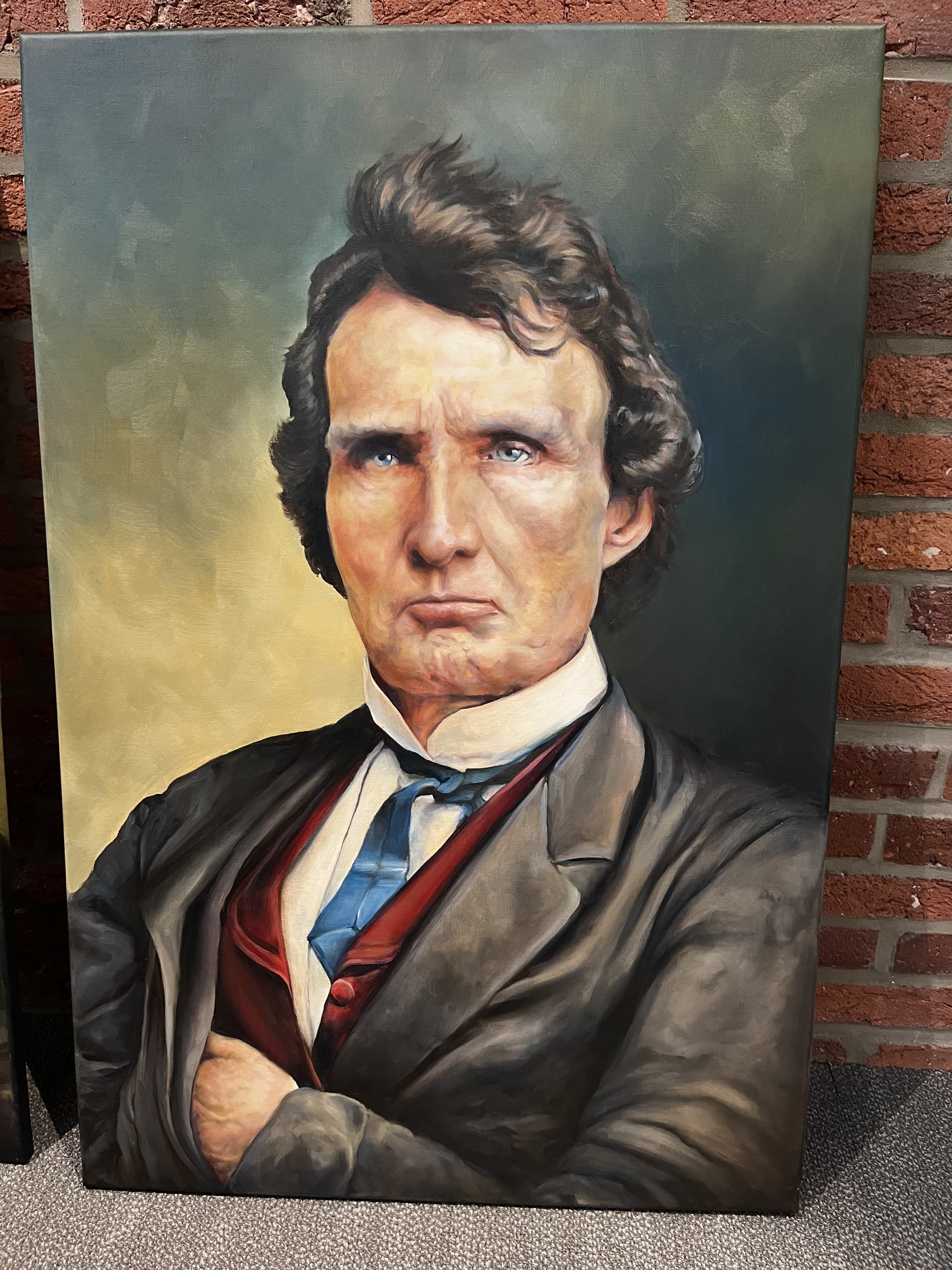
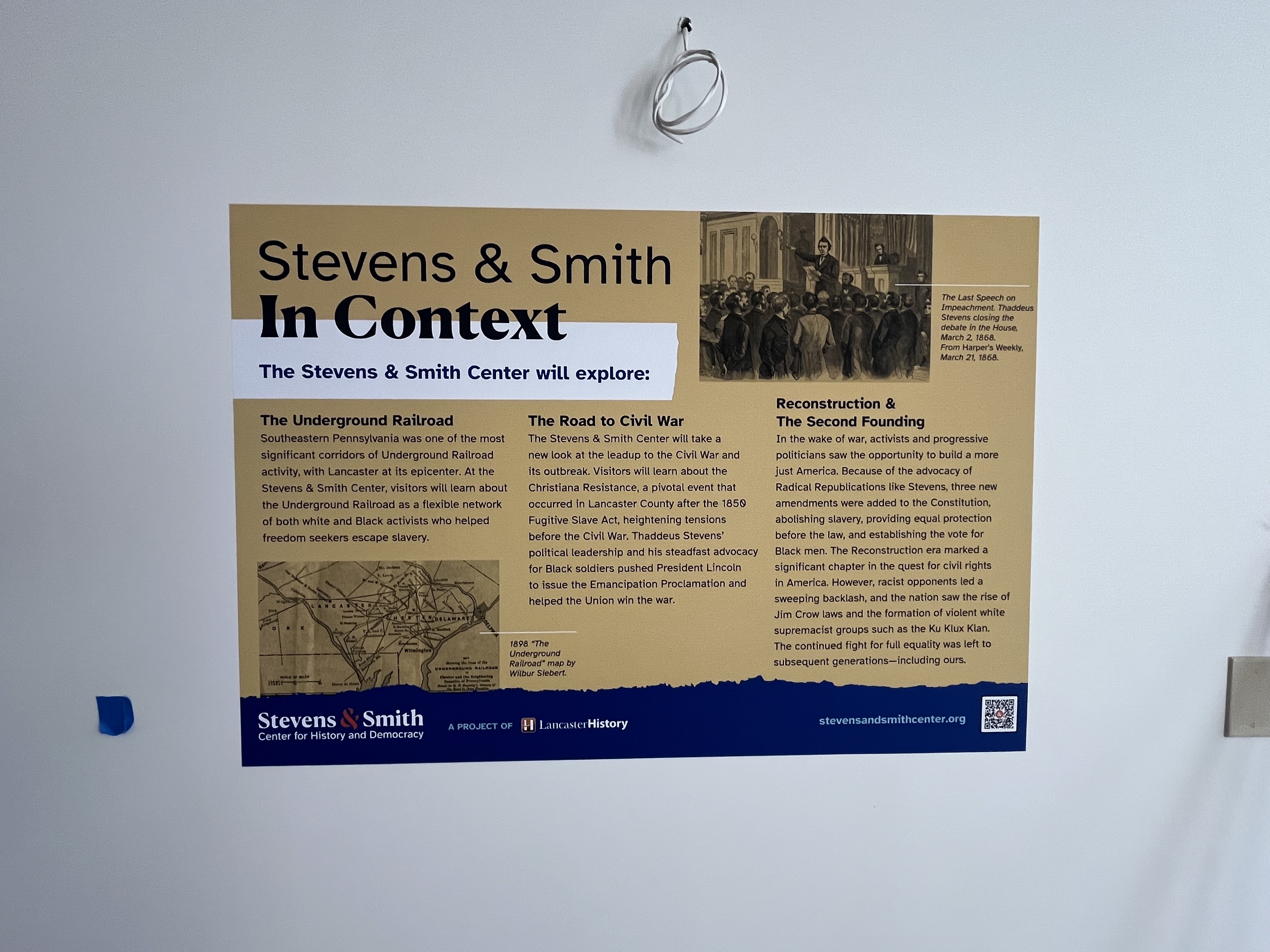
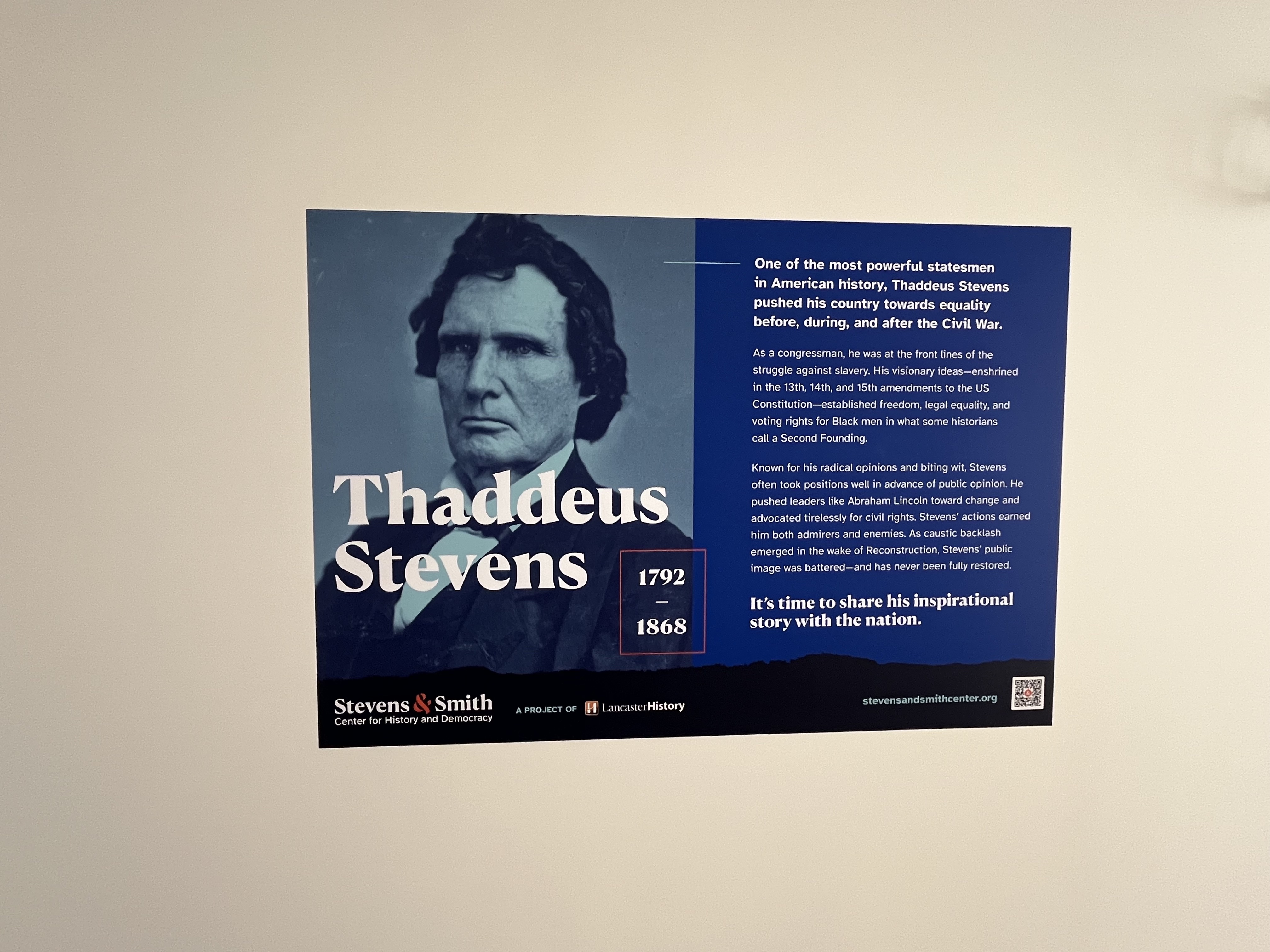
Thaddeus Stevens was an abolitionist and one of the most powerful men of the 19th century, responsible for the passage of the 13th Amendment (abolition of slavery), the 14th Amendment (the equal protection clause), and the 15th Amendment (the right to vote for all male citizens).
Lydia met Thaddeus Stevens as a youngster and, years later, moved from Harrisburg, where she had lived with her husband (then estranged), to work for Stevens.
Thaddeus tutored Lydia in finance. She became his business manager and ran his household. He enabled her to buy her first property at 21 E. Vine Street in Lancaster in 1860. She lived there briefly and then moved into Stevens’ house on Queen Street with her two sons. Together, they raised her sons and his two nephews, whom Stevens adopted when his brother died. Lydia worked for Stevens for two decades, serving as the lady of the house for his business and social gatherings. Stevens commissioned her portrait, one of the few renderings of Lydia, and, upon his death in 1868, Stevens left Lydia the substantial sum of $5,000 in his will, along with all the furnishings of the home they shared.
Under Stevens’ tutelage, Lydia owned approximately six houses, including several boarding homes, one in Philadelphia and one in Washington, D.C.; the latter was a residence for prominent dignitaries and congressmen.
In 2014, the Junior League of Lancaster formed the Lydia Hamilton Smith Society in partnership with Darlene Colon, a prominent local reenactor who has been channeling Ms. Smith for over two decades now. The program aimed to teach young women meaningful life and academic skills, such as critical thinking and resilience in overcoming challenges, research methods, written and oral communications, and public speaking, by connecting with a female historical figure such as Lydia Hamilton Smith, who not only busted through a succession of glass ceilings, but who, along with one of the most prominent Congressmen of the 19th century, helped fugitive slaves on the road to freedom with her participation in the Underground Railroad.
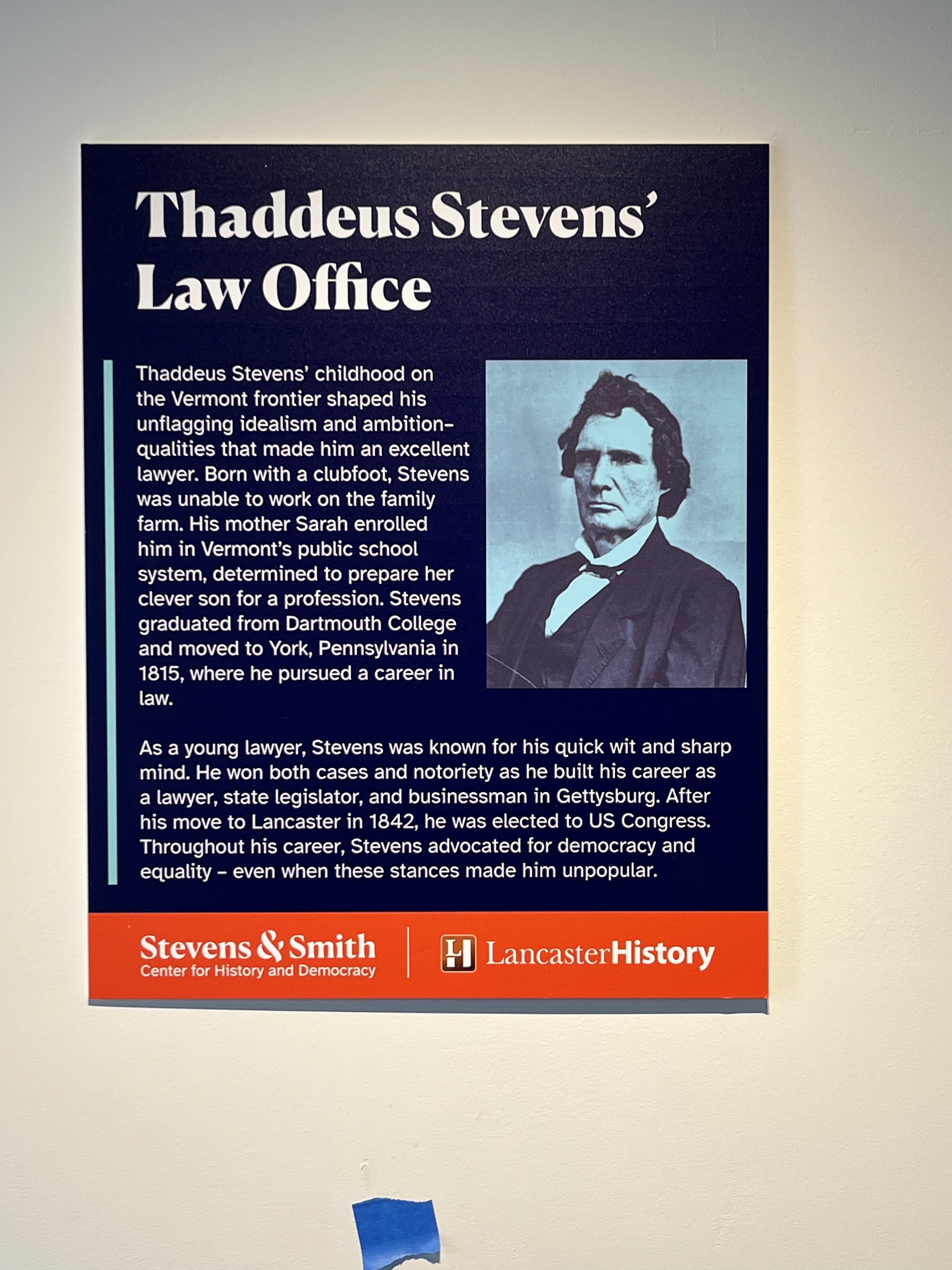
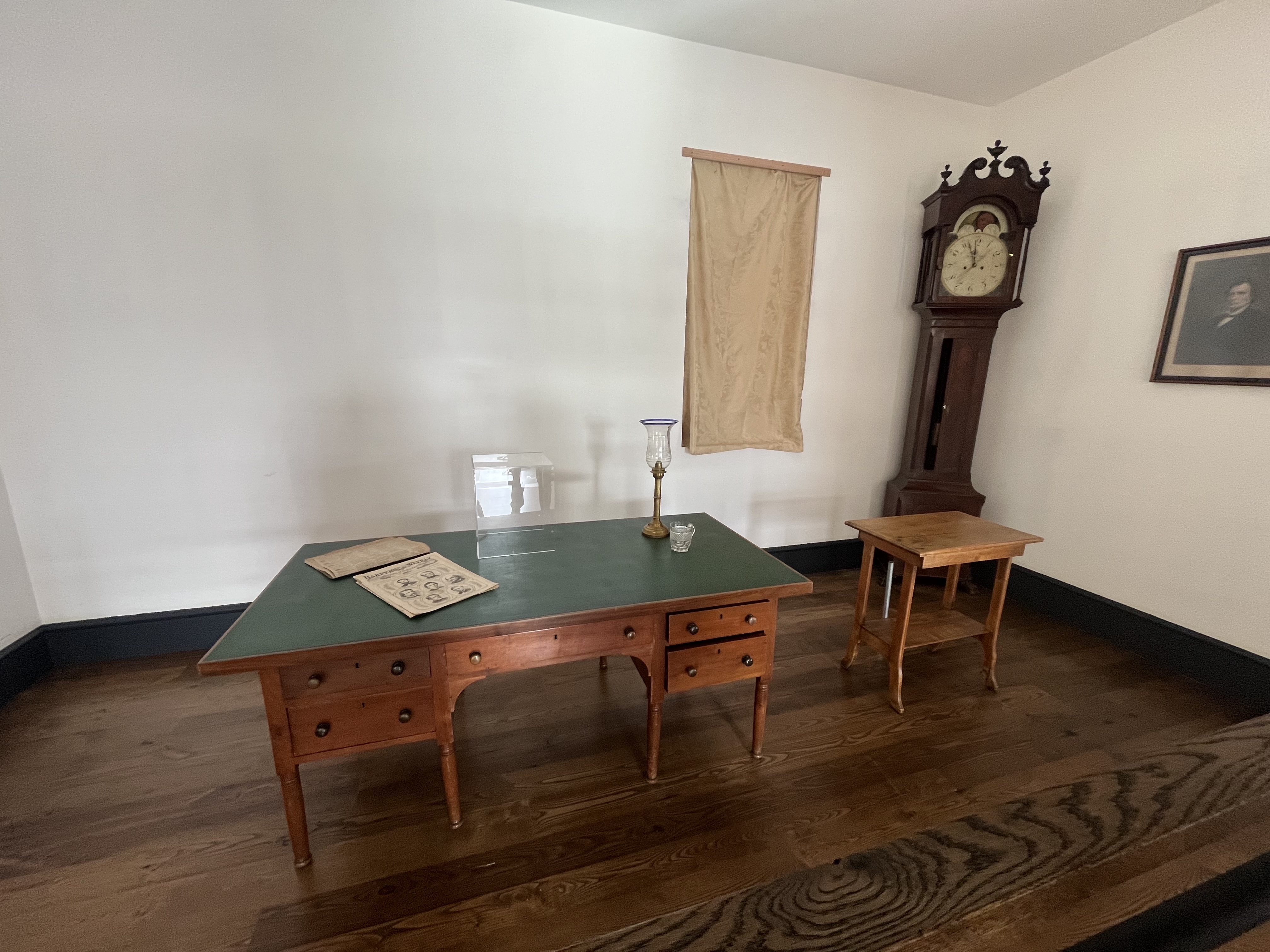
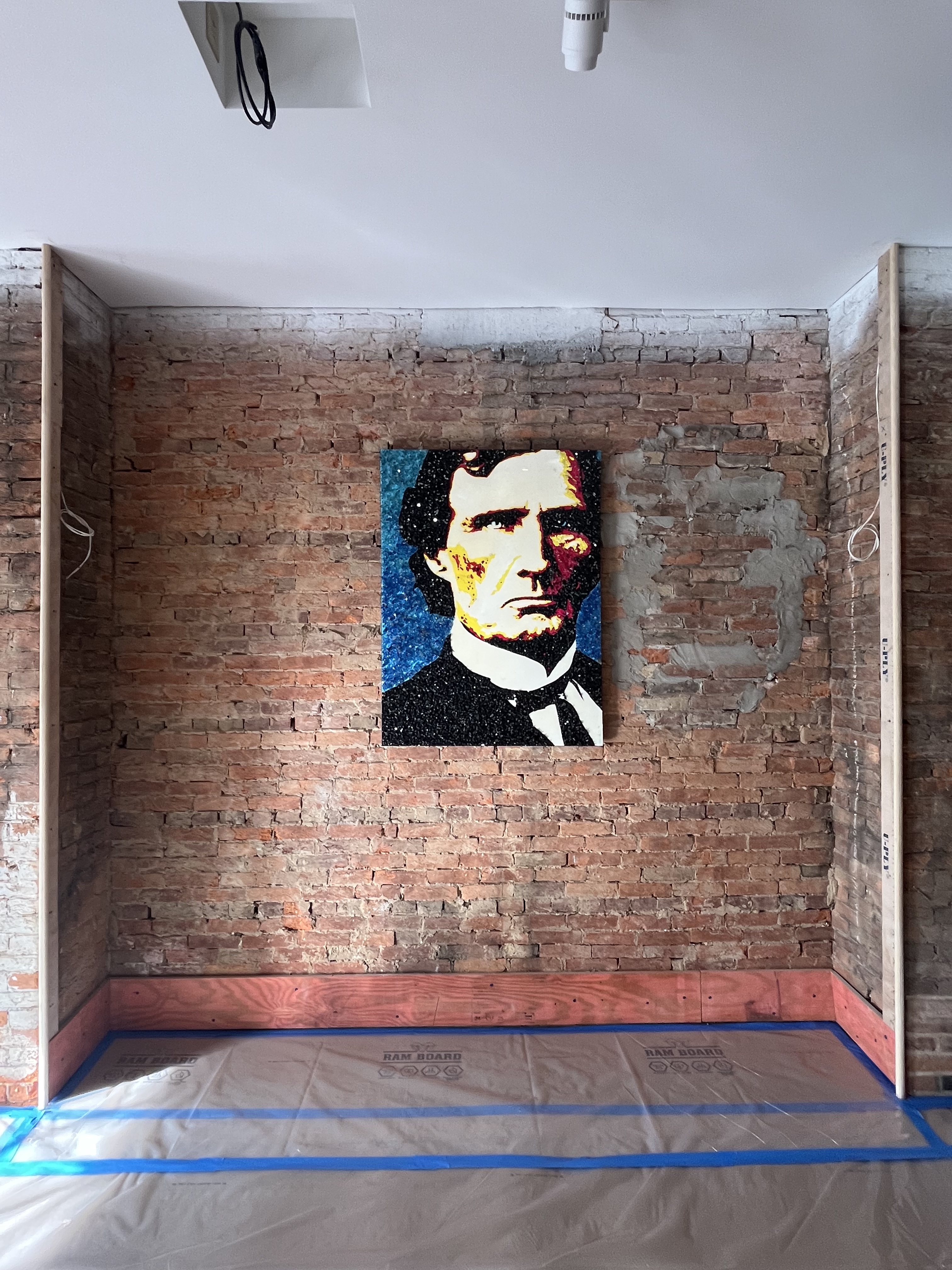
Museum recreation of a room in Stevens’ law office.
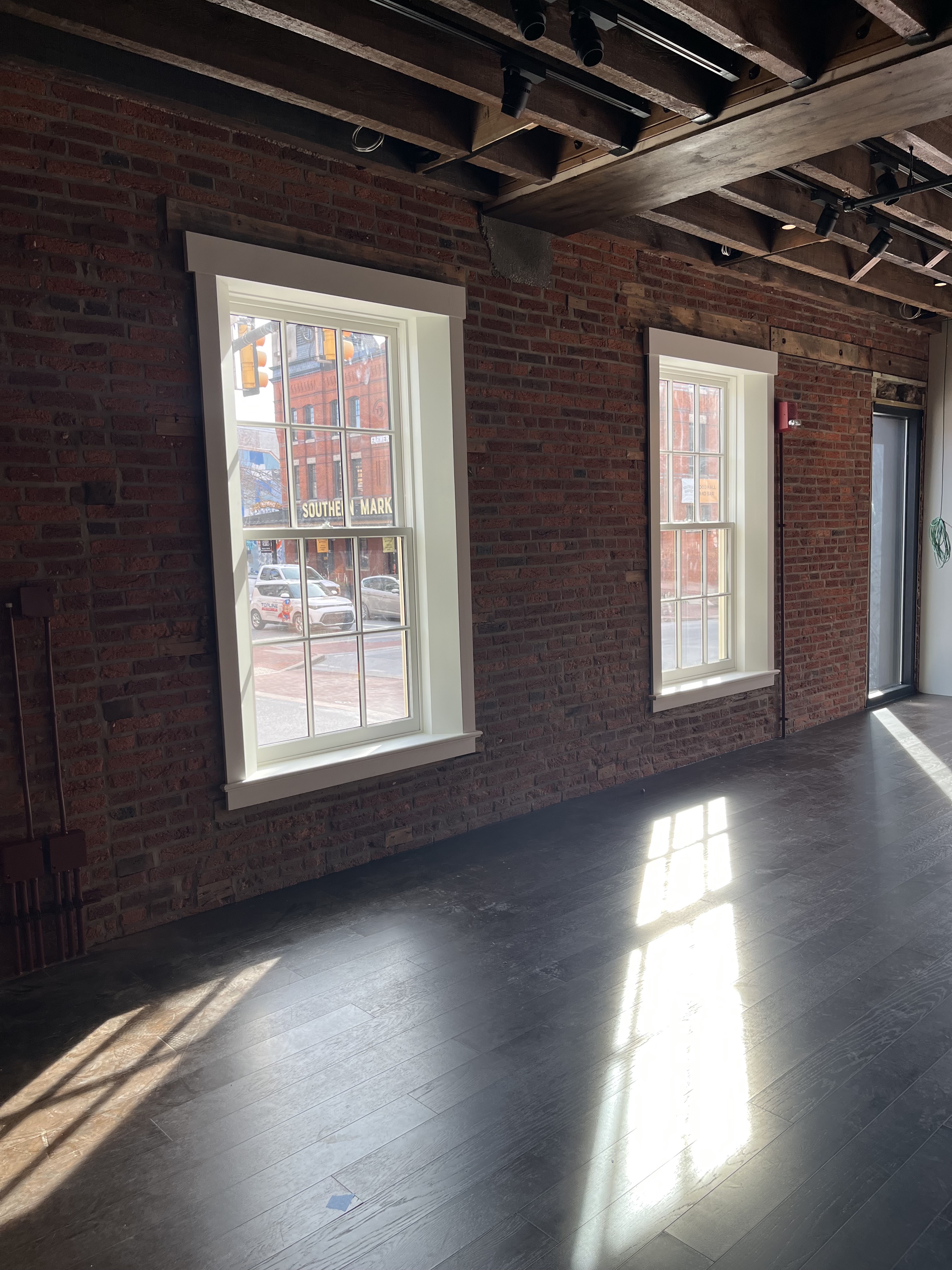
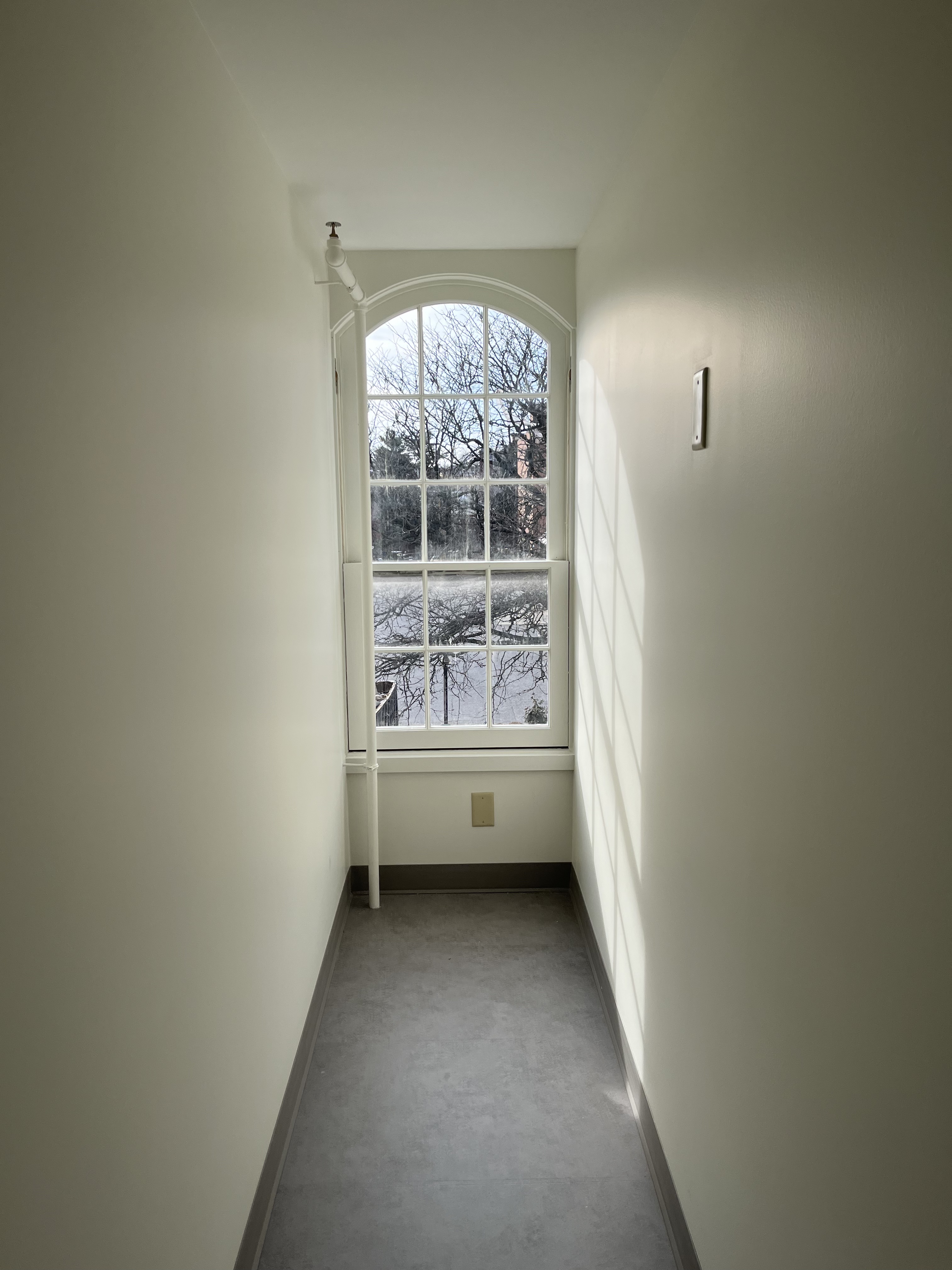
From the second-floor window of the museum, looking south toward the recently renovated Southern Market.
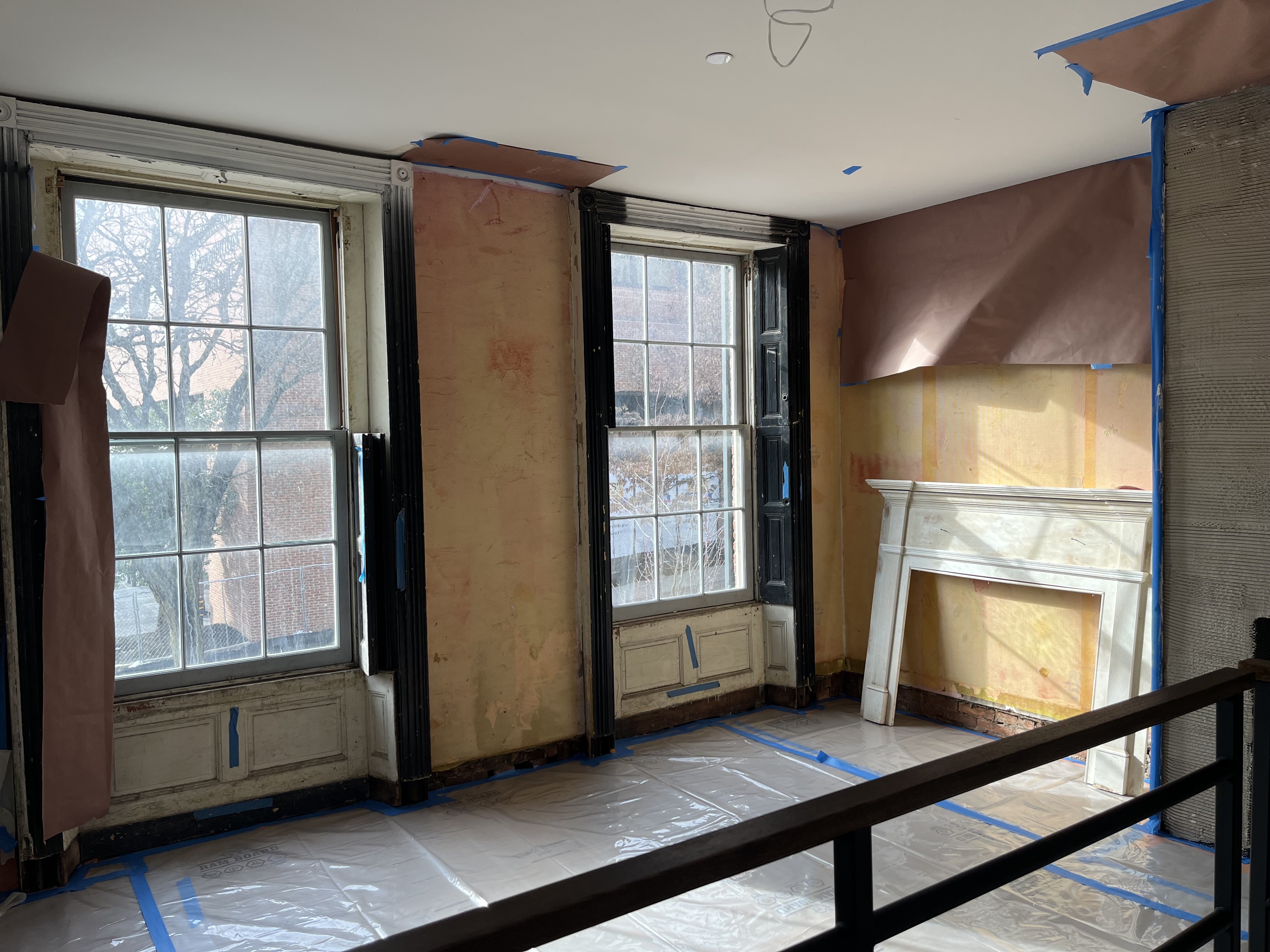
Second floor of the residence.
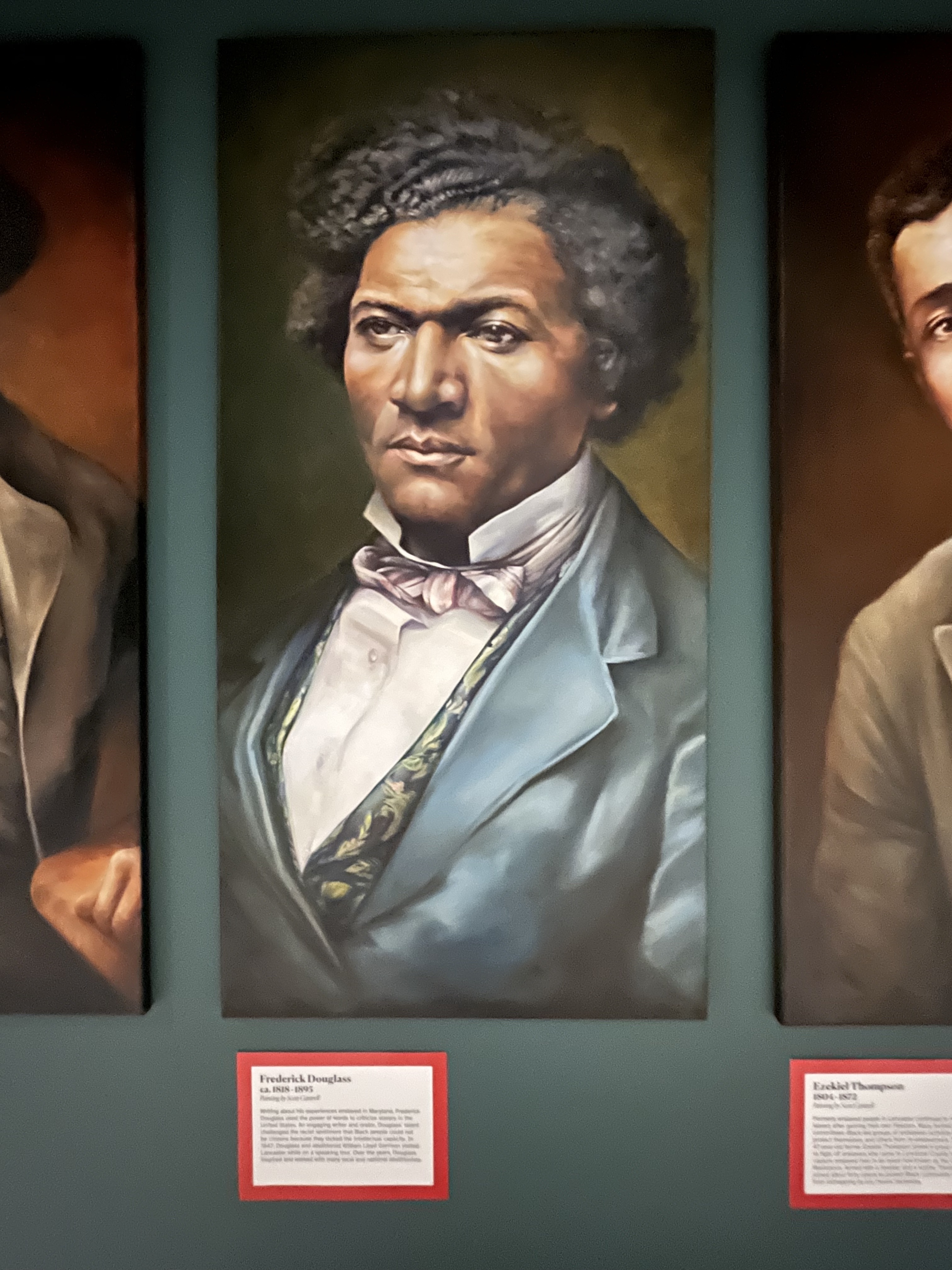
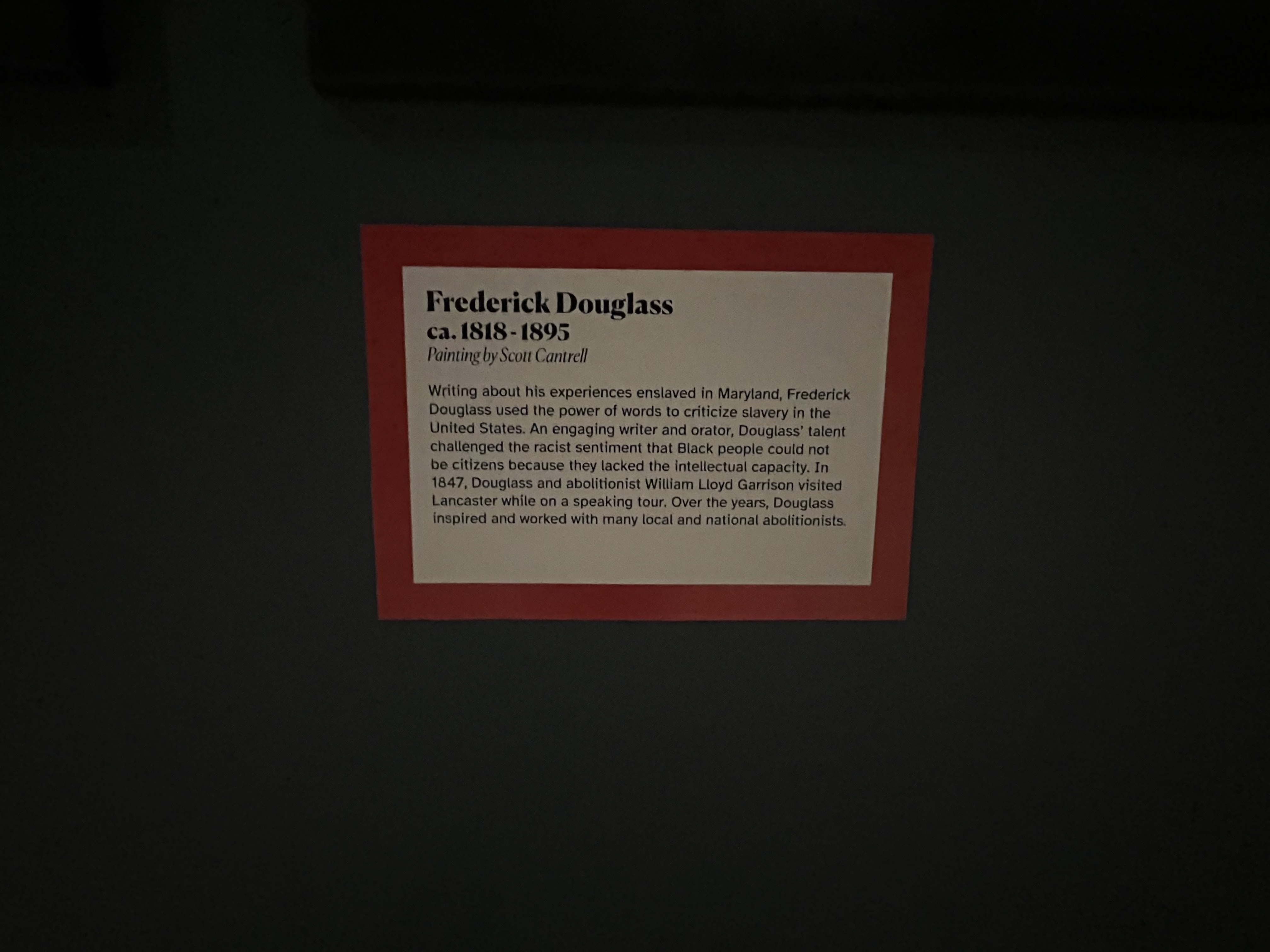
Social reformer, orator, writer, and known abolitionist, Frederick Douglass.
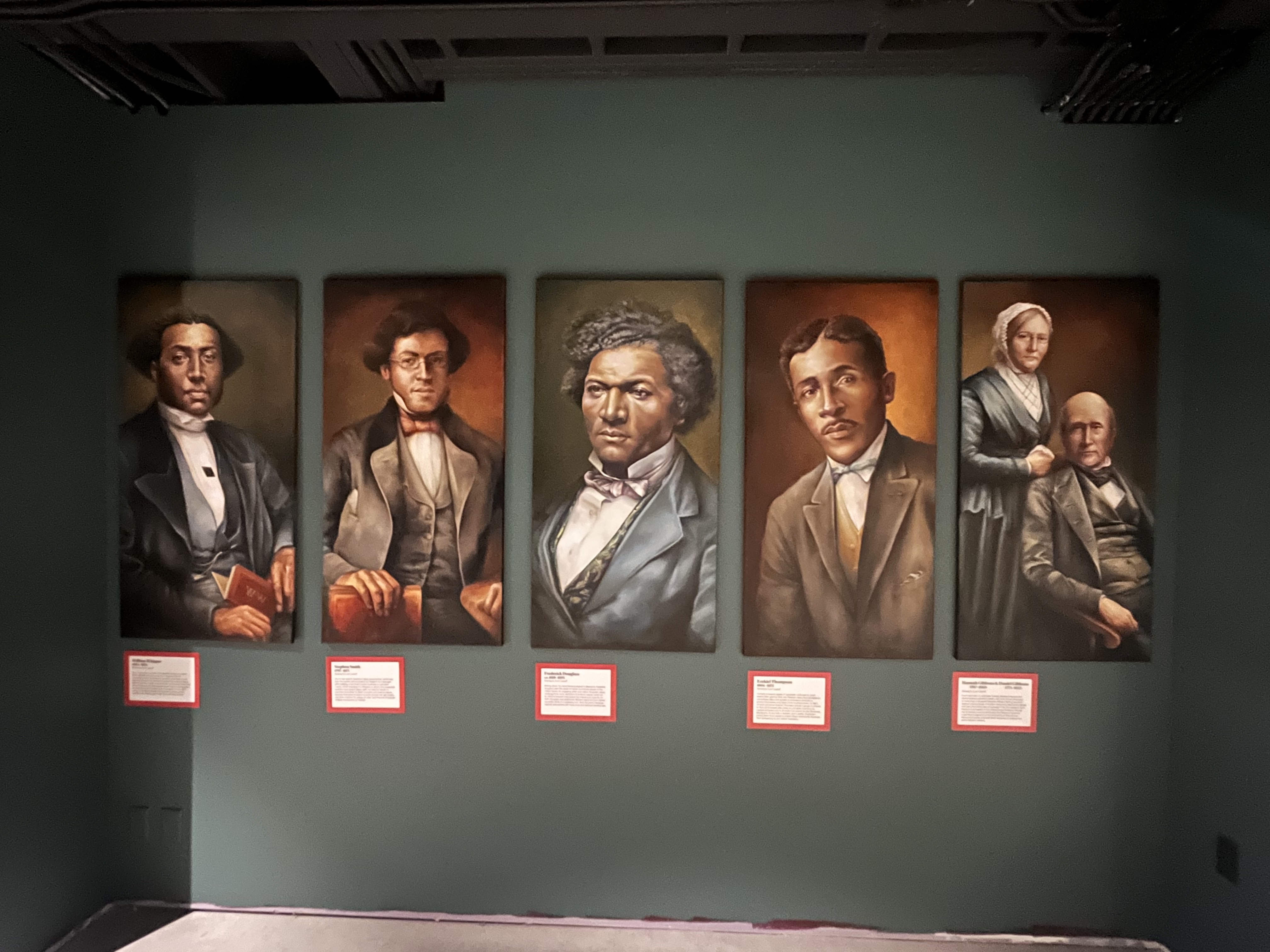
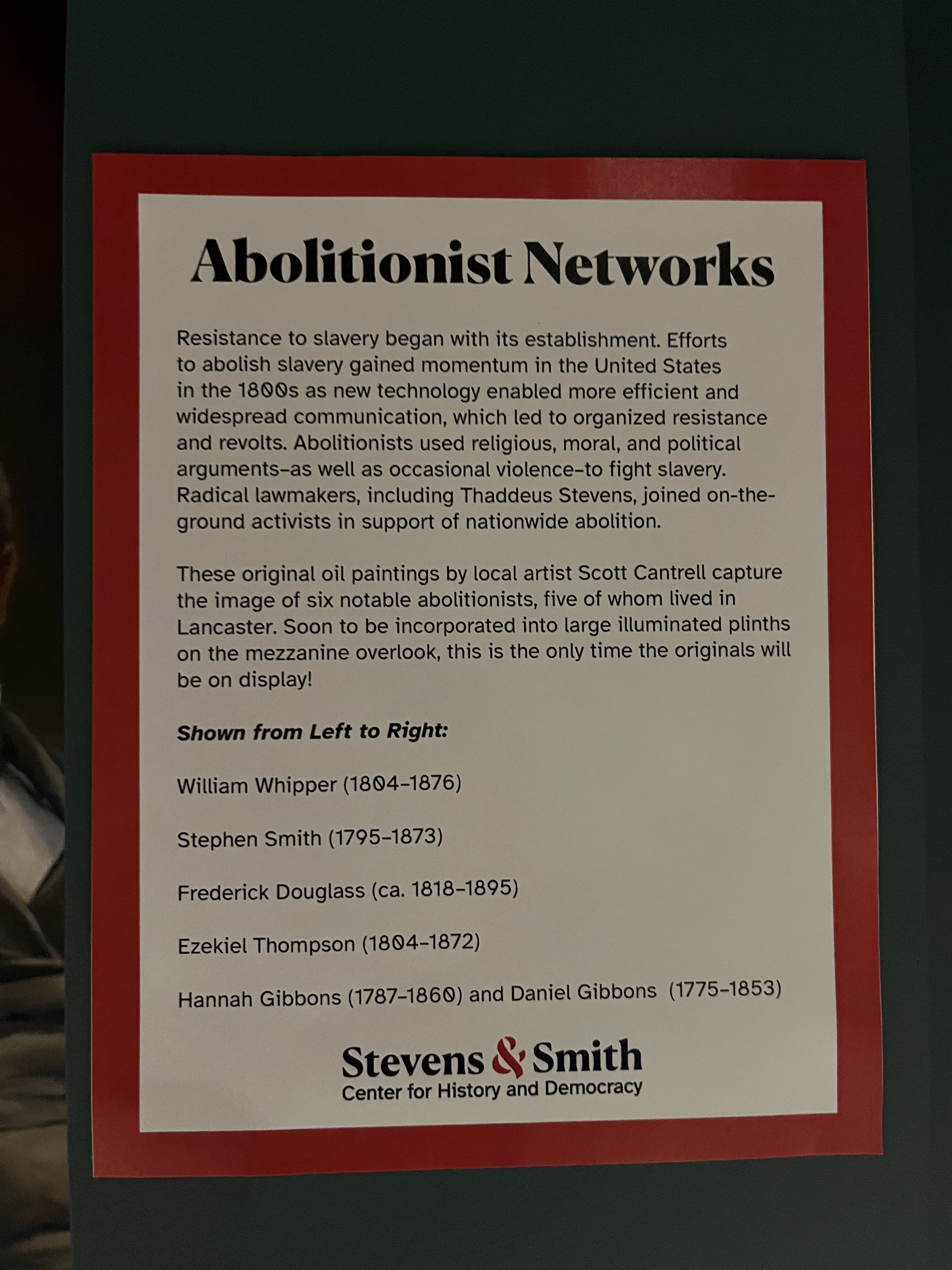
Notable abolitionists.
From my work with the Junior League, I learned much about Lydia, who, like Thaddeus Stevens, was a trailblazing visionary who shunned convention, social norms, and public perception to achieve specific societal goals. As a propertied woman of mixed race, Lydia commanded respect because of her holdings and position in society.
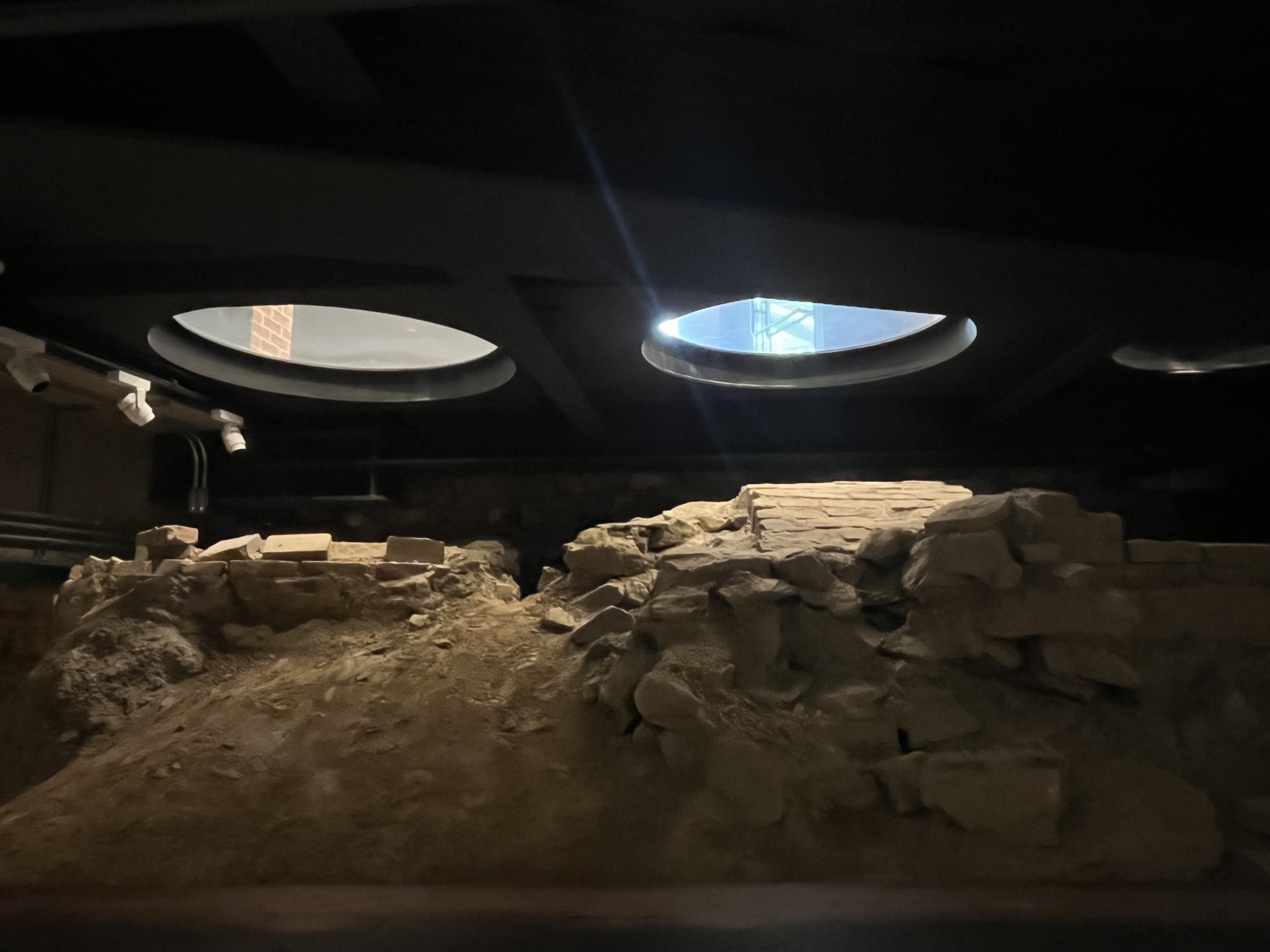
The cistern.
Lydia’s story is intriguing, but her life was not easy. Unfortunately, much of the work she and Stevens conducted in support of the Underground Railroad has not been documented, given the need for secrecy surrounding such endeavors. Lancaster History’s forensic recreation of this time in American history is a testament to the diligence of dozens of scholars, historians, and community members whose tireless perseverance brought this period of history and the story of these two incredible individuals to light.
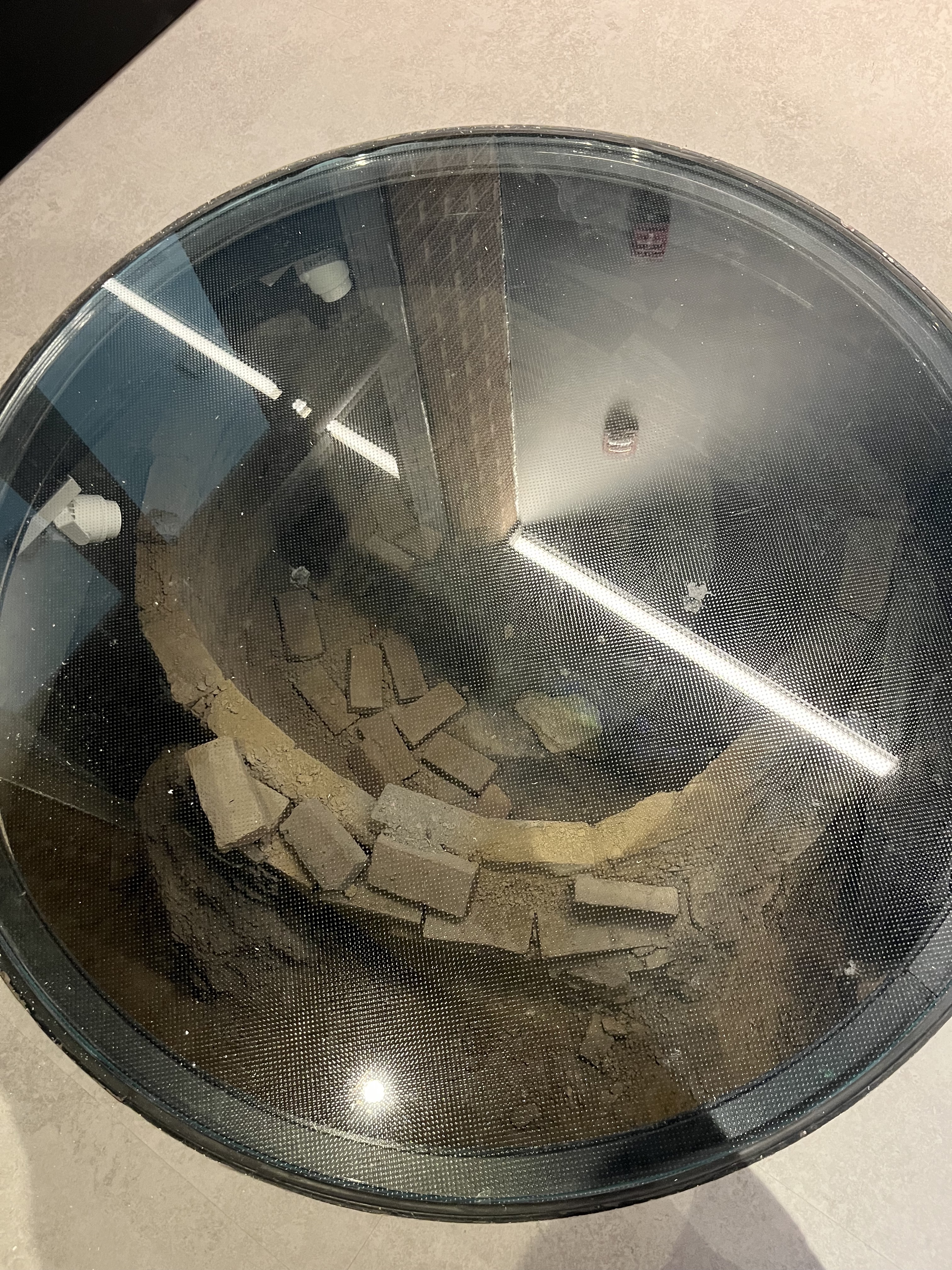
Bird’s eye view of the cistern.
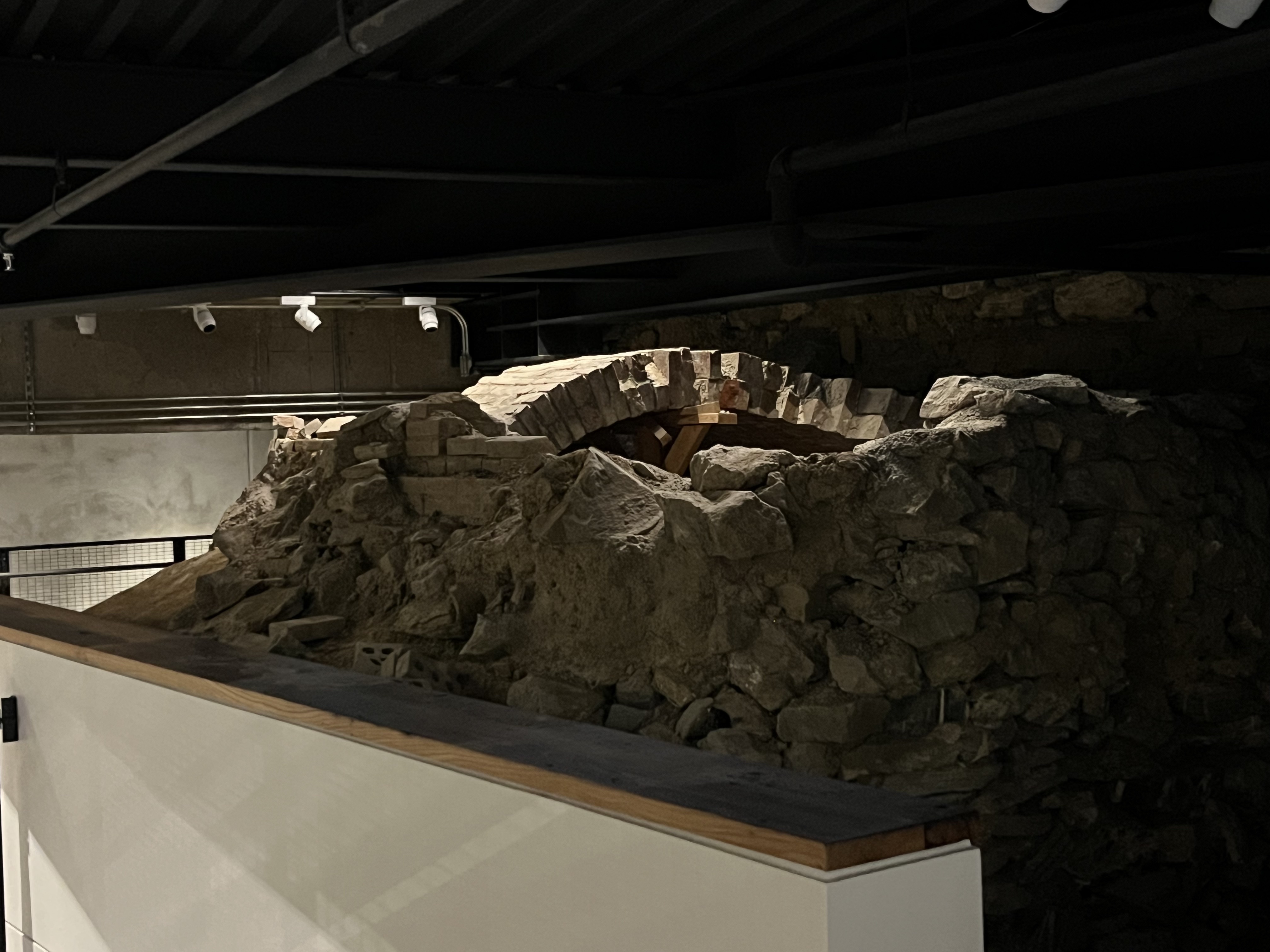
The cistern had an air hole at the top, leading to speculation that it was a hiding place for runaway slaves.
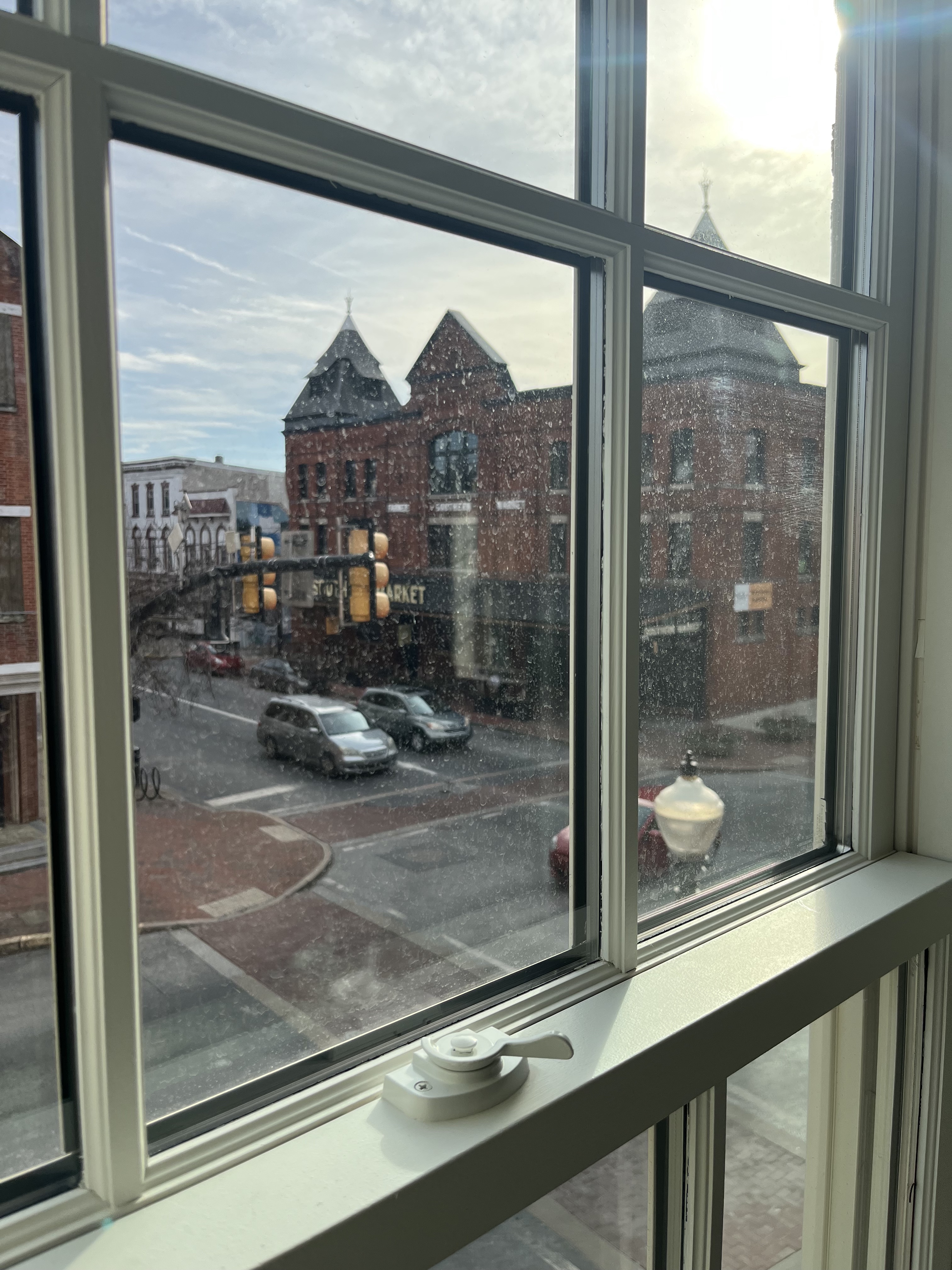
View of Southern Market, Lancaster, PA, initially built in 1888.
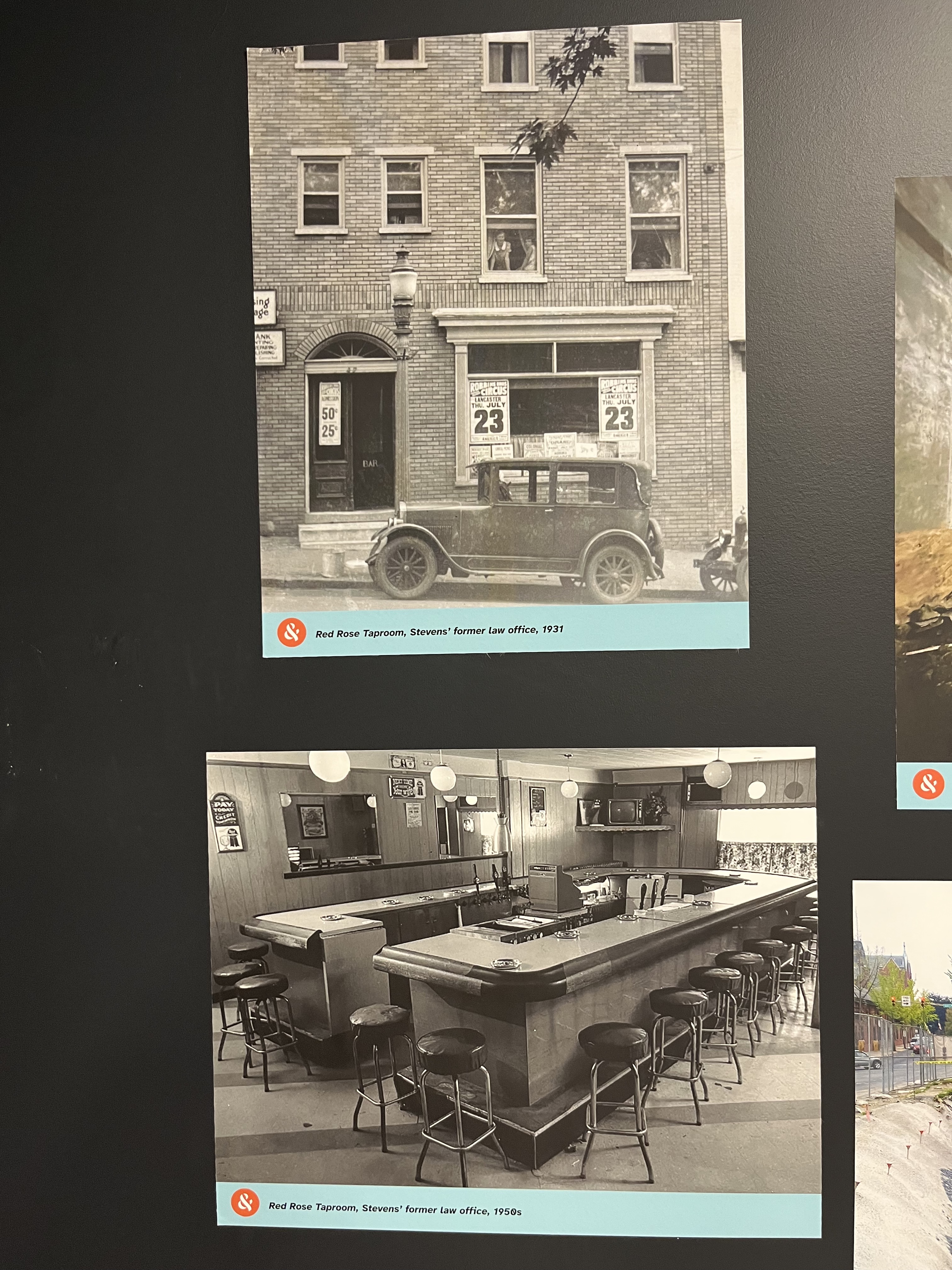
These historical photos are part of the museum’s offerings.
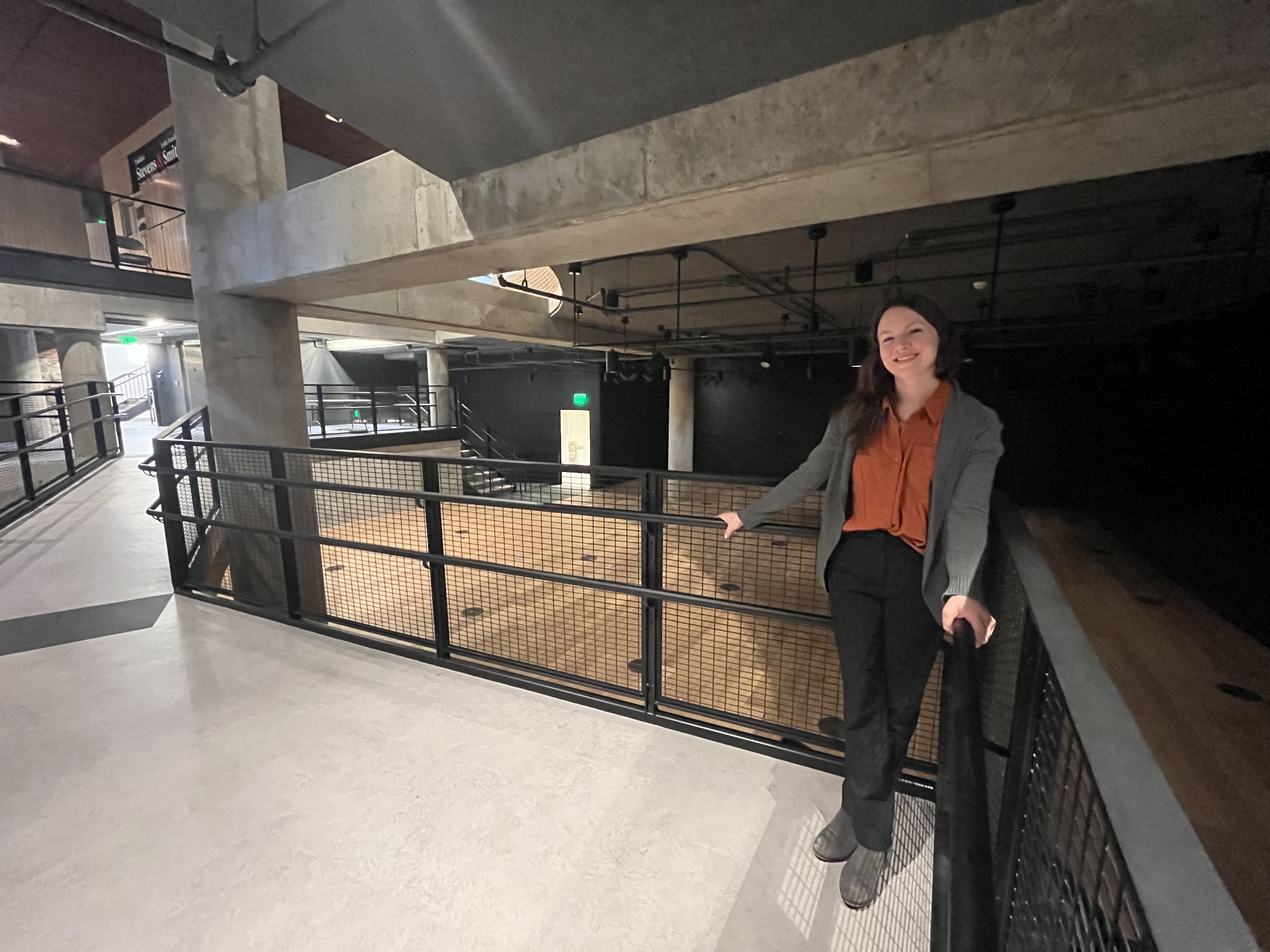
The incredible Erin Sell, Director of Development at Lancaster History, whose work, along with the President and CEO of LancasterHistory, Robin Sarratt, ensures that women’s stories are all of our stories — and that they won’t be lost to history!
In a nod to serendipity, I had the pleasure of working on From the Heart of Lydia, a book of historical fiction for middle-schoolers with two other incredible women, Darlene Colon, who can trace her resistance roots back to her third great-grandfather, and Terry Webb, MEd, PhD, who has long been interested in Thaddeus Stevens, authoring several books from this period in history.
Sunbury Press will publish our book, From the Heart of Lydia, in early 2026.
I’ve learned so much from working with these outstanding women. I hope that our little book, along with the fabulous Stevens and Smith Center for History and Democracy, will help buttress the twin causes of history and democracy for many years to come through the telling of a story that has been underground for far too long.
If you have any artifacts from this period in Lancaster’s history that you want to donate to the museum, go here.
If you want to donate to the Stevens & Smith museum campaign, go here.
As always, thank you for reading. Come back soon.
pam lazos — 5.4.25







 Green Life Blue Water
What a fascinating trip into the past, my friend! I love it when we can physically step through such a portal to feel such tangible relics. They help us see that which we need to remember. xxxxxxxxx
LikeLiked by 2 people
Exactly, Jean. Otherwise we are doomed to repeat the past. 🤷♀️
LikeLike
fascinating!
LikeLike
So interesting, Pam.
LikeLiked by 1 person
It is, Michele!
LikeLike
Fascinating to learn about the evolution of a museum. Lydia sounds like a remarkable woman who needs to be noted. So many stories, almost lost in time, give me pause today.
LikeLiked by 1 person
Especially women’s stories, Ally. Gotta retrieve them before they’re lost to time!
LikeLiked by 1 person
And you more than brought that to a reader’s attention. You held them and gripped them with this,
LikeLiked by 1 person
🥰🙏
LikeLiked by 1 person
This museum deserves to be a success, and I have a feeling it will be. And congrats on your forthcoming book!
LikeLiked by 1 person
Thank you, Neil. The waiting is the hardest part (with apologies to Tom Petty). 😂
LikeLiked by 1 person
That was very interesting Pam. You brought the tale of Lydia Hamilton Smith to life and what a remarkable woman she was, thanks to her lucky break of being hired by Thaddeus Stevens so many years before. She made her mark in history and the book and this center will help fortify that mark.
LikeLiked by 1 person
That would sure be nice, Linda. Lydia was quite a remarkable woman and history should remember her contributions. Darlene has done so much to making that happen not only with her reemacting work, but as a historian in her own right. 🙏😘
LikeLiked by 1 person
Kudos to all of you Pam!
LikeLiked by 1 person
🙏😘🥰
LikeLiked by 1 person
Let us the blog readers know when the Center opens so that we can go visit. Can’t help but think of Tommy Lee Jones who portrayed Stevens in the movie Lincoln.
LikeLiked by 1 person
Will do, and I know! Timmy Lee Jones even kind of looks like Stevens! 😂
LikeLike
Hope to get to see the museum when it opens. It has a compelling story to tell.
LikeLiked by 1 person
What a truly fantastic post Lady Pam. Absolutely fascinating.
LikeLiked by 1 person
Thank you, Lady Shey. Lydia Hamilton Smith is a mystery of epic and historic proportions!😘
LikeLiked by 1 person
Hope to get to see the museum when it opens. It has a pretty compelling story to tell.
LikeLiked by 1 person
Oh, for sure, Ken. Plus we need to get you out of Jersey once in awhile!😂
LikeLike
Important stories that need to be told.
LikeLiked by 1 person
True that, Rose!
LikeLiked by 1 person